Introduction:
The “engine cradle” in the Tesla Model Y is widely misunderstood—even among seasoned automotive writers. The confusion stems from applying traditional internal combustion terminology to modern EV architecture.
Here’s the reality:
The Tesla, Inc. Model Y does not have a conventional engine.
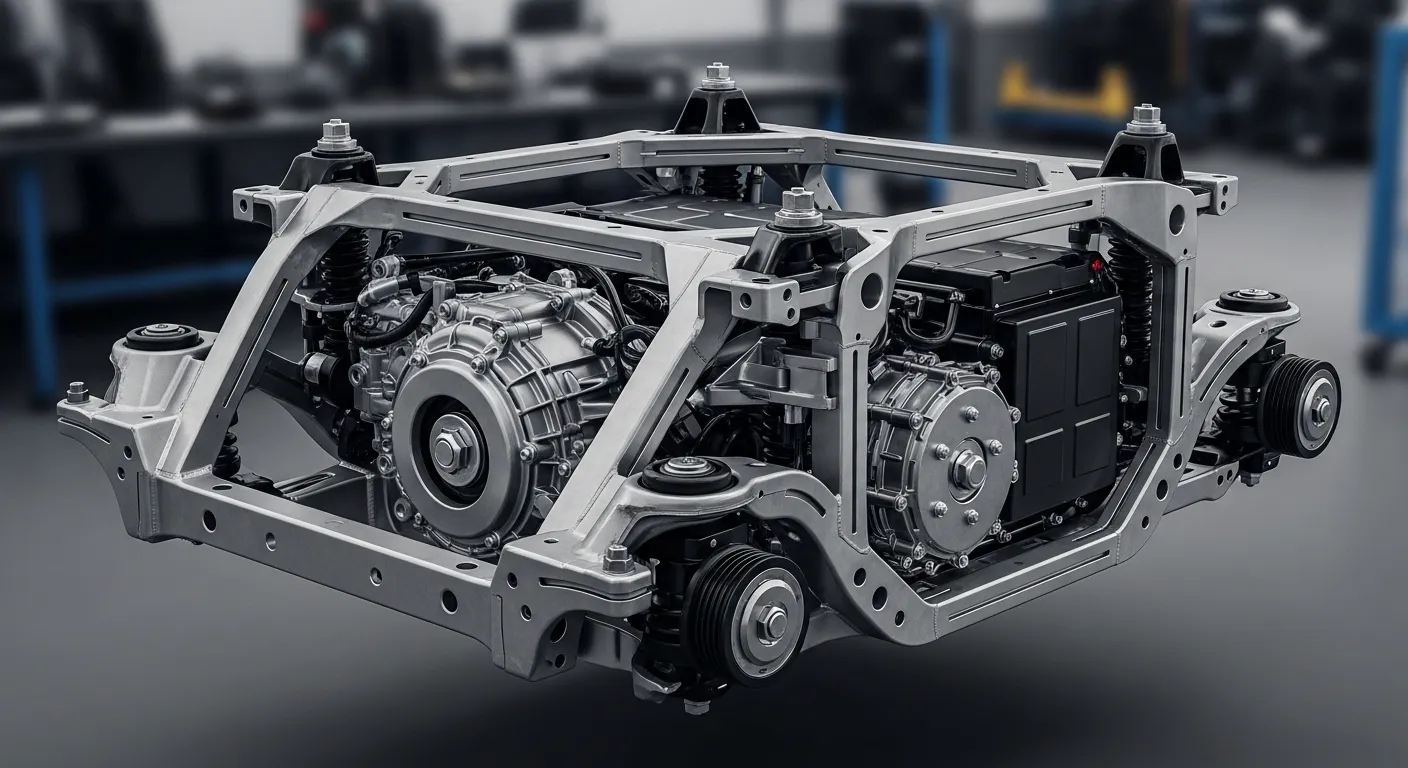
What many call the engine cradle is actually the subframe, a structural foundation.
This misunderstanding affects:
- Safety awareness
- Repair budgeting
- Maintenance strategy
- Resale value
This 2026 guide breaks down everything with clarity, precision, and expert-level insight.
Quick Overview:
| Specification | Tesla Model Y |
| Powertrain | Electric (Single/Dual Motor) |
| Output | 295–534 hp |
| Transmission | Single-speed |
| Range | 455–533 km (WLTP) |
| Body | Compact SUV |
| Platform | Dedicated EV |
Tesla Model Y Structural Design Explained
The Model Y uses cutting-Edge architecture that differs drastically from combustion vehicles.
Key Innovations
1. Gigacasting
- Large aluminum cast sections
- Reduced component count
- Increased rigidity
2. Structural Battery Pack
- Battery acts as load-bearing element
- Enhances stiffness
- Lowers mass
3. Integrated Drive Unit
- Motor + inverter + gearbox combined
- Mounted directly to subframe
4. Outcome: The subframe becomes more critical than ever.
Crash Safety Engineering
Tesla engineers design the subframe to:
- Absorb collision energy
- Redirect force away from cabin
- Work with crumple zones
Result:
- Improved crash outcomes
- Reduced cabin intrusion
Exterior Design:
The absence of a traditional engine allows:
- Sleeker aerodynamics
- No grille
- Streamlined front
The subframe supports this modern layout.
Interior Experience
- 15-inch touchscreen
- Minimalist layout
- Panoramic glass Roof
- Quiet cabin
No combustion noise enhances comfort.
Performance
Despite no engine:
- Up to 534 hp
- 0–100 km/h ≈ 3.7 sec
- Instant torque
Subframe stability supports high torque delivery.
Range & Efficiency
| Variant | Range |
| RWD | ~455 km |
| AWD | ~533 km |
| Performance | ~514 km |

Pros & Cons
Pros:
- Advanced Technology
- High safety rating
- Minimal maintenance
- Strong acceleration
Cons:
- Expensive repairs
- Limited service network
- Higher insurance
Alternatives:
| Vehicle | Type |
| Ford Mustang Mach-E | Sporty EV |
| Hyundai Ioniq 5 | Tech EV |
| Volkswagen ID.4 | Budget EV |
Maintenance Insights:
Benefits:
- No oil changes
- Fewer mechanical parts
- Reduced servicing
Important: Subframe damage = costly Repair.
FAQs:
A: Yes, in the Tesla context, the engine cradle usually refers to the subframe.
A: No. It affects safety and handling.
A: Usually 4–8 hours, depending on complexity.
A: Only manufacturing defects—not accidents.
A: Yes, it can exceed $3,500+.
Conclusion:
The biggest misconception:
Believing the engine cradle is an engine-related Component
In reality:
- It’s the subframe
- It’s essential for structural integrity
- It directly influences safety and cost