Introduction:
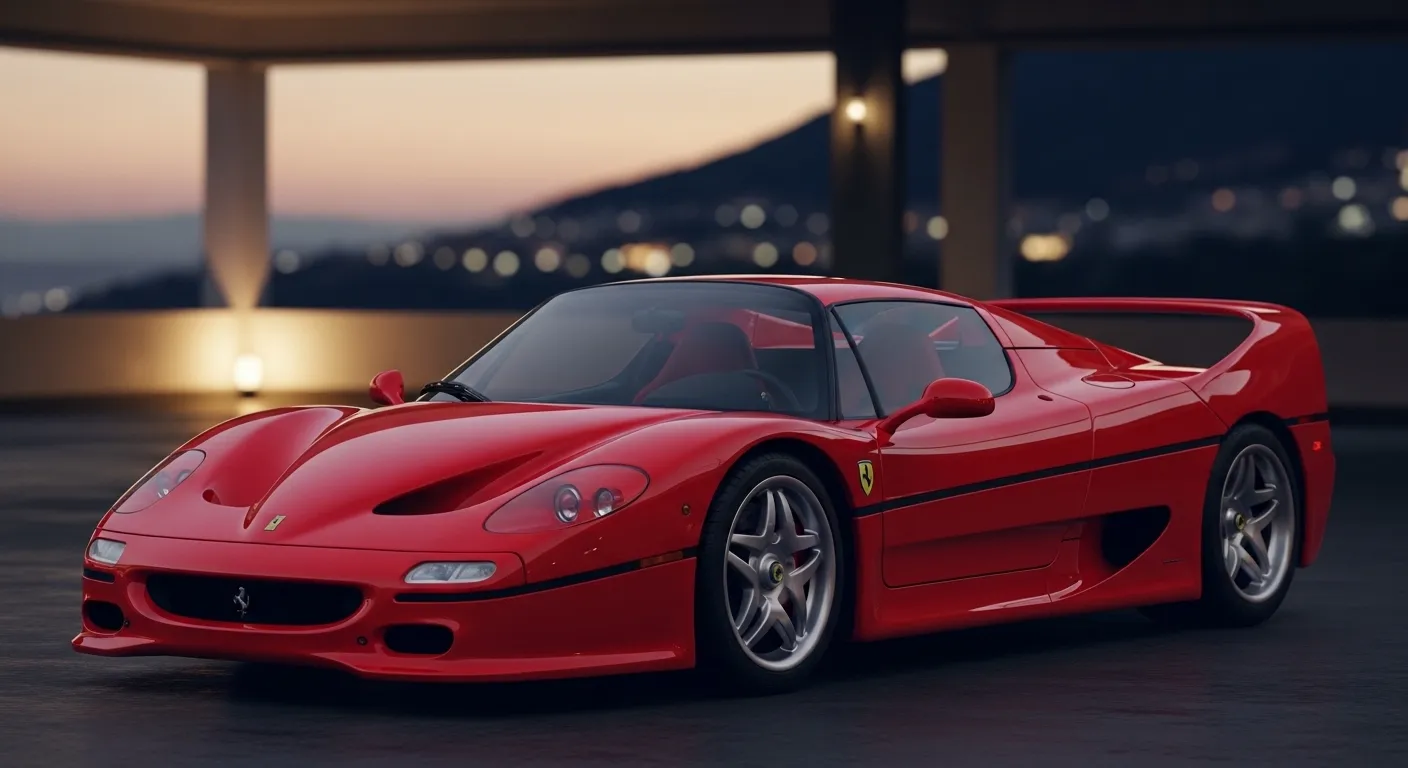
Out here among supercars, the Ferrari F50 stands apart because it feels raw, alive, almost unfiltered. Built with purpose, every piece works together like something forged rather than assembled. Few were made, which means seeing one move is rare. This isn’t just speed shaped into steel – this is passion driven to extremes.
Collectors Worldwide Question Market Trends
- This In Depth Seo Guide Explores
- Verified Ferrari F50 price ranges (2026)
- Confirmed auction benchmarks
- Investment outlook and projections
- The costs of owning something bring possible drawbacks along with them
- Comparison with Ferrari F40 and Ferrari Enzo
Quick Overview Table:
| Specification | Details |
| Engine | 4.7L Naturally Aspirated V12 |
| Power | 513 HP |
| Torque | 471 Nm |
| Transmission | 6-Speed Manual |
| Body Type | Targa Supercar |
Why Has the Ferrari F50 Price Increased So Much?
1. Limited Production
Only 349 units were manufactured.
Restricted supply directly drives demand.
2. Formula One Engineering
The engine derives from motorsport technology.
This is authentic racing DNA—not marketing exaggeration.
3. Pure Analog Driving
No digital filters. No Electronic aids.
A completely unfiltered driving experience.
4. Historical Significance
Built to celebrate Ferrari’s milestone anniversary.
This enhances its legacy status.
Exterior Design:
The F50’s design remains instantly identifiable.
Key highlights include:
- Removable targa roof
- Wide, aerodynamic stance
- Functional body sculpting
- Classic five-spoke wheels
Every contour serves a performance purpose.
Interior Comfort:
Inside the F50, luxury is intentionally absent.
Features include:
- Fixed racing seats
- Exposed carbon fiber structure
- No infotainment system
- Simplified controls
The focus is entirely on driver engagement.
Engine & Performance
The core of the F50 defines its uniqueness.
- 4.7L Naturally Aspirated V12
- 513 HP
- 0–100 km/h: ~3.7 seconds
- Top Speed: ~325 km/h
The acoustic experience alone is extraordinary.
Driving characteristics:
- Mechanical and responsive
- Direct driver feedback
- No electronic intervention
Modern hypercars rarely replicate this sensation.
Comparison:
| Model | Avg Price | Character |
| Ferrari F40 | $2M–$3M | Aggressive turbo |
| Ferrari F50 | $4M–$5M | Balanced V12 |
| Ferrari Enzo | $3M–$4M | Advanced hypercar |
Pros & Cons
Pros
- Rare production
- Strong appreciation
- Iconic Heritage
- Pure driving feel
Cons
- High cost
- Maintenance complexity
- Limited usability
- Minimal safety
Ideal Buyers
Best suited for:
- High-net-worth collectors
- Automotive investors
- Ferrari enthusiasts
- Motorsport purists
Ownership Costs
Key considerations:
- Specialist servicing required
- Rare parts availability
- High insurance premiums
- Controlled storage recommended
Ownership is passion-Driven.
FAQs
A: Typically $3.5M to $5.5M in 2026
A: Because of rarity, the F1 engine, and collector demand
A: It depends:
F40 = more aggressive
F50 = more refined and balanced
A: Only 349 units worldwide
Conclusion:
The Ferrari F50 has evolved beyond a supercar.
It represents:
- A financial instrument
- A collector’s centerpiece
- A historic automotive Artifact