Introduction:
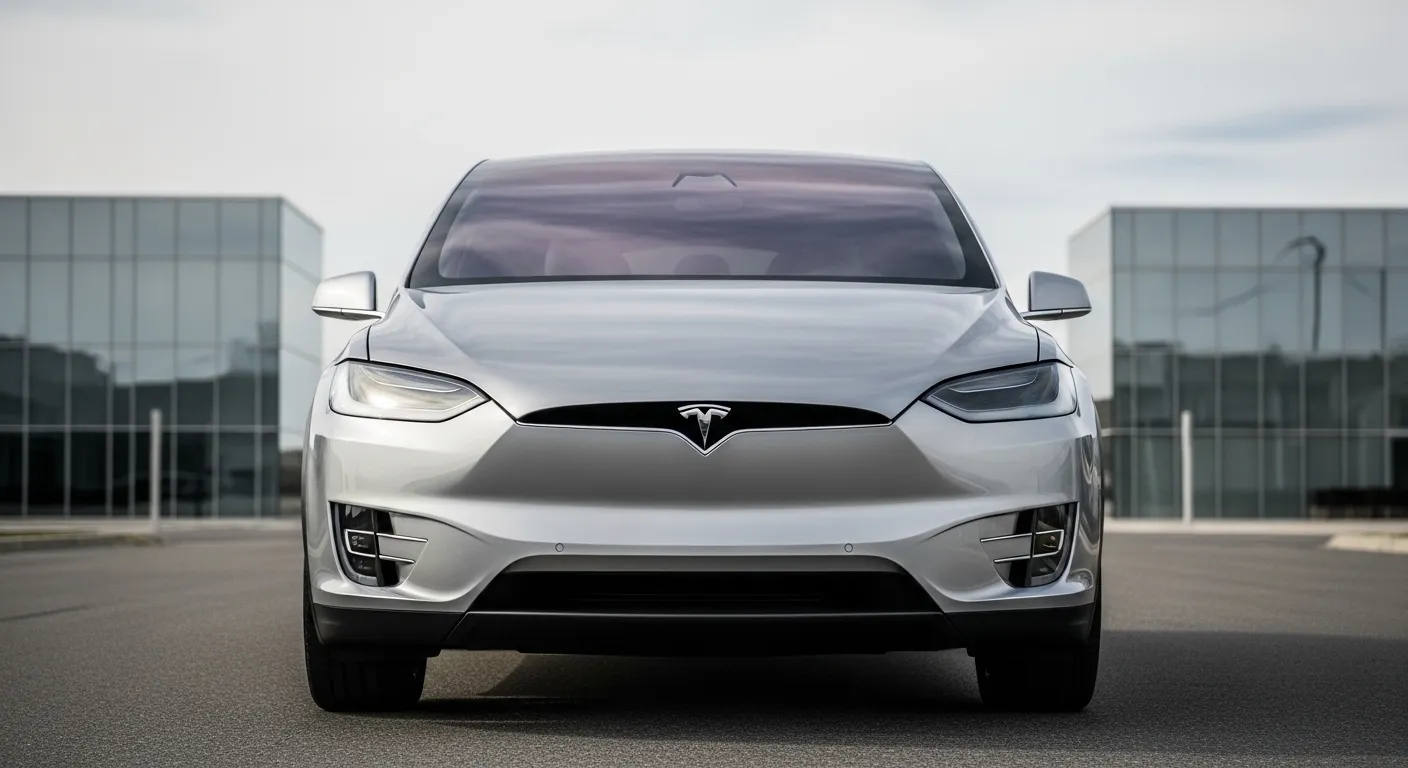
Out front, the Tesla Model X cuts a shape unlike any other on the road today. Seen far off, its outline whispers something new – charged, different.
- Yet here comes a crucial thought
- Could this look actually be better, or just different from regular SUV Designs?
Smooth lines replace sharp ones. Where others shout with big fronts, Tesla whispers through curves. Most pile on the tough look; this takes strength from silence instead. Angles give way to flow. Boldness hides in what is left out. Less becomes louder here.
This detailed 2026 walkthrough covers what lies ahead
- The logic behind Tesla’s grille removal
- How front design enhances efficiency
- Differences between 2016 and 2021+ versions
- Whether it still feels contemporary in 2026
- How it compares to rivals like BMW iX and Audi Q8 e-tron
- Once finished, it will be obvious if this layout holds up today.
Quick Overview
- Vehicle Type: Electric Luxury SUV
- Power Output: Up to 1,020 hp (Plaid)
- Range: ~560 km (WLTP est.)
- Transmission: Single-speed automatic
- Fuel Type: Fully electric
- Body Type: Full-size SUV
- Seating: 5, 6, or 7 passengers
Exterior Design
The Tesla Model X front view breaks conventional SUV design norms.
Key Front-End Characteristics
- Grille-less fascia
- Seamless, polished surface
- Slim LED headlamps
- Wide, grounded stance
Instead of rugged aesthetics, it resembles a refined technological product.
Headlights & Illumination
The headlamp structure is sleek, angular, and highly functional.
Key advantages:
- Adaptive LED systems
- Enhanced nighttime clarity
- Integrated design language
These lights don’t just illuminate—they shape the vehicle’s identity.
Wide Stance & Visual Dominance
Although wheels are secondary, they influence perception.
Importance:
- Enhances stability perception
- Supports aerodynamic balance
- Elevates premium Character
Why Tesla Model X Has No Front Grille
A frequently asked question:
“Why does the Tesla Model X have no grille?”
Simplified Explanation
Traditional vehicles require grilles because:
- Internal combustion engines generate heat
- Radiators need airflow
However, Tesla vehicles:
- Use electric motors
- Generate less thermal load
- Require minimal cooling airflow
Result: the grille becomes unnecessary.
Engineering Breakdown of Front Design
Closed Front Surface
- Eliminates unnecessary openings
- Boosts efficiency
- Minimizes resistance
Lower Air Intake
- Subtle and functional
- Supports essential cooling
Sensor Integration
- Cameras
- Radar modules
- Parking sensors
Enables advanced driver assistance like Autopilot.
Sculpted Hood Geometry
- Directs airflow smoothly
- Enhances visual appeal
- Reduces turbulence
Evolution of Tesla Model X Front (2016–2026)
2016 – Nose Cone Era
- Simulated grille
- Conventional styling
- Lower efficiency
2017–2020 Update
- Removed nose cone
- Cleaner Aesthetic
- Improved aerodynamics
2021–Present Refresh
- Ultra-minimal approach
- Sharper lighting
- Premium refinement
This version defines modern Tesla identity.
Tesla Model X vs Model Y vs Model S
Comparison with Tesla Model Y and Tesla Model S:
- Model X: Strong presence, luxury balance
- Model Y: Simpler, compact appeal
- Model S: Sporty and streamlined
Model X delivers the most commanding front stance.
Impact of Front Design on Performance
The design is not purely visual—it enhances functionality.
Aerodynamics
- Smooth front reduces drag
- Improves efficiency and range
Stability
- Supports high-speed control
- Enhances acceleration dynamics
Safety
- Optimized sensor placement
- Better detection accuracy
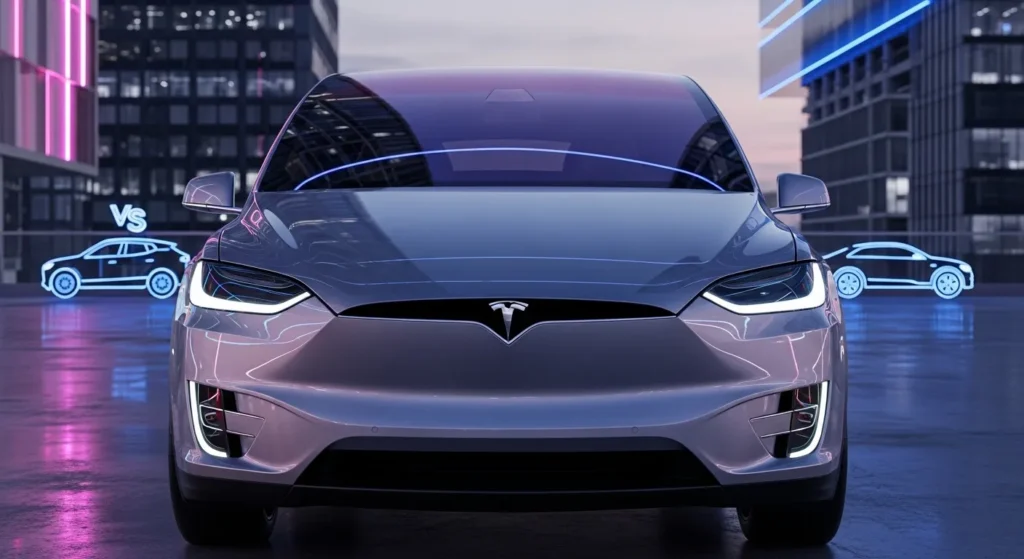
Is It Still Modern in 2026?
Reasons It Still Works
- EV design trends favor minimalism
- Grille-less styling remains futuristic
- Clean designs age gracefully
Limitations
- Rivals offer more aggressive styling
- Limited Visual evolution since 2021
Comparison with Competitors
BMW iX
- Bold, controversial grille
- Highly aggressive
More dramatic, less refined.
Audi Q8 e-tron
- Traditional SUV aesthetics
- Safe and premium
Less futuristic.
Mercedes-Benz EQS SUV
- Smooth, luxurious design
- Similar philosophy
Closest rival in approach.
Interior Continuity
- Clean dashboard layout
- Large central touchscreen
- Minimal physical controls
Performance Capabilities
- Dual or tri-motor systems
- Up to 1,020 hp (Plaid)
- 0–100 km/h ≈ 2.6 seconds
One of the fastest SUVs globally.
Efficiency & Range
- Range: ~560 km (WLTP)
- Fast charging support
- Optimized city efficiency
Safety & Technology
✔ Safety Systems:
- Automatic braking
- Lane assist
- Adaptive cruise
✔ Technology:
- 17-inch display
- Rear screen
- OTA updates
Pros & Cons
Pros
- Futuristic styling
- Strong aerodynamics
- Exceptional performance
- Spacious interior
- Advanced technology
Cons
- High cost
- Slight design Stagnation
- Less aggressive look
- Limited customization
- Regional service limitations
Who Should Consider It?
- Technology enthusiasts
- Luxury EV buyers
- Families needing space
- Performance seekers
FAQs
A: Because it removes the grille and focuses on aerodynamics instead of traditional design.
A: The 2021+ refresh is the most modern and refined.
A: Yes — smoother design improves efficiency and range.
A: It depends on personal taste, but most people find it futuristic and clean.
Final Verdict
Unusual shapes define how the Tesla Model X presents its face to the road. Its front end stands out, not by accident, but through deliberate choices in styling that few others copy. Recognition comes easily, since few cars look quite like it up front. Boldness here replaced Tradition, making a statement without needing loud details. What you see first is different – by intent – and stays memorable because of that difference.