Introduction:
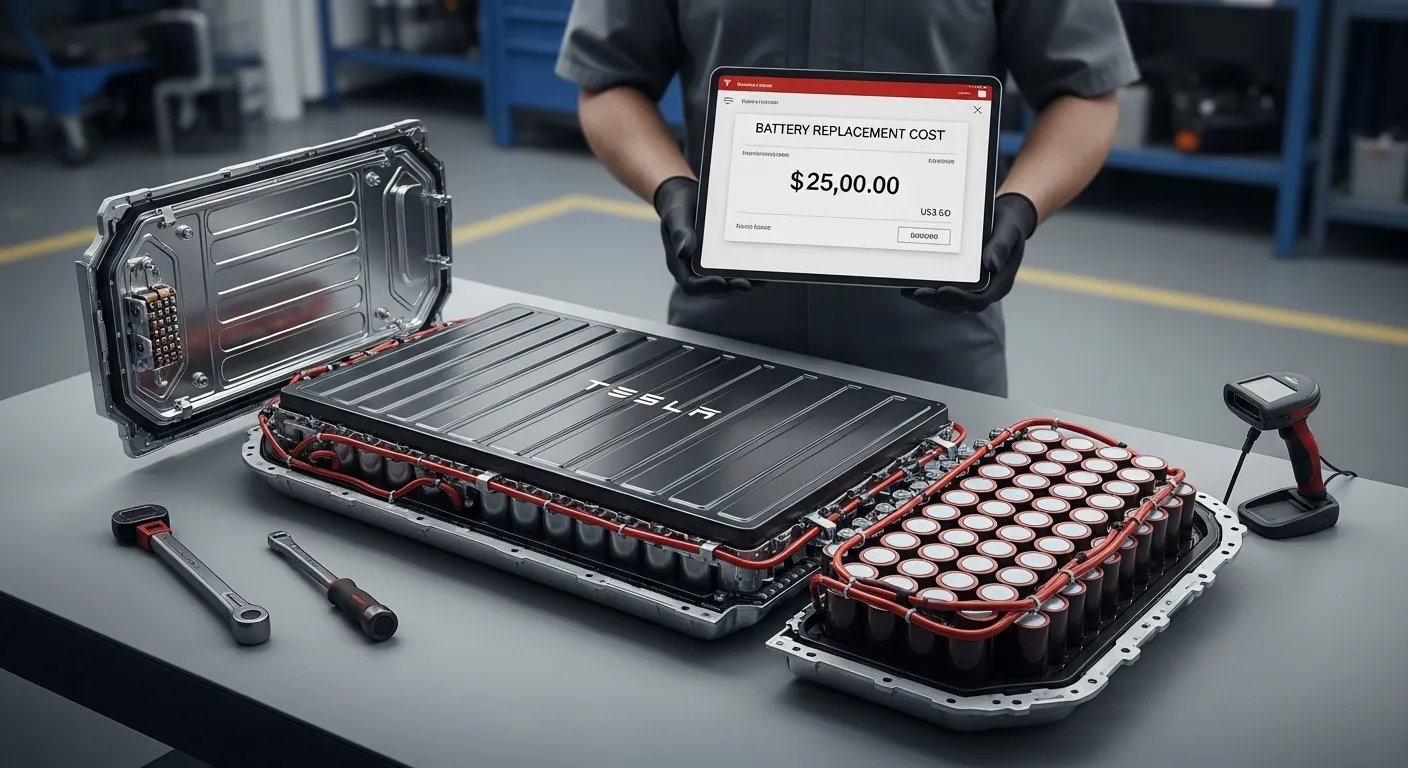
One thing people keep asking about? How much does it cost to swap out a Tesla Model Y battery replacement cost. This topic pops up again and again, often clouded by guesses and half-truths across electric vehicle circles.
Facing a big battery cost might seem crushing, especially if you’re checking out a new buy, thinking through years of use, or even behind the wheel right now.
- Truth is, things aren’t nearly as bad as they seem
- Battery issues happen very rarely
- Drivers usually avoid paying for new parts themselves
- Warranty protection covers major risks
From actual costs to clear numbers, here’s what owning one really involves. A look at prices people actually pay shapes the full picture. Real examples replace guesses throughout.
Quick Overview
| Specification | Details |
| Powertrain | Single / Dual Motor |
| Output | 295–450+ hp |
| Range | 400–530 km |
| Transmission | Single-speed |
| Body Type | Compact Electric SUV |
| Seating | 5–7 passengers |
Battery Replacement Cost Breakdown
Realistic Price Range
- $9,000 – $17,000 → Standard OEM battery
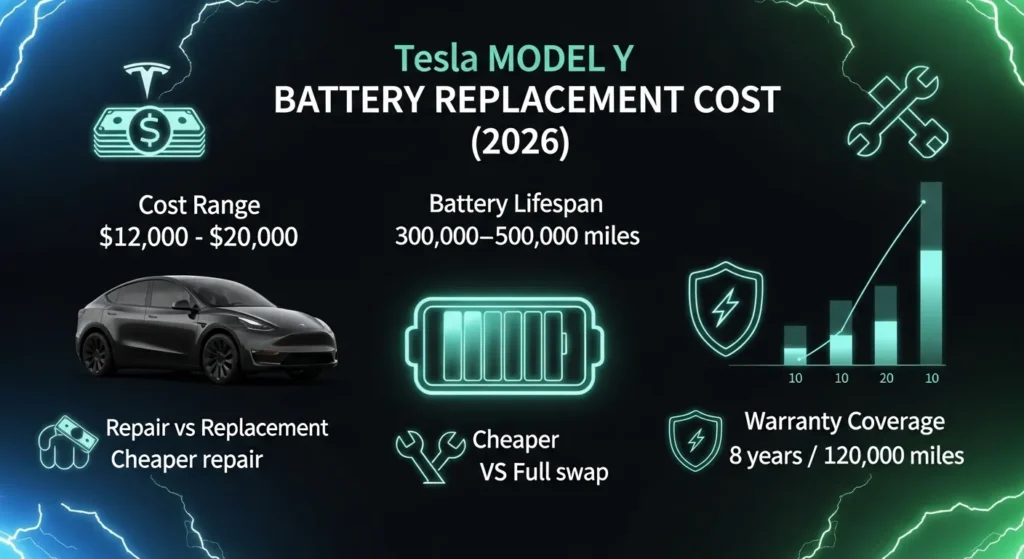
- $12,000 – $20,000+ → Full replacement with labor
- $7,000 – $12,000 → Refurbished pack
Labor alone: $1,000 – $2,500
Cost by Variant
| Model | Capacity | Estimated Cost |
| RWD (LFP) | 60–62 kWh | $9K – $15K |
| Long Range | 75–82 kWh | $13K – $18K |
| Performance | 75–82 kWh | $14K – $20K+ |
| OEM Pack | Full | $18K – $22K+ |
Real-World Scenario
A Long Range owner reported:
- Issue → Module malfunction
- Repair → $1,800
This highlights a key truth: full replacement is rarely required
Is Replacement Worth It?
Replace If
- Vehicle value exceeds Repair cost
- Car condition is excellent
- Failure is severe
Avoid If
- Cost ≈ resale value
- Vehicle heavily depreciated
Battery Health & Resale Value
Battery condition directly impacts market valuation.
Effects
- Healthy battery → premium pricing
- Degraded battery → reduced demand
Buyer Behavior
Modern buyers:
- Request diagnostics
- Analyze degradation metrics
This trend is accelerating globally.
Battery Lifespan
Average Life
300,000 – 500,000 km
Degradation Pattern
- Year 1–2 → minor decline
- Year 3–5 → stabilization
- Year 6+ → gradual Reduction
No sudden failure curve.
Performance & Efficiency
- 0–100 km/h: ~3.5 seconds
- Instant torque delivery
- Smooth acceleration
Range
| Variant | Range |
| RWD | ~400 km |
| Long Range | ~530 km |
| Performance | ~500 km |
Pros & Cons
Pros
Cons
- High replacement cost (rare)
- Limited service access
- Minimal physical Controls
Competitor Comparison
| Model | Range | Maintenance | Cost |
| Model Y | High | Low | Low |
| Ioniq 5 | Moderate | Low | Moderate |
| Mach-E | Moderate | Medium | Medium |
| ID.4 | Moderate | Low | Moderate |
Ownership Cost
- No oil changes
- Fewer moving components
- Reduced brake wear
Total cost remains lower than that of gasoline Vehicles.
FAQs
A: Between $9,000 and $20,000, depending on type and condition.
A: Around 300,000–500,000 km with gradual degradation.
A: Yes, under warranty if the capacity drops below 70%.
A: Yes, most issues are repairable and cost much less.
A: No, it is rare for most owners.
Conclusion
The Battery replacement expense of the Tesla Model Y appears intimidating—but the truth is far more reassuring.
- Replacement is uncommon
- Warranty covers major failures
- Lifespan is extensive
Even when issues arise, they are typically minor and repairable.