Introduction:
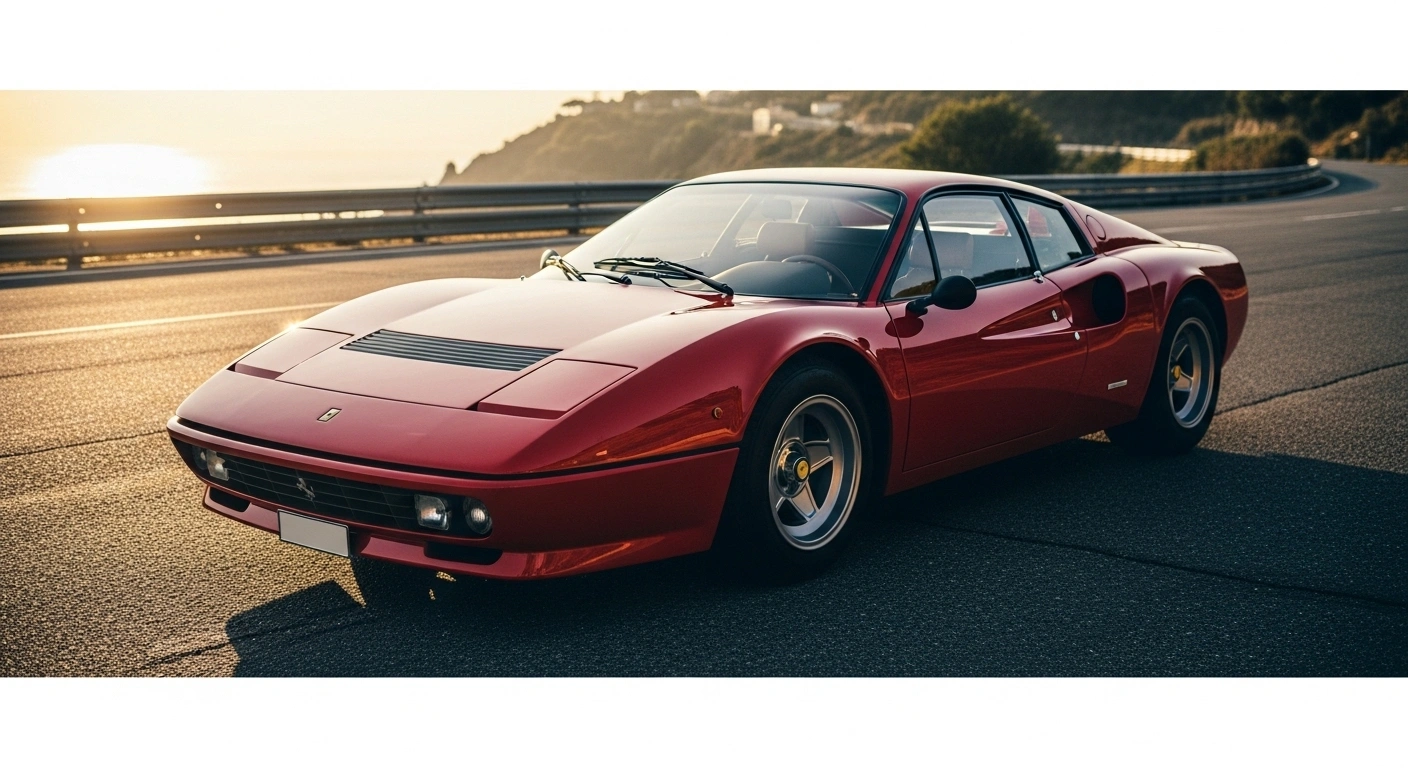
The Ferrari 512 is more than a classic supercar—it is one of the most emotionally engaging road-going Ferraris ever built. From the dramatic Berlinetta Boxer era to the sharper, more refined 512 TR and the ultra-desirable F512 M, the 512 nameplate captures Ferrari’s transition from raw analog performance to more usable high-speed grand touring. Even in 2026, the Ferrari 512 remains a standout among collectible Italian exotics because it combines timeless Pininfarina design, a naturally aspirated flat-12 soundtrack, and the kind of mechanical purity modern supercars simply can’t replicate.
Across versions such as the 512 BB, 512 BBi, 512 TR, and F512 M, Ferrari continuously improved power delivery, cooling, drivability, and road manners without losing the car’s unmistakable character. For collectors, enthusiasts, and first-time vintage Ferrari shoppers, the 512 offers something rare: true Ferrari heritage with genuine long-term desirability. If you want a classic Ferrari that still feels special every time the engine fires, the 512 deserves serious attention.
2026 Collector Market Trends for the Ferrari 512
The Ferrari 512 has benefited from a broader shift in the collector world: buyers are increasingly chasing analog Ferraris with gated manuals, naturally aspirated engines, and low production appeal. That trend strongly favors the 512 TR and especially the F512 M, which sits at the sweet spot between classic Ferrari drama and more usable road manners.
Quick Overview Table:
Exterior Design:
The Ferrari 512 is a car that people know well. It has a low body and cool curves that make it look like a racecar. All the different types of Ferrari 512 cars look similar because they were all designed with the same ideas in mind. The Ferrari 512 has lines, air moving around it in a way that helps it go faster, and it looks like it is ready to go really fast. The Ferrari 512 design is about being strong and powerful.
Body Style & Aerodynamics
The Ferrari 512 lineup has a look that is really nice, and it works well, too. The Ferrari 512 body was designed with the help of Pininfarina. It looks amazing. When you see a Ferrari 512 on the road or at a car show, people still.
Headlights & Front Fascia
The 512 models were quite different, depending on when they were produced. Some of the 512 models featured pop-up headlights, which were a characteristic of supercars in the 1970s. The 512 models featured fixed headlights. The designers of the 512 models did not
Seats & Materials
Leather‑wrapped sport seats provide a luxury feel while supporting the driver in high‑speed corners. These cars aren’t about rear‑seat comfort — they’re about putting you in the driver’s seat of a pure performance machine.
Space & Practicality
Being a mid‑engine supercar, cabin space is tight but focused. Long drives are possible, but the real joy comes from spirited runs on twisty roads.
What to Check Before Buying a Ferrari 512 in 2026
A Ferrari 512 can be a deeply rewarding ownership experience, but purchase discipline matters. Pre-purchase inspections from a classic Ferrari specialist are essential, especially because older exotic cars can hide expensive deferred maintenance. In the 2026 market, documented service history and originality matter almost as much as mileage.
Engine & Performance:
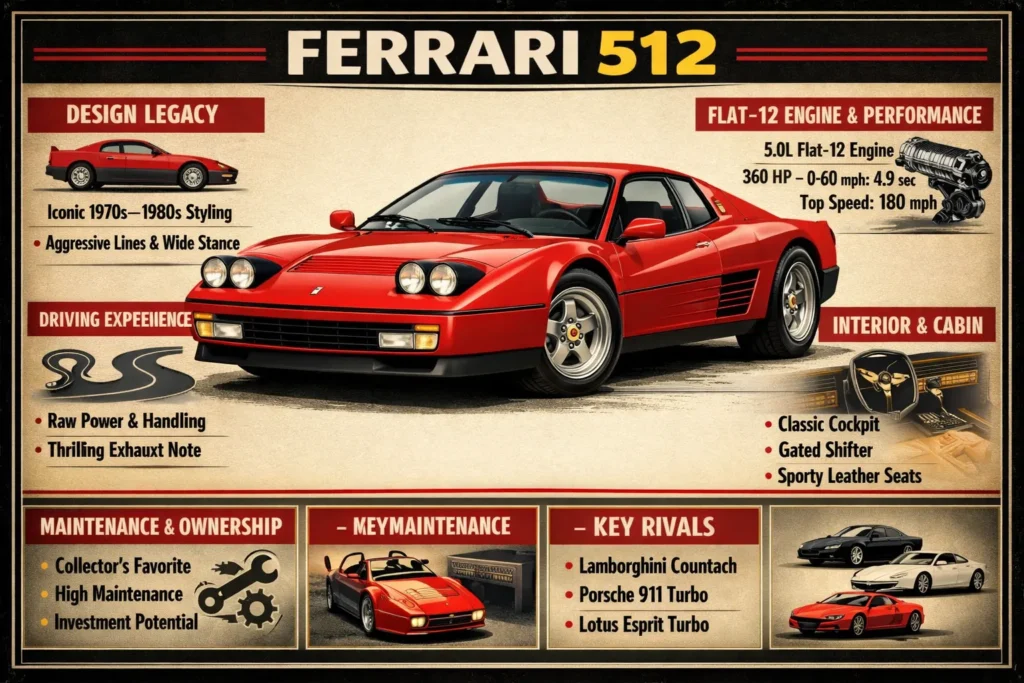
At the heart of every Ferrari 512 is a flat‑12 engine — a mechanical masterpiece that delivers thrilling power and sound.
Engine Layout & Specs
The Ferrari 512 engine is a 4.9L flat‑12 cylinder layout. It delivers a wide powerband, smooth high‑rpm response, and an unforgettable exhaust note.
Variants include:
- BB/BBi: 360–340+ hp (carburetted and fuel‑injected versions)
- 512 TR: ~428 hp with improved torque and acceleration,
- 512 M: ~440 hp, higher top Speed, and refined dynamics
Acceleration & Driving Feel
Modern electronics might beat these figures, but Ferrari 512’s numbers are still impressive: ~0–100 km/h in under 5 seconds and a top speed above 190 mph (315 km/h) — especially for its era.
Fuel Economy / Range:
Fuel economy isn’t a priority for the Ferrari 512, and that’s part of the charm. Combined figures vary by model and driving style:
| Variant | City / Highway (est.) |
| 512 BB | ~15–17 mpg combined |
| 512 TR | ~10–18 mpg combined |
| 512 M | ~10–15 mpg combined |
Safety Features:
While other modern cars boast lane assist, blind‑spot monitoring, and automatic brake emergency systems, the Ferrari 512 focuses on driving purity.
Standard Safety
- 3‑point seatbelts
- Disc brakes (with optional ABS on later models)
- Rigid chassis and balanced weight distribution
- Limited driver assists (given era)
Technology & Infotainment:
Tech in Ferrari 512 models is minimal — designed for the driver rather than screens.
Key Features
- Analog gauges
- Classic radio/audio (period‑correct)
- Manual climate control
Variants & Pricing
The Ferrari 512 family includes a few notable versions:
| Variant | Highlight |
| 512 BB | Classic Berlinetta Boxer — the original production hot rod. |
| 512 BBi | Fuel‑injected refinement and better driveability. |
| 512 TR | Enhanced power and handling. |
| 512 M | Most powerful and rare — modern handling upgrades. |
Pricing Range: Since these are collector cars, values vary widely. Factors include condition, mileage, history, and originality. Rare and well‑maintained examples can command high auction values.
Pros & Cons
Pros
Legendary flat‑12 engine with iconic Sound
Manual gearbox — driver‑focused fun
Timeless Italian design
Collectible and appreciating value
Strong enthusiast community
Cons
Fuel economy isn’t great
Minimal modern safety/tech
Limited practicality
Higher maintenance costs
Not an ideal daily driver
Best For
- Italian supercar collectors
- Vintage racing enthusiasts
- Ferrari fans seeking heritage
- Drivers craving mechanical engagement
Comparison Suggestions:
| Model | Why Compare |
| Lamborghini Countach | Iconic Italian 80s supercar rival |
| Porsche 911 Turbo (Classic) | Performance rival in a similar era |
| Ferrari F40 | Later mid‑engine Ferrari icon |
Maintenance & Ownership
Owning a Ferrari 512 is rewarding but requires care.
- Scheduled services every 5k‑7k miles
- Classic Ferrari specialist recommended
- Parts are available, but can be expensive
- Resale value is strong for original, unmodified cars
- Storage and climate control are important
FAQs
A: The Ferrari 512 is a true classic supercar, featuring a flat-12 engine, manual transmission, and an iconic design that enthusiasts love.
A: This car is not really for use. It is better for occasions like drives and car shows, and for people who are really into cars. The reason is that it uses a lot of fuel and does not have the comforts that most cars have.
A: With expert care and specialist maintenance, it performs reliably and continues to run at its best.
A: The 512
Conclusion:
The Ferrari 512 remains one of the most compelling analog Ferraris you can own in 2026. It blends timeless design, a glorious flat-12 engine, a gated manual gearbox, and genuine collector appeal in a way few classic Supercars can match. Whether you’re drawn to the raw charisma of the 512 BB, the smoother 512 BBi, the more complete 512 TR, or the highly sought-after F512 M, each version offers a distinctly emotional ownership experience.
For enthusiasts, the Ferrari 512 is not just about horsepower or top speed—it is about feel, sound, heritage, and the satisfaction of driving something truly special. If you’re shopping for one, focus on condition, originality, and documented specialist maintenance. Buy carefully, buy the best example you can afford, and you’ll own more than a classic Ferrari—you’ll own one of the most memorable V12-era icons Maranello ever built.