Introduction:
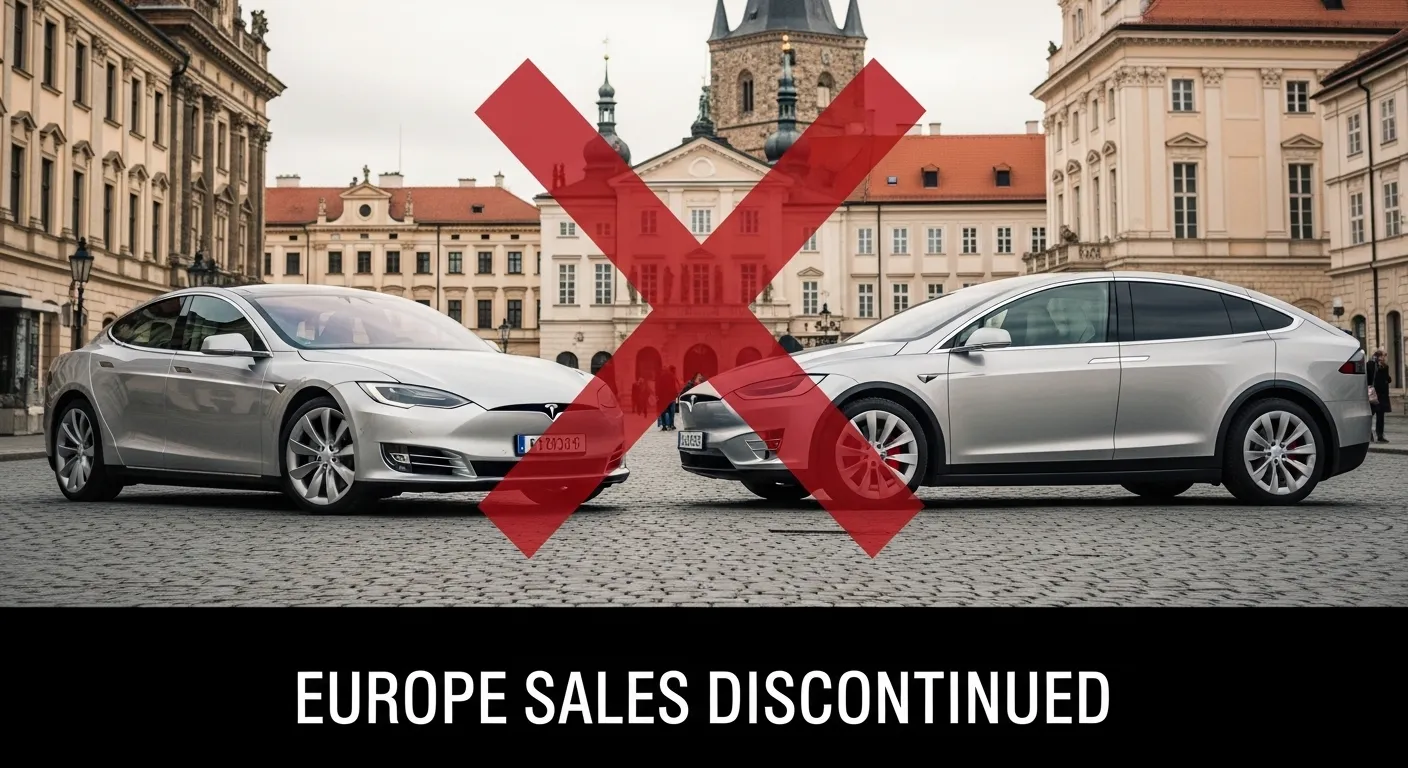
The Tesla Model S X Europe sales discontinuation has stunned the EV market—and not without reason.
For more than a decade, Tesla, Inc. has built its global identity around two flagship vehicles:
- Tesla Model S — a revolutionary luxury EV sedan
- Tesla Model X — a bold SUV with Falcon Wing doors
These were not merely automobiles—they symbolized innovation, prestige, and technological leadership.
But then something unexpected unfolded…
Tesla discreetly removed Model S & X from Europe first—without a formal announcement.
This silent withdrawal sparked confusion:
- Why did Europe get dropped first?
- Was demand truly declining?
- Are these vehicles permanently gone?
In this complete pillar guide, you’ll uncover:
- The overlooked reasons competitors ignore
- A precise timeline (2025–2026)
- Hidden sales and demand insights
- Whether they still make sense in 2026
Quick Overview:
Both vehicles still appear strong on specifications:
- Dual / Tri Motor configurations
- Up to 1,020 hp (Plaid variants)
- ~600 km range (Model S), ~550 km (Model X)
On paper, they remain competitive—but real-world demand tells a different story.
Timeline:
Early 2025: Demand Weakens
Interest in high-cost EVs begins declining across Europe. Buyers shift toward affordable alternatives, and the premium EV segment slows.
Mid 2025: Silent Removal
Tesla quietly removes Model S & X from its European configurator—without press coverage.
This “silent phase-out” triggered speculation and uncertainty.
Late 2025: Inventory Phase
Only the remaining stock is available. No new production allocations are sent to Europe.
2026: Global Wind-Down
Production gradually declines as Tesla reallocates resources.
Europe wasn’t the end—it was the early signal.
Why Tesla Stopped Selling Model S & X
1. Demand Collapse (Core Factor)
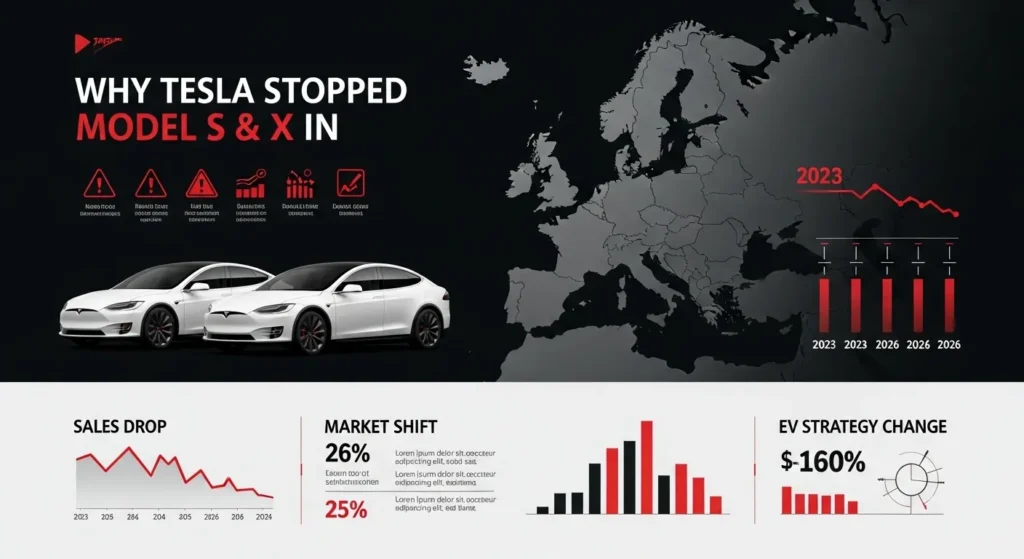
Estimated demand hovered around ~30,000 Units annually vs ~100,000 capacity.
A major imbalance between supply and demand.
Tesla also stopped reporting these models separately, grouping them under “Other Models.”
Translation: They lost strategic importance.
2. Rise of Model 3 & Model Y
The dominance of:
- Tesla Model 3
- Tesla Model Y
…completely transformed Tesla’s strategy.
Reasons for dominance:
- Lower pricing
- Higher practicality
- Mass-market appeal
These models vastly outsold S & X globally.
3. Intense European Competition
Europe’s premium EV segment became highly competitive:
- Porsche Taycan
- BMW i7
- Mercedes-Benz EQS
- Lucid Air
These rivals offered:
- More refined interiors
- Advanced platforms
- Faster innovation cycles
Tesla’s aging flagships struggled to remain dominant.
4. Aging Architecture
- Model S launched in 2012
- Model X launched in 2015
Despite updates:
- Core structure remained dated
- Interior lagged behind competitors
- Incremental refreshes were insufficient
Buyers migrated toward newer-generation EVs.
Why Europe First?
Europe was not randomly chosen—it was strategic:
- Strong legacy luxury brands
- Price-sensitive EV adoption
- Rapid shift toward efficiency
Europe acted as a testing ground for product viability.
Availability in 2026
Short answer: No (new Orders unavailable)
Current status:
- Configurator removed
- Limited remaining stock
- Import-only access
Effectively, Tesla exited the European flagship segment.
Global Discontinuation:
By 2026:
- Production is largely phased down
- Resources redirected
- Rumors of final editions surfaced
This marks a structural shift in Tesla’s identity.
2026 Reality Check
Design
Still sleek and futuristic—but no longer segment-leading.
Interior
Minimalist design with large displays—but less premium than Mercedes-Benz EQS
Performance
Still elite:
- 0–100 km/h under 2.5 sec
👉 Among the fastest EVs ever built
Range
Competitive—but no longer dominant
Technology
Tesla continues to lead in:
- Software Integration
- OTA updates
- Autopilot ecosystem
Pros & Cons
Advantages
- Exceptional acceleration
- Strong driving range
- Advanced software ecosystem
- Iconic brand identity
Disadvantages
- Discontinued status
- Aging platform
- Declining resale value
- Inferior luxury vs rivals
Should You Buy in 2026?
Best For
- Tesla enthusiasts
- Performance-focused drivers
- Collectors
Avoid If
- You want long-term reliability certainty
- Luxury refinement is a priority
- Resale value matters
It’s now a niche purchase—not mainstream.
Tesla vs Rivals
Tesla dominates in performance—but loses in luxury refinement and perceived quality.
Ownership Reality
- Lower maintenance vs ICE vehicles
- Software support continues
- Parts availability may decline over time
Biggest concern: long-term Support uncertainty
Future of Tesla in Europe
Tesla, Inc. is now focused on:
- Affordable next-gen platforms
- AI & autonomous driving
Luxury flagships are no longer central.
FAQs
A: Low demand, strong competition, and internal product overlap.
A: Production has largely been phased out by 2026.
A: Only through leftover stock or imports.
A: Only for performance or collector value.
A: Focus shifted to Model 3, Model Y, and future Tesla innovations.
Conclusion
The Tesla Model S X Europe sales discontinuation is not just about two vehicles disappearing.
It reflects a deeper transformation:
- From luxury → scalability
- From exclusivity → mass adoption
- From flagship dominance → global Expansion