Introduction
The electric vehicle ecosystem in 2026 is experiencing an unparalleled acceleration, redefining transportation, mobility, and global automotive strategies. Electric vehicles (EVs), once niche and experimental, are now mainstream, catalyzing a paradigm shift in urban mobility, consumer preferences, and industrial priorities. From affordability to autonomous operations, the EV sphere is expanding on multiple fronts, merging cutting-edge software, AI intelligence, and sustainable energy solutions into a cohesive transportation revolution.
This comprehensive guide delves into the core pillars of the 2026 EV transformation, examining Tesla’s strategic realignment, the emergence of cost-effective EV options, rising global competition, and macro-level trends that influence worldwide adoption. By synthesizing industry data, expert analysis, and high-authority references, this article aims to provide a nuanced understanding of the present and near-future electric mobility landscape.
Tesla:
In 2026, Tesla is still the name when it comes to electric cars. The company is changing what it focuses on. There is a lot of competition. The market is getting older, so Tesla is looking to do more than just make cars.
Autonomy & Robotaxis
One of the things Tesla is working on is cars that can drive themselves. These are called robotaxis. Tesla has a car called the Cybercab that does not have a steering wheel or pedals. The company is making these cars now. Plans to have them on the road in many cities by the end of 2026. The goal is to have a lot of these cars on the road with no drivers.
Why Robotaxis Matter:
They can change the way we get around cities.
make public transportation better.
They can make money for the company all the time, not just when someone buys a car.
money than just selling cars.
Big companies like Uber are investing in ways to charge these cars so they can be used in the future. This shows that companies are moving away from making money from cars and towards making money from transportation systems that use artificial intelligence and real-time data.
Optimus Robots and AI Expansion
Tesla is also working on robots that can do things like humans. These robots are called Optimus. They show that Tesla wants to do more than just make cars. The company wants to use intelligence to make robots that can help people.
* These robots can be used in factories and warehouses.
* They can help Tesla do more than just make cars.
Stock & Strategic Narrative
People who invest in Tesla are more interested in what the company’s doing with autonomy and artificial intelligence than in how many cars it sells.
The value of Tesla’s stock goes up when the company makes progress in autonomy and AI.
People are starting to see Tesla as a technology company, not a car company.
Even if Tesla is late delivering cars, it is still a leader in cars.
This means that Tesla is in a position. It is a company that is working on transportation, software, and artificial intelligence all at the same time.
Evs: Why It Matters
For electric cars to become popular, they need to be affordable. Tesla needs to make cars that people can buy even if they do not have a lot of money.
Tesla’s Lower-Cost Models
Tesla is making cheaper cars:
* The Model 3 Standard is a version of the Model 3.
* The Model Y Standard is a version of the Model Y.
These cars are cheaper, but some people think that the cost of software and digital services might make them not as cheap as they seem. So Tesla is trying to make its cars more affordable for more people.
Other Affordable EVs on the Market
Tesla faces growing competition from both established automakers and emerging EV brands producing cost-effective alternatives:
| Brand | Model | Price Range | Notes |
| BYD | Song Plus / Dolphin Plus | Under $25,000 | Strong value proposition, solid range |
| Kia | EV4 | $49,990+ | Competes with Tesla Model 3 pricing |
| Citroën | e-C3 Urban | Under £18,500 | Supported by UK EV grants |
| Suzuki | e-VITARA (India) | ~₹1.1M (~$12,000) | Battery rental models reduce entry cost |
Affordable EVs are instrumental in expanding access to sustainable mobility, particularly in emerging economies where price sensitivity is a primary barrier to adoption.
Intensifying EV Competition
The electric vehicle market is getting tougher by the day. In 2026, the electric vehicle sector is more competitive than it has ever been. There are a lot of companies, new that are trying to get a bigger share of the market. They want to be the best in terms of technology. They want people to trust them.
Old Car Companies Are Joining In
The big car companies that have been around for a while are starting to make electric vehicles, too. They are making vehicles at different price points and using new manufacturing techniques Tesla developed. For example:
Ford: They are making a truck that will cost $30,000, and it will be made in a special way that makes it easier to produce.
Toyota: They are making hybrid and electric vehicles.
Chevrolet, Nissan, Hyundai, Kia: They are all making vehicles, and they are pricing them so that people can afford them.
These old car companies are getting better at making vehicles, and they are making them cheaper and more stylish. This means that people have a lot of choices when it comes to buying an electric vehicle.
New Electric Vehicle Companies Are Growing Fast
There are some companies, especially from China, that are changing the way the electric vehicle market works.
* BYD: They sold more electric vehicles than Tesla in 2025. They make vehicles like the Sealion and Atto series that are affordable and have a long range.
* Nio, Xpeng, Li Auto: They are selling their vehicles in countries, and they are making premium and mid-tier electric vehicles with good software and battery features.
In some places, like Australia and Southeast Asia, the Chinese electric vehicles are Selling better than Tesla. This shows that there is a lot of competition in the electric vehicle market and that the new companies are making vehicles.
There Are Electric Vehicle Options Now
In 20,26 people have a lot more choices when it comes to electric vehicles.
There are affordable electric vehicles that are good for people who do not want to spend a lot of money.
electric vehicles that are good for families and for people who like to travel.
Some vehicles aremade just for certain parts of the world,rld like Europe, Asia, and America.
This means that people can choose the vehicle that is right for them based on what they need and what they can afford. It also means that more people will be able to buy vehicles, which is good for the environment. electric vehicle market is getting better and better. The electric vehicle options are getting more diverse. The electric vehicle sector is really. Changing and electric vehicles are becoming more popular.
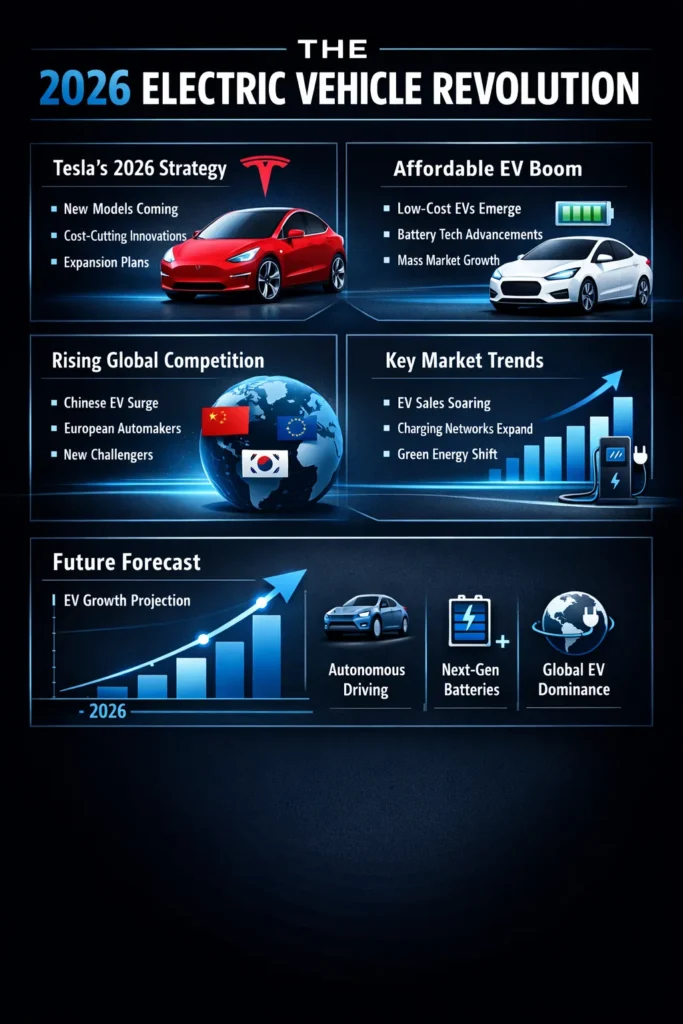
EV Market Data & Trends
Data-driven insights highlight the trajectory of EV adoption:
6.1 EV Sales Leaders in 2026
| Rank | EV Model | Sales | Notes |
| 1 | BYD Dolphin Plus | 536,700 units | Value-oriented with strong range |
| 2 | Tesla Model 3 (Highland) | 489,300 units | Major global seller |
| 3+ | Various | Growing | Includes Kia, Hyundai, VW, etc. |
Global EV Production & Growth
China keeps leading in electric vehicle manufacturing.
Out in the world, electric vehicle numbers are rising fast from one year to the next.
More people adopt – especially across Europe, India, parts of Southeast Asia, and certain regions in North America.
These signs show how fast electric transport systems are growing, people are accepting them, plus factories can now prepare for large numbers of vehicles on the road.
Challenges and Opportunities Ahead
Even with fast expansion, some obstacles still stand:
Challenges
Batteries face tight supplies as metal prices stay high and expenses keep shifting.
Charging spots need to grow fast because more people want access every day.
One thing about self-driving cars – rules covering them differ widely depending on where you look.
Market shifts create uneven adoption – some areas lag due to limited policy backing.
Opportunities
Fresh moves in batteries – solid-state tech and new chemicals could make things cheaper.
Software & AI integration: Enhances autonomous capabilities and vehicle intelligence.
Cheaper EV options make the segment more accessible to wider audiences.
India leads the way in Southeast Asia and Africa, where untapped demand keeps growing quietly.
What stands out is how tough it gets for Car companies when old rules clash with new ones. Still, that mix also opens doors that few expected.
FAQs
A: A robotaxi is a driverless electric vehicle designed for ride-hailing services without human control, leveraging autonomous navigation and AI-powered decision-making.
A: Tesla and competitors have announced lower-cost models, and vehicles like the Cybercab aim to be accessible around this price threshold.
A: Competitors provide more affordable EVs with faster rollout strategies, particularly in high-demand markets such as China and Australia.
A: Yes. Self-driving platforms and mobility services represent the next evolution of the EV ecosystem beyond traditional sales.
Conclusion
The electric vehicle revolution that is happening in 2026 is a deal. It is not about new technology; it is about changing the way people move around the world. Tesla is working on making cars that can drive themselves and on using intelligence to make new things. At the same time, electric vehicles are getting cheaper, so more people can buy them.
Old car companies and new ones are trying to sell people vehicles, so people have a lot of choices now. They can pick the car they like best.
The future of vehicles depends on a few things. They need to be cheap, have batteries be able to drive themselves, and be sold in many places. There are still some problems to solve, like making sure there are places to charge the cars, getting enough batteries, and figuring out the Rules.