Introduction
A sensational video has been circulating online claiming that Tesla remotely deactivated a Cybertruck, leaving the owner unable to use the vehicle and showing the ominous message:
“Vehicle Deactivated. Return to Dealer.”
This alarming clip generated widespread fear, confusion, and outrage across social media platforms, causing many people to seriously question:
Can Tesla truly disable your car remotely?
Does Tesla maintain control of your vehicle even after purchase?
Could your Cybertruck stop functioning without warning?
Is owning a Tesla risky or unsafe?
These are not trivial concerns. Purchasing an automobile — especially an electric vehicle (EV) that relies intensely on software and connectivity — involves considerable cost and trust. No customer wants to feel like they don’t own what they paid for.
To address these widespread worries, this article offers a comprehensive explanation of:
What the supposed Tesla Cybertruck “deactivated” warning really means
Why the viral video is completely fake
The techniques experts used to uncover the hoax
Tesla’s formal response to the incident
What Tesla can and cannot do remotely
What genuine risks EV owners should be aware of
How to avoid being misled by future misinformation
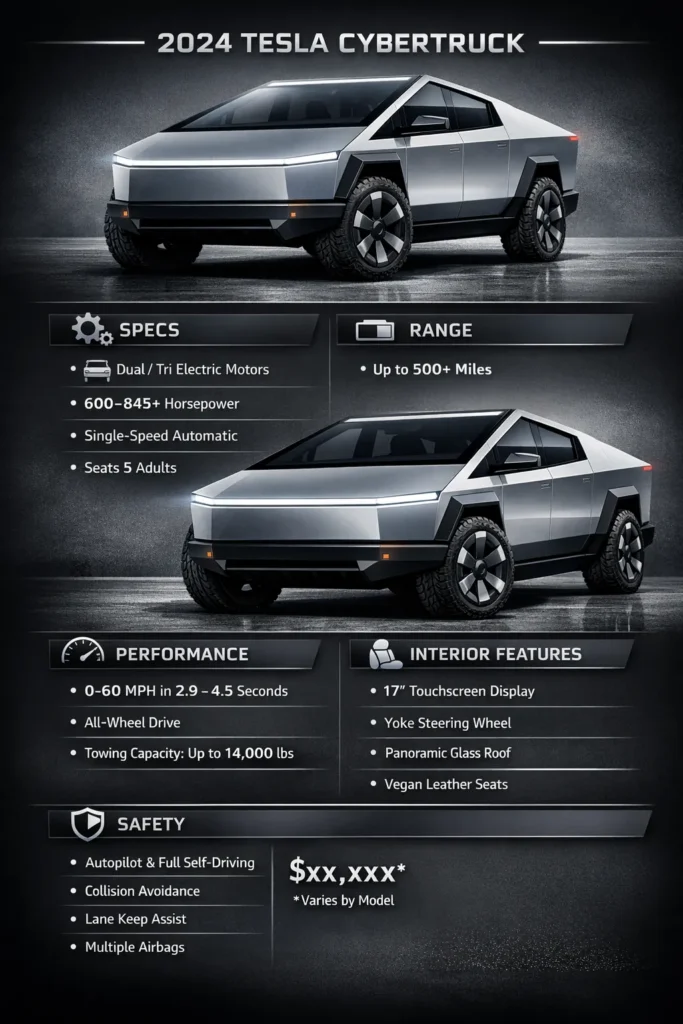
Quick Overview Table
| Feature | Details |
| Engine | Dual or Tri Electric Motors (varies by model) |
| Power | Approx. 600–845+ horsepower |
| Range | Up to 500+ miles per charge (claimed) |
| Transmission | Single-speed automatic |
| Fuel | Electric |
| Body | Pickup truck |
| Seating | Up to 5 adults |
What Is the “Tesla Cybertruck Deactivated” Message?
The spectacle began when a video surfaced on multiple platforms showing a Cybertruck’s display screen with a stark warning:
“Vehicle Deactivated. Return to Dealer.”
The person who posted the video alleged that Tesla had:
Disabled the vehicle without consent
Locked the owner out of using the truck
Punished the owner due to some unverified “policy violation.”
The implication was disturbing: Tesla still retained control over vehicles after they had been bought, and could arbitrarily take away access.
At first glance, this ignited shock and distrust.
However, automotive experts, engineers, and Tesla enthusiasts rapidly identified multiple inconsistencies that made the video suspicious — and ultimately fraudulent.
What Made the Message Look Fake?
Experienced Tesla owners and industry professionals found several indicators that the screen shown in the video was not genuine:
User Interface Didn’t Match Tesla’s Established Design
Tesla maintains a consistent and highly recognizable UI (user interface) across all of its vehicles. The viral clip showed a screen that:
Looked unlike real Tesla menus
Contained odd spacing and elements
Appeared to be a full-screen video rather than a system alert
Had no navigation or functional buttons
This was one of the first red flags — it simply didn’t look like Tesla software.
Incorrect Typeface and Style
Fonts and typography are part of Tesla’s distinct branding, and engineers noted that the characters in the video did not align with those used by Tesla in real alerts.
Typography in software isn’t accidental — it’s deliberate. When it doesn’t match, it’s often fake.
“Return to Dealer” Phrase Doesn’t Make Sense
Tesla sells vehicles directly to customers and does not work through traditional dealership networks. Therefore, the phrase “Return to Dealer” is fundamentally out of place in Tesla’s system — a glaring inconsistency.
This one detail alone was enough for many experts to call the video into question.
The Viral Video That Ignited the Rumor
The claim exploded when a social media personality — described as an influencer and musician — shared a dramatic video claiming:
Tesla “punished” him
The vehicle was disabled
Official documents proved Tesla’s wrongdoing
Along with the video, he posted:
A purported legal letter
Static screenshots
Emotional captions designed to provoke outrage
The result?
Millions of impressions and shares across the internet.
Platforms Where It Spread
The video and its narrative proliferated rapidly on:
- Instagram
- X (formerly Twitter)
- BlueSky
- Facebook Groups
- TikTok
Why Did It Spread So Fast?
Several psychological and social factors Helped the hoax go viral:
Pre‑existing Fear of Big Tech
Many people already feel uneasy about large technology companies having access to our data, devices, and daily routines. The idea that a company could control your car reinforced those anxieties.
General Lack of Technical Understanding
Most individuals are unfamiliar with how modern car software operates. Without a technical background, it’s easy for misinformation to feel real.
Emotional Storytelling
The creator’s narrative was crafted to provoke anger, concern, and shock — emotions that accelerate sharing.
Psychologists have shown that emotionally charged content spreads faster than neutral content.
Misleading Headlines
Blogs and fringe websites amplified the issue with sensational titles like:
“Tesla Can Kill Your Car!”
“Cybertruck Disabled by Tesla!”
“You Don’t Own Your Tesla!”
Tesla’s Official Response
Once the video gained attention, Tesla itself addressed the rumors directly.
The company publicly stated:
“This is fake.”
“That screen is not from any Tesla software.”
“Tesla does not remotely deactivate vehicles.”
Tesla clarified:
✔ The interface shown was fabricated
✔ The accompanying legal letter was not authentic
✔ No Cybertruck was ever disabled
Tesla Engineers and insiders further confirmed that the footage was edited and not representative of the vehicle’s real functionality.
How Experts Identified the Hoax
After the initial surge of views, software engineers and automotive analysts dissected the video more thoroughly. Their findings were revealing.
Fake Legal Letter
The letter shared as “evidence” had:
Outdated or mismatched job titles
Poor formatting, inconsistent with Tesla’s standards
No official logos or branding
Incorrect contact information
Grammatical mistakes
Official communication from any auto manufacturer — especially Tesla — adheres to tight formatting and professional layout standards.
This document didn’t even resemble a real corporate letter.
Fake User Interface
Experts observed that the screen:
Didn’t respond to touch
Had no animations
No system menus were accessible
No notification banners
Appeared paused in video editing software
Real Tesla touchscreens are interactive at all times — and alerts don’t behave like static images.
Strange Terminology
As previously mentioned, the term “dealer” is not something Tesla uses. The company’s direct‑sales model means there are no independent third‑party dealers.
That error was enough to convince many skeptics that the entire thing was staged.
Technical Impossibility
Tesla vehicles are built on a layered cybersecurity architecture. They do not allow arbitrary shutdowns via a single command without multi‑factor authentication and legal oversight.
This makes the scenario shown in the video highly unlikely from a systems engineering perspective.
Could Tesla Technically Deactivate a Vehicle Remotely?
This is the core of the controversy — and the most important section for owners and potential buyers.
Let’s separate fact from fiction.
What Tesla Can Do Remotely
Technically and legally, Tesla retains certain remote capabilities, including:
✔ Lock or unlock vehicle doors
✔ Track the vehicle if reported stolen
✔ Limit or suspend Supercharging access in select cases
✔ Diagnose system problems remotely
✔ Receive and install software updates over the air (OTA)
✔ Monitor battery health and onboard diagnostics
What Tesla Cannot Do
Contrary to the viral claim, Tesla cannot:
Force your vehicle to stop while driving
Disable the vehicle randomly or without cause
Remove your ability to drive without a legal process
Punish drivers arbitrarily
Access or control your vehicle without consent
Legal & Technical Limits
Remotely disabling a customer’s vehicle without their permission would violate:
Consumer protection laws
Property rights
Data privacy and digital rights regulations
International automotive safety and liability standards
Common Tesla Cybertruck Alert Screens
Here are legitimate Tesla alert examples — compared to the fake message:
| Alert Type | Example (Real Tesla Message) |
| Battery | “Low Battery – Charge Soon” |
| Safety | “Autopilot Limited” |
| Software | “Update Available” |
| Maintenance | “Service Required” |
Fake vs Real Comparison
| Feature | Fake Message | Real Tesla Alert |
| Font | Incorrect | Tesla Standard |
| Interaction | None | Interactive |
| Menu Access | Blocked | Accessible |
| Branding | Missing | Present |
| Animations | None | Present |
Why This Hoax Matters
Misinformation fuels misunderstanding. The viral Cybertruck rumor damaged both consumer confidence and industry reputation.
Effects on Consumers
Increased fear of EV technology
Loss of trust in Tesla
Delayed purchasing decisions
Confusion about ownership rights
Anxiety about connected systems
Effects on the Broader Industry
Reputation harm
Regulatory scrutiny
Media narratives about vulnerability
Public skepticism of connected vehicles
Exterior Design
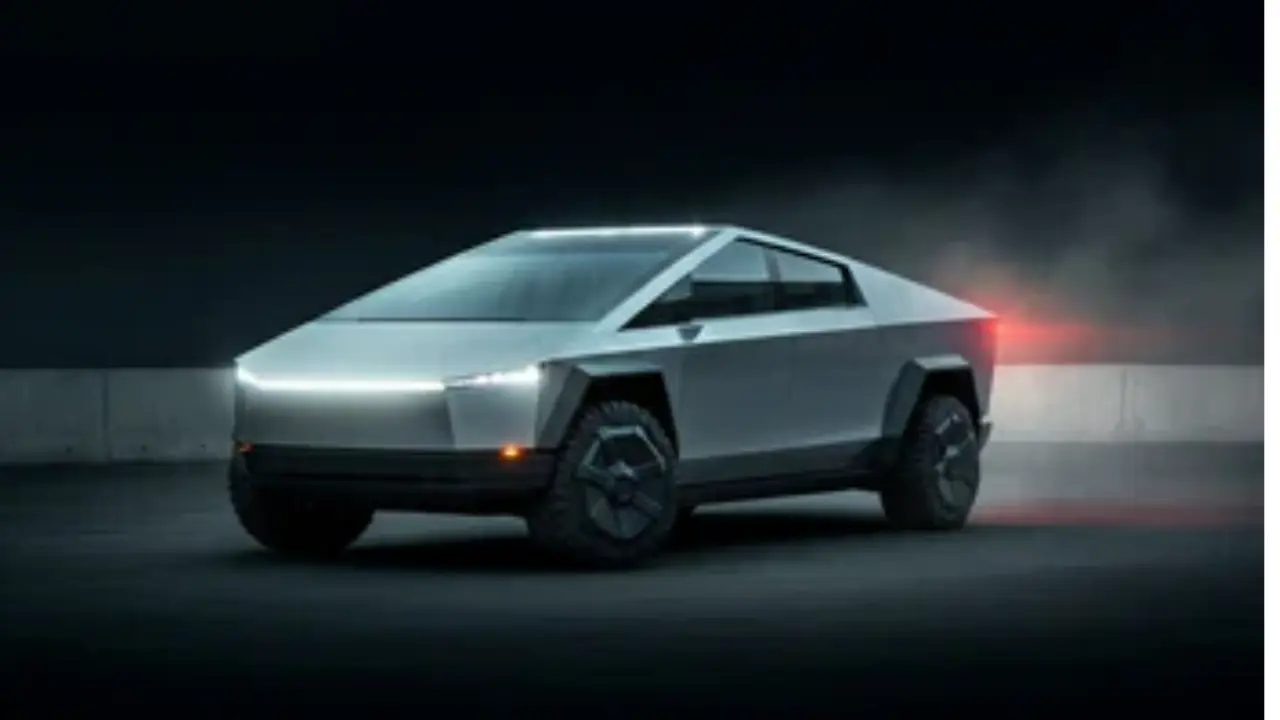
The Cybertruck’s exterior is polarizing and futuristic:
Stainless‑steel exoskeleton
Angular, unconventional shape
Full‑width LED light bar
Armored glass panels
Large 20‑inch wheels
Adaptive air suspension
Interior & Comfort
Inside, the Cybertruck emphasizes simplicity and spaciousness:
17‑inch central touchscreen
Yoke‑style steering wheel
Vegan leather seats
Panoramic glass roof
Flat, minimalist dashboard
Ample rear passenger space
Engine & Performance
The Cybertruck is engineered to be high‑performance:
| Variant | Motors | 0–60 mph | Drive |
| Dual Motor | 2 | ~4.5 sec | AWD |
| Tri Motor | 3 | ~2.9 sec | AWD |
Drivers report:
Instant torque
Smooth acceleration
Excellent towing capability
Quiet operation
Fuel Economy / Range
Electric range is a crucial consideration for any EV.
| Variant | Estimated Range |
| Standard | ~400 miles |
| Extended | ~500+ miles |
What Affects Range?
Driving speed
Weather conditions
Vehicle load
Terrain
Cold temperatures and heavy towing reduce actual range.
Safety Features
Tesla incorporates advanced safety systems, including:
✔ Multiple airbags
✔ ABS & ESC
✔ Forward collision warning
✔ Automatic emergency braking
✔ Blind‑spot monitoring
✔ Lane‑keep assist
✔ Driver attention monitoring
Technology & Infotainment
Tesla’s tech ecosystem is a major selling point:
17‑inch touchscreen
Over‑the‑air software updates
Navigation with live traffic
Streaming apps (Netflix, Spotify)
Bluetooth and voice control
Tesla mobile app integration
Variants & Pricing
Tesla offers multiple trim options, including:
✔ Rear‑Wheel Drive
✔ Dual Motor AWD
✔ Tri‑Motor AWD
Pros & Cons
Pros
✔ Futuristic, bold design
✔ Impressive performance
✔ Long electric range
✔ Advanced technology features
✔ Safety‑focused systems
✔ Low mechanical maintenance
✔ OTA software updates
Cons
Polarizing aesthetic
Limited service center availability in some regions
Potential wait times for delivery
Premium pricing
Learning curve for new EV users
Best For
The Cybertruck is ideal for:
Tech‑savvy drivers
EV adopters
Adventure seekers
Pickup owners want innovation
Environmentally conscious buyers
Business owners need utility and performance
Comparison Suggestions
| Model | Type | Strength |
| Ford F‑150 Lightning | Electric Pickup | Familiar truck design |
| Rivian R1T | Electric Pickup | Off‑road focused |
| GMC Hummer EV | Electric Truck | Extreme power & performance |
Maintenance & Ownership
Servicing
✔ No oil changes
✔ Fewer moving parts
✔ Remote diagnostics
✔ OTA updates
✔ Mobile service capabilities
Parts Availability
Tesla continues expanding its infrastructure, but some regions still experience parts delays.
Resale Value
Tesla vehicles tend to hold strong resale value due to demand and software longevity.
FAQs
A: No — Tesla confirmed the viral claim was fabricated.
A: Tesla can limit certain features in specific cases (like stolen vehicles), but cannot randomly disable vehicles.
A: Technical analysis suggests video overlays and editing.
A: No — Tesla’s systems are encrypted and legally restricted.
A: Check official sources like Tesla’s website, trusted auto media, and verified social accounts.
Conclusion
The Tesla Cybertruck “Vehicle Deactivated” scare is a perfect example of how fast misinformation spreads in the digital age.
Despite its emotional impact and viral reach:
✔ The screen was fake
✔ The legal letter was counterfeit
✔ Tesla did not disable any vehicle
✔ The entire story was fabricated
Tesla’s connected systems are designed for safety, usability, and convenience—not for clandestine control of owners.