Introduction:
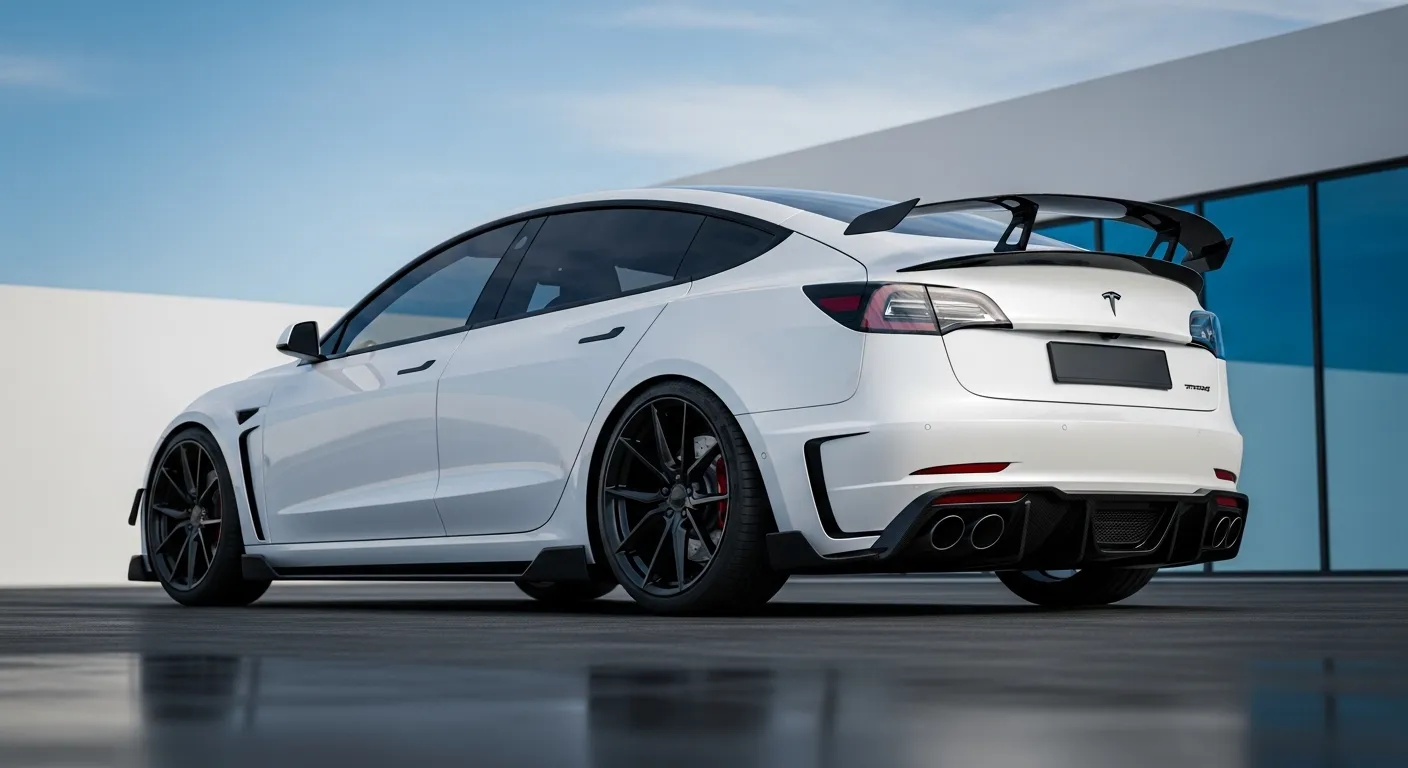
The Tesla Model 3 body kit has already secured its place as one of the most iconic electric-vehicle body kits globally. Its clean silhouette, minimalist design language, and futuristic appeal attract millions of drivers.
However, despite its sleek factory styling, many owners feel the stock appearance is somewhat plain, understated, and lacking personality.
That’s exactly where a Tesla Model 3 body kit becomes relevant.
In 2026, vehicle personalization is no longer optional—it’s a lifestyle. Owners increasingly want their cars to reflect individuality, boldness, and exclusivity. A body kit enables you to transform, refine, and elevate your car’s appearance without altering its core engineering.
But here’s the reality most buyers face:
- Poorly designed kits often lead to misalignment and installation issues
- Inferior materials can crack, warp, or degrade quickly
- Wrong purchases can result in wasted money and disappointing results
This in-depth guide helps you avoid costly mistakes and build a visually stunning, performance-inspired, and well-balanced setup.
Quick Overview Table:
| Specification | Details |
| Motor Type | Dual Electric Motor |
| Power Output | 283–450+ hp |
| Transmission | Single-speed automatic |
| Fuel Type | Electric |
| Range | 400–550 km |
| Body Type | Sedan |
| Seating Capacity | 5 |
What Is a Tesla Model 3 Body Kit?
A Tesla Model 3 body kit is a collection of exterior components designed to enhance your vehicle’s:
- Visual aesthetics
- Aerodynamic efficiency
- Road presence and stance
Instead of altering mechanical systems, body kits focus on cosmetic enhancement with functional benefits.
Common Components
- Front lip/splitter
- Side skirts
- Rear diffuser
- Spoiler
- Fender flares (widebody kits)
When combined correctly, these parts create a cohesive, aggressive, and premium appearance.
Highland vs Legacy Fitment
Two Generations
- Legacy: 2017–2023
- Highland: 2024–2026
These versions have different dimensions, panels, and mounting points.
Why This Matters
- Poor alignment ruins visual harmony
- Installation becomes complicated
- Money and effort get wasted
Always verify your model before purchasing any kit.
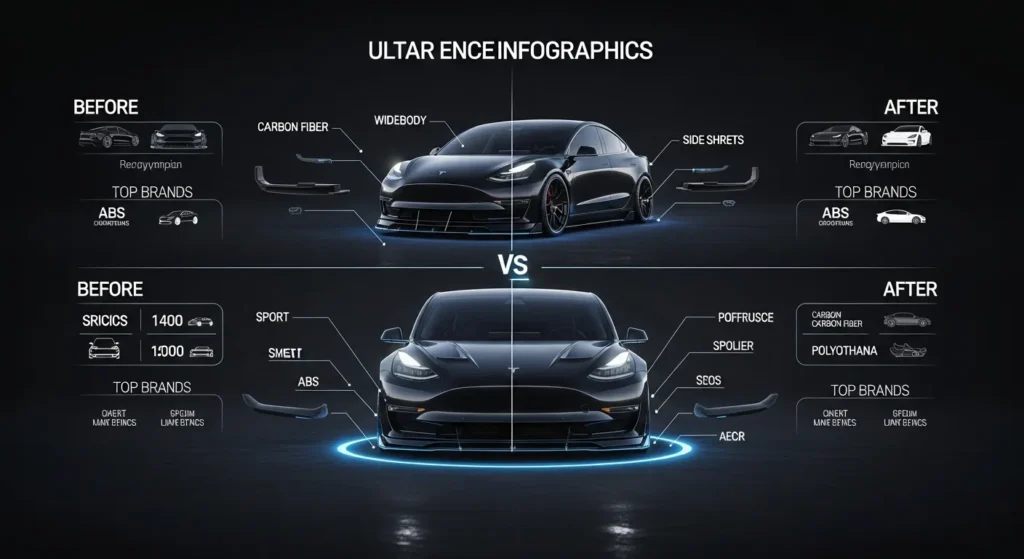
Materials Explained
| Material | Pros | Cons |
| Carbon Fiber | Lightweight, premium, strong | Expensive |
| ABS Plastic | Affordable, durable | Less premium appearance |
| Polyurethane | Flexible, impact-resistant | Slightly heavier |
Carbon fiber can increase cost by 50–100%, but enhances luxury appeal.
Exterior Design
Installing a body kit dramatically changes the vehicle’s personality:
- Sharper front fascia
- Sculpted side profile
- Aggressive rear styling
- Wider stance
The result is a commanding, premium, and dynamic look.
Interior & Comfort
Although body kits do not directly alter the cabin:
- They enhance emotional satisfaction
- Increase driving enjoyment
- Complement the futuristic interior theme
Performance & Aerodynamics
Many assume body kits significantly boost Performance.
Reality:
- Minor aerodynamic gains
- Improved high-speed stability
Benefits are subtle but noticeable under certain conditions.
Safety Considerations
Ensure your body kit does NOT interfere with:
- Cameras
- Sensors
- Autopilot systems
Safety must always take priority over aesthetics.
Pros & Cons
Pros
- Unique Styling identity
- Improved road presence
- Customization flexibility
- Enhanced premium feel
- Potential resale value increase
Cons
- Expensive investment
- Installation complexity
- Fitment risks
- Warranty concerns
- Cheap kits reduce value
Maintenance & Ownership
Key Tips
- Clean regularly
- Avoid impacts
- Inspect alignment periodically
Resale Value
- High-quality kits can increase value
- Poor-quality kits reduce Appeal
FAQs
A: Yes, if you want better looks and uniqueness.
A: Only slightly, mostly at high speeds.
A: Start with a front lip or spoiler.
A: Yes, they often have poor fitment.
A: Yes, poorly designed kits can reduce efficiency.
Conclusion:
A Tesla Model 3 body kit is not just a cosmetic enhancement—it’s a statement of identity, personalization, and automotive passion.
However, the smartest approach is strategic:
- Start small
- Prioritize Quality
- Focus on fitment