Introduction:
A closer look at Tesla Model 3 wheels shows appearance isn’t the main concern. Ride quality often shifts dramatically based on wheel choice. Potholes feel different too, depending on size and build. Winter grip changes more than many expect. Tire replacement costs climb or drop without notice. Energy use ties closely to rim diameter and weight. Handling responds instantly to these adjustments. Getting it wrong brings surprises later. The right setup keeps things running clean.
Wheels matter more than most Model 3 drivers think. Not just about appearance – rolling resistance changes how far you go on a charge. Braking feels different depending on the rim setup you choose. Long miles take a toll, especially if the hardware isn’t suited to your driving. Dive into this 2026 review and discover factory details, custom upgrades, cold-weather alternatives, plus hands-on tips that actually help.
Quick Overview Table:
| Specification | Tesla Model 3 (2026 U.S.) |
| Vehicle Type | Electric Sedan |
| Drivetrain Options | RWD / AWD / Performance AWD |
| EPA Range | Approx. 309–363+ miles |
| Factory Wheel Sizes | 18″, 19″, 20″ depending on trim |
| Bolt Pattern | 5×114.3 mm |
| Center Bore | 64.1 mm |
| Offset | Varies by wheel design |
| Common OEM Width | ~8.5 inches |
Factory Wheel Differences by Trim:
- RWD & Long Range/Premium: 18″ or 19″
- Performance: 20″ Warp Wheels
What Are Tesla Model 3 Wheels
“Tesla Model 3 wheels” may appear simple, but the topic spans multiple intents:
- Identifying OEM wheels
- Finding the best aftermarket upgrade
- Optimizing winter performance
- Balancing efficiency vs style
- Ensuring fitment confidence before purchase
This guide is ideal for:
- New Tesla Model 3 owners
- Daily drivers prioritizing comfort
- Enthusiasts balancing performance and efficiency
- Winter drivers requiring reliable setups
- Aftermarket buyers seeking precise fitment
In short, this article equips you with the knowledge to choose the safest, most practical, and aesthetically pleasing wheels without unnecessary trial and error.
How Wheels Transform Your Tesla Model 3’s Aesthetic
Wheels aren’t just functional—they define the car’s character.
18‑Inch Wheels
- Highest efficiency potential
- Often paired with aero wheel covers
- Ideal for commuting and maximizing range
19‑Inch Wheels
- Balanced between visual appeal and practicality
- Strong compromise for comfort and style
20‑Inch Wheels
- Aggressive, performance-oriented look
- Standard for Performance trims
- Trade-offs include harsher ride and reduced efficiency
SEO Tip: If your goal is mainly visual, wheel covers can create dramatic visual upgrades at a fraction of the cost compared to full wheels.
Interior Comfort
Wheel choice influences ride dynamics inside the cabin:
Incorrect wheel setups can result in:
- Rough, jarring rides on broken surfaces
- Increased noise at highway speeds
- Accelerated tire wear
- Higher tire replacement costs
Rule of Thumb:
- Smaller wheel + taller tire sidewall = smoother ride
- Larger wheel + lower-profile tire = firmer ride
Many owners select:
- 18‑inch wheels for comfort-focused commuting
- 19‑inch wheels for a balance of style and usability
- 20‑inch wheels mainly for visual impact
Cities with rough roads, potholes, or harsh winters benefit from smaller wheels with higher sidewalls for protection.
Performance Implications
Tesla Model 3, though electric, is sensitive to wheel selection in terms of handling, braking, and ride feel:
- Steering precision
- Unsprung weight
- Brake response
- Traction
- Ride compliance
- Acceleration perception
Performance Reality: Bigger wheels are not always better.
Heavier 20‑inch wheels can:
- Reduce comfort and ride compliance
- Increase tire replacement frequency
- Elevate the risk of pothole damage
- Decrease efficiency
Lightweight 18″ or 19″ aftermarket wheels can:
- Improve steering responsiveness
- Absorb road imperfections more Effectively
- Slightly enhance range
Do Bigger Wheels Reduce Tesla Model 3 Range?
Short answer: yes, often.
Reasons:
- Additional rotational mass
- Wider or less efficient tires
- Reduced sidewall increases energy consumption
- Aggressive wheel designs can raise aerodynamic drag
Tesla’s OEM strategy reflects this:
- RWD & Long Range: 18″ or 19″ (higher range)
- Performance 20″ Warp: lower efficiency
Range Summary:
- Best: 18‑inch wheels
- Balanced: 19‑inch wheels
- Least efficient: 20‑inch wheels
Wheel Fitment Is Safety, Not Just Style
Wheel safety depends on multiple factors beyond the bolt pattern:
- Bolt pattern
- Center bore
- Offset
- Load rating
- Brake caliper clearance
- Barrel design
- Hub-centric fitment
- TPMS compatibility
- Overall tire diameter
A wheel that “fits” mechanically might still be unsafe.
Wheel Technology & Compatibility
Modern wheels affect more than rotation:
- TPMS sensors
- Aero cover fitment
- Hub-centric alignment
- EV-specific load compliance
- Brake Clearance
Tesla-specific wheels often deliver safer and more reliable fitment than generic options.
Tesla Model 3 OEM Wheel Sizes (2026)
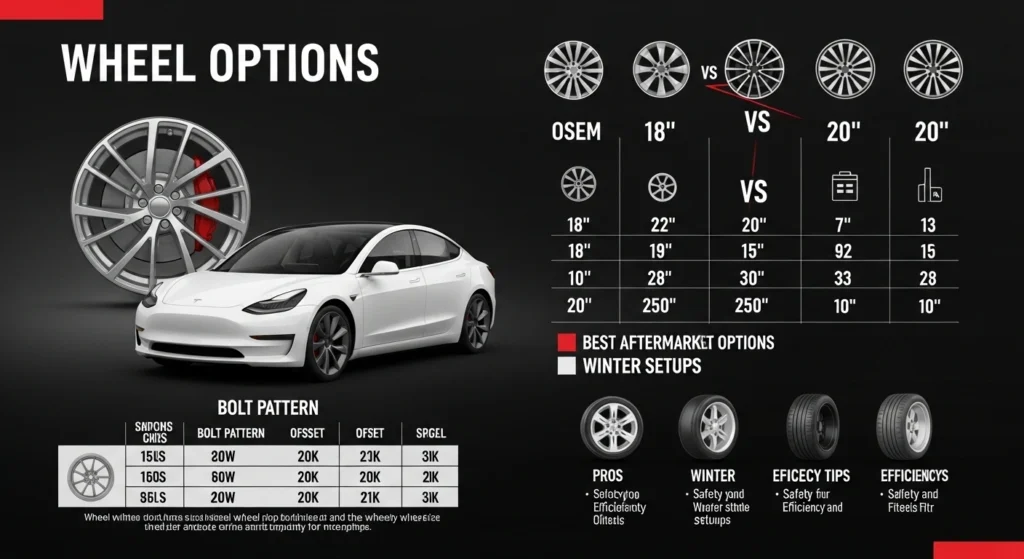
2026 Factory Options:
- Rear-Wheel Drive: 18″ or 19″
- Long Range / Premium: 18″ or 19“
- Performance: 20″ Warp Wheels
Popular Used Market Wheels:
- 18″ Aero / Photon
- 19″ Sport / Nova
- 20″ Überturbine / Warp-style
Fitment varies with:
- Model year
- Refresh generation (Highland vs pre-Refresh)
- Brake package
- Trim level
Bolt Pattern, Offset, Center Bore & Load Rating
| Parameter | Specification |
| Bolt Pattern (PCD) | 5×114.3 mm |
| Center Bore | 64.1 mm |
| OEM Width | ~8.5 inches |
| Offset | Varies by wheel style |
| Load Rating | Must meet EV weight requirements |
Important: Matching bolt pattern alone doesn’t guarantee safe installation. Offset, brake clearance, load rating, and hub alignment are equally crucial.
18 vs 19 vs 20‑Inch Wheels
| Wheel Size | Best For | Comfort | Range | Styling | Tire Cost | Pothole Protection | Performance Trim |
| 18″ | Daily driving, winter, efficiency | ★★★★★ | ★★★★★ | ★★★★☆ | ★★★★★ | ★★★★★ | Conditional |
| 19″ | Balanced setup | ★★★★☆ | ★★★★☆ | ★★★★★ | ★★★★☆ | ★★★☆☆ | Often possible |
| 20″ | Aggressive styling | ★★★☆☆ | ★★★☆☆ | ★★★★★ | ★★★☆☆ | ★★★☆☆ | Factory Performance |
Best 18-Inch Wheels
Pros:
- Optimal comfort
- Highest range potential
- Lower tire cost
- Excellent pothole resilience
- Strong winter usability
Cons:
- Less aggressive visual appeal
- Performance brake clearance may vary
Best For:
- Daily commuters
- Rough-road urban drivers
- Range-focused owners
- Winter driving
- Long-term ownership
Best 19-Inch Wheels
Pros:
- Balanced aesthetics and practicality
- Compromise between style and Comfort
Cons:
- Slight range loss vs 18″
- Higher tire costs than 18.”
Best For:
- Owners wanting visual upgrade without major compromise
- Comfort-conscious drivers who want style
Best 20-Inch Wheels
Pros:
- Aggressive factory appearance
- Visual dominance
Cons:
- High tire costs
- Firmer ride
- Reduced efficiency
- Higher pothole vulnerability
Best For:
- Factory Performance trim owners
- Style-first drivers on smooth roads
FAQs
A: The Model 3 utilizes a 5×114.3 mm bolt pattern (sometimes referenced as 5×4.5 inches). Important: Matching bolt pattern alone does not guarantee safe fitment — offset, hub-centric alignment, brake clearance, and load rating must also be considered.
A: For most owners, 18‑inch wheels are the most advantageous choice. They provide the best combination of comfort, range, tire longevity, and pothole protection.
A: Yes. Smaller wheels are generally lighter and more aerodynamic, which can enhance real-world efficiency. A proper 18‑inch setup with aero covers or lightweight aftermarket options can contribute to noticeable range improvement.
A: Yes, but only if engineered specifically for Performance brakes. Clearance, offset, and hub-centric fitment are key factors to ensure safe installation.
A: Yes, larger wheels with lower-profile tires reduce sidewall flexibility, which can increase cabin harshness, elevate pothole risk, and accelerate wear on suspension components.
Final Verdict
A closer look at how far it goes, how cozy it feels, how long it lasts, and also its appearance – each part matters just as much as the rest
- Last choice for plenty of drivers: 18-inch Tesla Model 3 rims
- Best combination of style and usability: 19‑inch wheels
- Wheels that size? They suit a factory look. Twenty inches fit right when Performance matters. Appearance gets sharper this way
- Fine on bumpy streets: go with 18-inch rims
Best winter setup:
A single part can shift how the car feels every day. Not just looks – wheels change how far you go on a charge. Rough roads? They affect how smoothly you ride. Stress moves through them into the frame, so lasting power matters too. Safer stops depend partly on their design and grip. Bigger ones often mean pricier tires later down the road. Even when selling, buyers notice what spins beneath. Pick based on where you drive most – city streets or winding hills – and save money over time while staying happy behind the wheel.