Introduction:
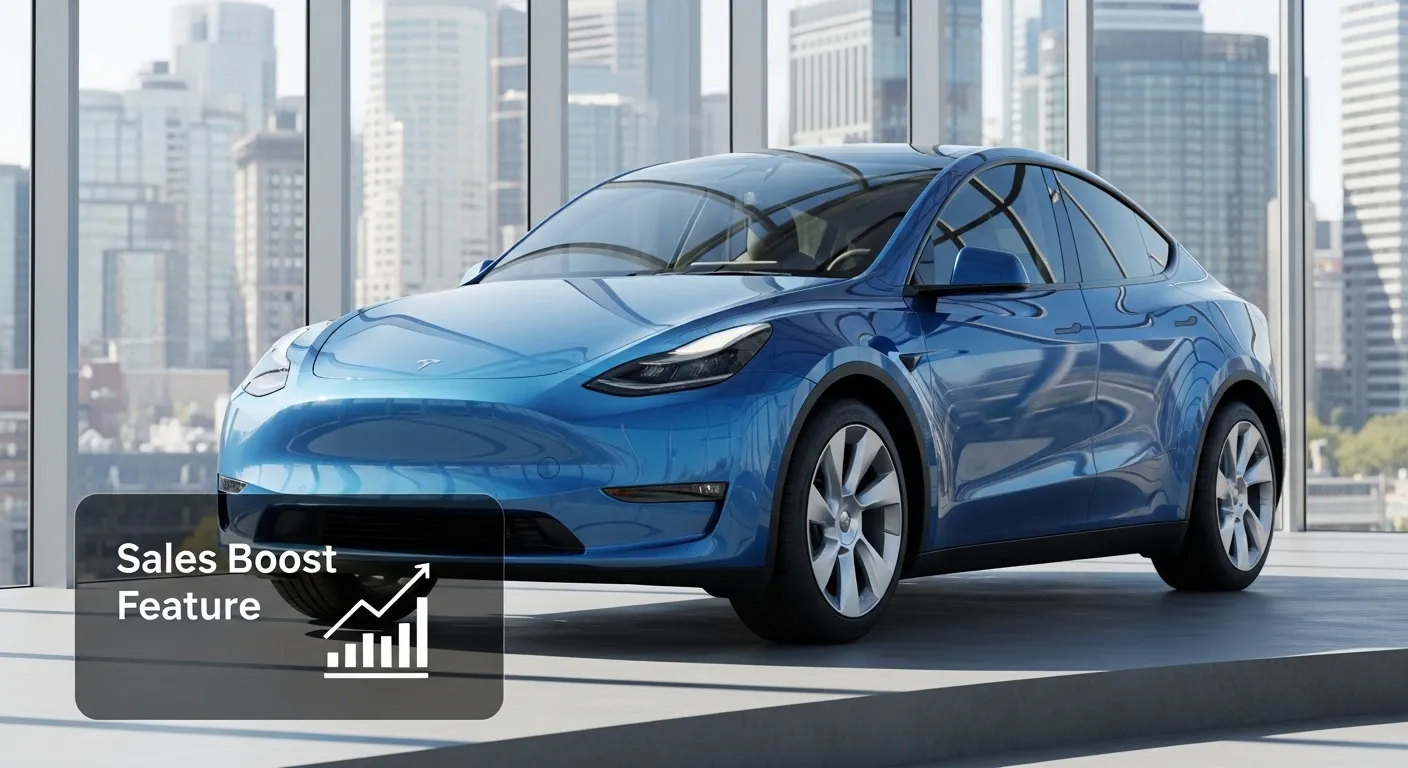
The Tesla cheaper model Y sales boost story has become one of the most talked-about electric vehicle discussions of 2026 — and that attention is fully justified.
Tesla did not unveil a totally new ultra-budget EV at a $25,000 price point. Instead, it appears to have chosen a much more strategic, immediate, and commercially realistic path: make its most important vehicle, the Model Y, more attainable.
That matters enormously in today’s market.
Rather than waiting years for a completely fresh low-cost Tesla architecture, the company seems to be pursuing a more efficient and more scalable strategy:
- Lower the starting price of the Model Y
- introduce more accessible entry-level trims
- remove selected premium features that many mainstream buyers can live without
- preserve the Tesla badge, software stack, and charging ecosystem
- appeal to a larger audience in an increasingly value-conscious EV market
Quick Overview Table
| Specification | Tesla Model Y Cheaper/Base Version (2026) |
| Powertrain | Single-motor RWD or Standard AWD (market dependent) |
| Battery Type | Standard Range configuration |
| Power Output | Lower than Long Range / Performance trims |
| 0–60 mph | Approx. 6.8 sec (RWD) / 4.6 sec (Standard AWD) |
| Drive Type | Rear-Wheel Drive or All-Wheel Drive |
| Range (EPA est.) | Approx. 321 miles (RWD) / 294 miles (Standard AWD) |
| Charging | Up to 225 kW DC fast charging |
| Charging in 15 min | Up to 160 miles (RWD) / 152 miles (AWD) |
| Seating | 5 adults |
| Cargo Capacity | Around 74–74.8 cu ft |
| Touchscreen | 15.4-inch center display |
| Warranty | 4 years / 50,000 miles basic; 8 years / 100,000 miles battery & drive unit |
| Positioning | Entry-level / value-oriented Model Y |
Exterior Design
Short answer:
No — and that is a huge reason this strategy can work.
One of the smartest parts of Tesla’s lower-cost Model Y strategy is that the cheaper version still looks like a real Model Y.
That matters more than many people realize.
Most buyers do not want a vehicle that visually screams:
- base model
- bargain version
- stripped-out trim
- “cheap Tesla”
They want:
- the same silhouette
- the same road presence
- the same brand identity
- the same sleek EV image
- the same modern crossover appeal
What Stays the Same
The cheaper Model Y still retains the familiar design DNA buyers expect:
- streamlined fastback-style crossover profile
- aerodynamic bodywork
- clean, uncluttered surfacing
- signature Tesla front-end lighting language
- closed-off EV nose design
- modern, premium-looking stance
What May Change on the Outside
To reduce costs, Tesla may make subtle adjustments such as:
- smaller wheels
- simpler wheel designs
- fewer appearance upgrades
- more limited paint or trim packaging
- fewer included cosmetic extras
That’s a smart place to save money because it protects efficiency and keeps the vehicle visually desirable.
Exterior Verdict
The cheaper Tesla Model Y still looks aspirational.
That is critical.
If Tesla had made it look obviously stripped-down, buyer interest would have fallen immediately.
Interior & Comfort
This is where the Tesla Model Y’s cheaper trim becomes especially interesting.
From the outside, it still looks like a proper Model Y.
Inside, Tesla can quietly remove cost without dramatically hurting mainstream appeal.
Cabin Layout Still Feels Like a Tesla
The entry-level Model Y still delivers the core Tesla cabin experience:
- minimalist dashboard architecture
- large central touchscreen
- almost no physical controls
- airy front-seat ambiance
- flat-floor EV packaging
- open, spacious design language
This matters because for many buyers, the screen and layout are the emotional anchors of Tesla ownership.
If those remain intact, the vehicle still feels authentic.
Space Is Still a Major Selling Point
This is one of the biggest reasons the cheaper Model Y can still succeed.
Even in lower trims, buyers still get:
- seating for 5 adults
- practical rear-seat room
- flat-floor passenger packaging
- front trunk (frunk)
- large rear cargo area
- fold-flat versatility for family use
For buyers comparing EV crossovers, this is hugely important.
They’re not just shopping for speed.
They’re shopping for:
- school runs
- grocery hauling
- family road trips
- commuting practicality
- lifestyle flexibility
And the Model Y still performs strongly in those areas.
Where Tesla Likely Cuts Features
This is where the Cheaper Model Y becomes less premium, but not necessarily less compelling.
Likely cost-reduction areas include:
- fewer premium trim materials
- less rear-seat luxury
- fewer convenience features
- simpler equipment packaging
- lower-spec audio in some markets
- fewer “wow factor” extras
- possibly no rear display in certain lower-cost variants
- fewer included luxury touches
Performance
This is one of the most searched buyer questions.
And the answer is simple:
Yes — for normal drivers, absolutely.
Base Performance Numbers Still Look Strong
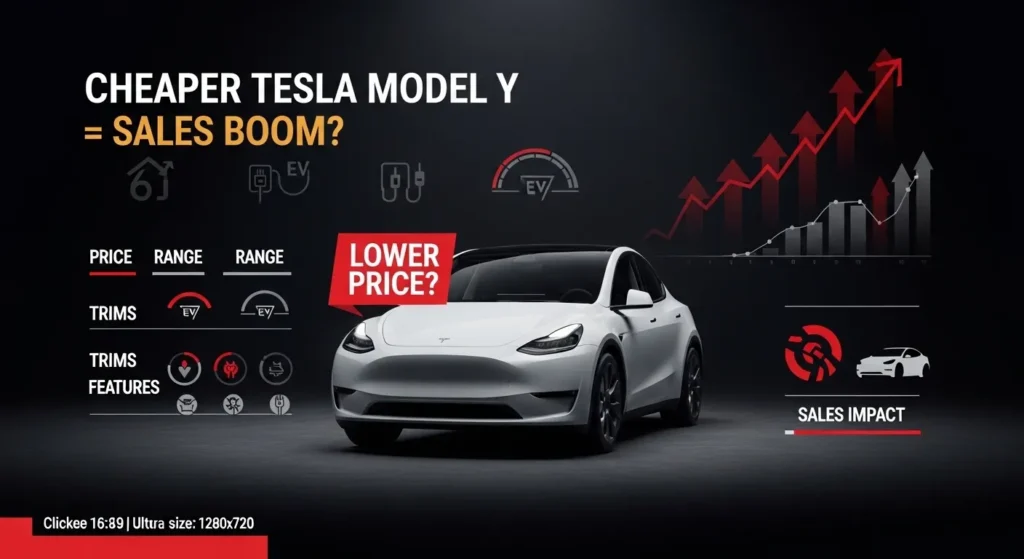
The cheaper Model Y may not be the quickest version in the lineup, but for a value-focused electric crossover, it still offers convincing numbers.
That means:
- solid off-the-line response
- immediate EV torque
- confident merging power
- strong urban drivability
- enough acceleration to feel modern and refined
For the vast majority of buyers, this is more than enough.
What the Driving Experience Should Feel Like
Even a lower-cost Tesla usually preserves the characteristics buyers like most:
- instant electric torque delivery
- smooth and linear acceleration
- quiet low-speed operation
- effortless city driving
- stable highway composure
- low center of gravity
- predictable regenerative braking feel
That’s important because Tesla is not trying to make the Model Y feel slow or compromised.
It’s trying to make it feel accessible without feeling Underwhelming.
What You Lose vs Long Range / Performance
Compared with higher trims, the cheaper Model Y may have:
- slower acceleration
- less high-speed punch
- less dramatic “wow factor.”
- lower enthusiast appeal
- reduced performance headroom
Technology & Infotainment
One reason the tesla cheaper Model Y sales boost idea makes so much sense is simple:
Tesla understands what buyers care about most.
They care about:
- the screen
- the software
- the Tesla app
- the charging experience
- over-the-air updates
- route planning
- the “Tesla feel.”
Core Tech That Still Makes the Model Y Attractive
Even lower trims should still offer the essentials that define the Tesla ownership experience:
- large center display
- Tesla-style navigation
- charging route planning
- remote smartphone controls
- OTA software updates
- ecosystem integration
- Tesla brand-specific digital ownership benefits
Comparison Table
| Category | Cheaper / Standard Model Y | Long Range / Premium Model Y |
| Purchase Cost | Lower | Higher |
| Monthly Payment | More affordable | More expensive |
| Range | Good to very good | Better for frequent long trips |
| Acceleration | Strong enough | Stronger |
| Charging Performance | Good | Better in ideal conditions |
| Interior Equipment | Simpler | More upscale |
| Ownership Feel | Practical Tesla experience | More complete Tesla experience |
| Best For | Value-focused buyers | Comfort + convenience + range |
| Buyer Type | Budget / practical | Balanced / premium-minded |
Pros & Cons
Pros
- Lower entry price makes Tesla ownership more attainable
- Still gives buyers the Tesla brand + ecosystem
- Practical, family-friendly electric SUV form factor
- Strong range for an entry-level EV crossover
- Access to Tesla charging convenience and software Experience
- Better affordability in a more demanding EV market
- Still looks like a real Model Y
- One of the smartest value-first Tesla choices in 2026
Cons
- Still not cheap enough to be a true mass-market breakthrough
- Fewer premium features than higher trims
- May feel less special inside than Long Range / Premium versions
- Slower than upper trims
- Could reduce Tesla’s profit margins
- May cannibalize higher-trim sales
- Some rivals may offer more standard equipment at similar pricing
- Tesla pricing changes can make timing frustrating
Quick Competitor Comparison Table
| Model | Biggest Strength | Best Buyer Type | Cabin richness/equipment value |
| Tesla Model Y (Cheaper Trim) | Ecosystem + brand + simplicity | Value-focused Tesla shoppers | Charging familiarity + software ecosystem |
| Hyundai Ioniq 5 | Design + comfort + feature value | Style + comfort buyers | Cabin richness / equipment value |
| Kia EV6 | Sporty feel + charging speed | Driver-focused buyers | Performance-per-dollar |
| Ford Mustang Mach-E | Familiarity + broad appeal | Mainstream crossover buyers | Traditional brand confidence |
Maintenance Ownership
The cheaper Model Y can be especially attractive because EV ownership is often simpler than owning a gasoline crossover.
What Owners May Like
Compared with internal-combustion SUVs, the Model Y can mean:
- no oil changes
- no traditional transmission servicing
- fewer moving parts
- less routine drivetrain maintenance
- easier day-to-day ownership for many households
What Buyers Should Watch
Tire Wear
EVs can wear tires faster because of:
- instant torque
- Higher curb weight
- aggressive launches or hard acceleration
Service Access
Ownership quality can still depend on:
- Tesla service center proximity
- mobile service availability
- local parts access
- regional support maturity
Resale Value
Tesla resale values can be influenced by:
- pricing volatility
- MSRP changes
- demand fluctuations
- battery Health perception
- new trim introductions
- market saturation
Ownership Verdict
The cheaper Model Y can be a smart long-term purchase — if you buy for value, not hype.
FAQs
A: The cheapest Tesla Model Y in 2026 is typically the entry-level Standard or Rear-Wheel Drive configuration, depending on market availability. Tesla’s pricing structure changes often, but the lower-cost trim is positioned as the most accessible gateway into Tesla SUV ownership.
A: In practical terms, yes. Tesla’s lower-cost trim strategy strongly suggests the company is using affordability to defend demand, widen the buyer pool, improve conversion rates, and keep the Model Y competitive in a more price-sensitive EV environment.
A: The cheaper Model Y appears to reduce cost by focusing on:
smaller or more value-oriented battery/motor setups in some versions
simplified equipment packages
fewer premium interior materials
reduced luxury touches
fewer convenience extras
Tesla’s goal appears to be protecting the core ownership experience while trimming non-essential costs.
A: Most likely, yes — but more as a stabilizer than a dramatic growth explosion.
It lowers the entry barrier, improves affordability, and broadens the addressable audience. However, it may still not be cheap enough to create a truly massive new wave of first-time Tesla buyers.
A: Not necessarily.
The cheaper Model Y is usually the better value buy, while the Long Range or more premium trim is typically the better all-around ownership experience.
If your priority is cost efficiency, the cheaper trim wins.
If your priority is comfort, range, and a more complete experience, the higher trim usually wins.
Final Verdict
The Tesla cheaper model Y sales boost strategy is one of the clearest signs that the EV market in 2026 is no longer driven by hype alone.
It is now driven by:
- affordability
- monthly payments
- real-world value
- range confidence
- charging convenience
- buyer practicality
- Ownership efficiency
That is exactly why the cheaper Model Y matters so much.