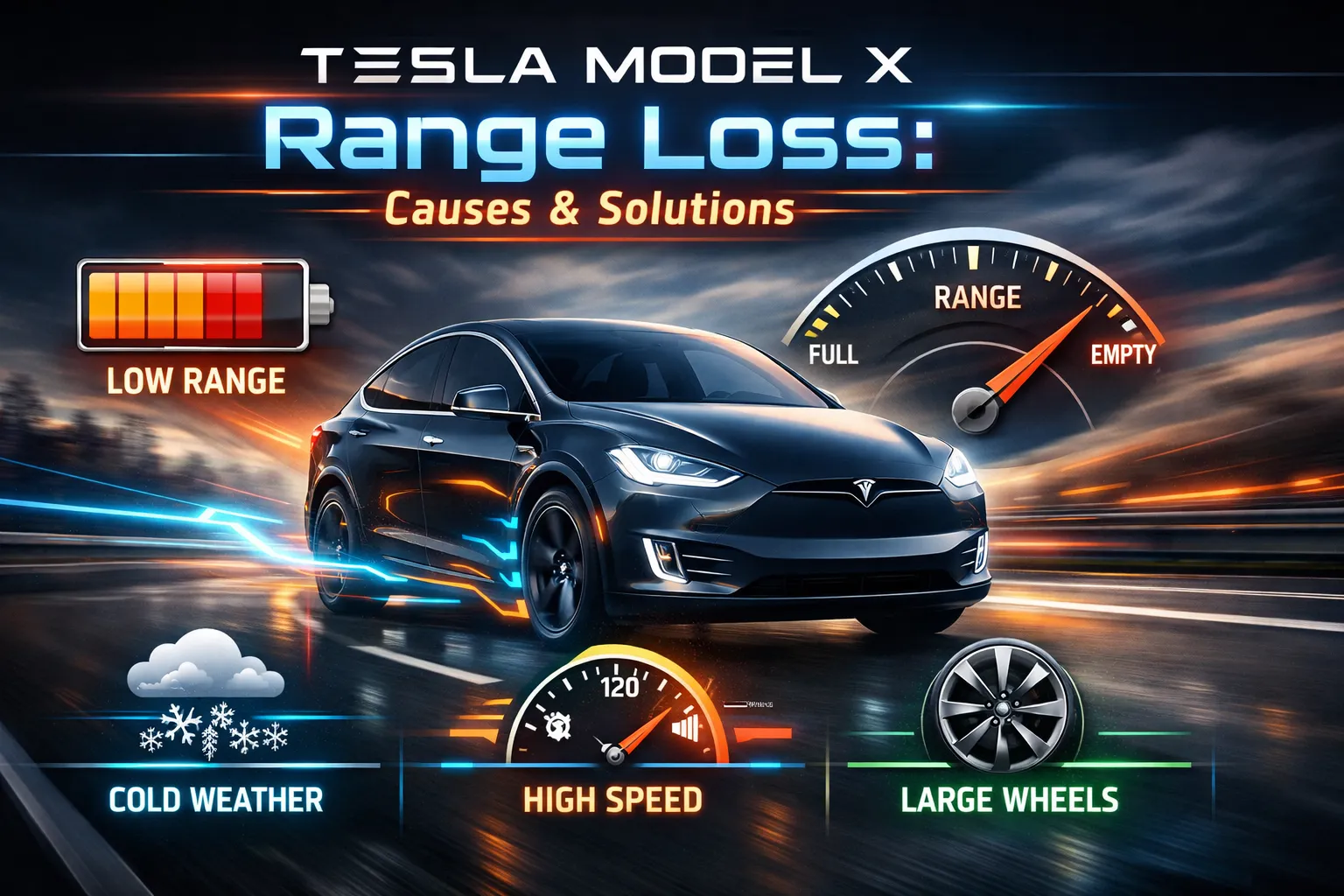
Introduction:
One thing catches attention about the Tesla Model X: it’s an electric SUV built with sharp looks, strong power, under the hood tech. Still, plenty of drivers – new ones just as much as those who’ve had Teslas before – get caught off guard by how far it really goes when fully charged. Numbers shown during sales often don’t match what happens on real roads.
The pain of losing ground hits harder than the numbers show. What happens next ripples outward, touching lives in ways charts can’t capture
Confidence in daily commuting
- Planning long trips
- Preserving long-term battery integrity
- Overall ownership satisfaction
This deep dive covers every detail worth knowing – practical tips to stretch your Tesla Model X range, plus an honest look at how it performs off paper. Clear words only, so anyone can follow along, whether or not they’ve studied power cells. What matters shows up here.
Quick Overview
| Feature | Specification |
| Engine / Motor | Dual Electric Motors (All-Wheel Drive) |
| Power | 670–1,020 hp (depending on trim) |
| Range (EPA) | 330–348 miles* |
| 0–60 mph | 2.5–3.8 seconds |
| Transmission | Single-speed automatic |
| Fuel Type | Electric |
| Body Type | SUV / Crossover |
| Seating | 5–7 passengers |
*EPA range represents standardized estimates; real-world distances can vary.
Normal vs Abnormal Range Loss
| Type | Explanation |
| Normal Range Loss | Occurs due to environmental conditions, driving style, or routine energy consumption |
| Abnormal Range Loss | Caused by battery anomalies, software irregularities, or hardware issues |
EPA vs. Real-World Range
Tesla quotes range figures based on the EPA test cycle, a laboratory assessment simulating standardized driving patterns. However, real-life conditions are inherently dynamic, meaning the vehicle may deliver less than the nominal figure.
Real-World Factors That Influence Range
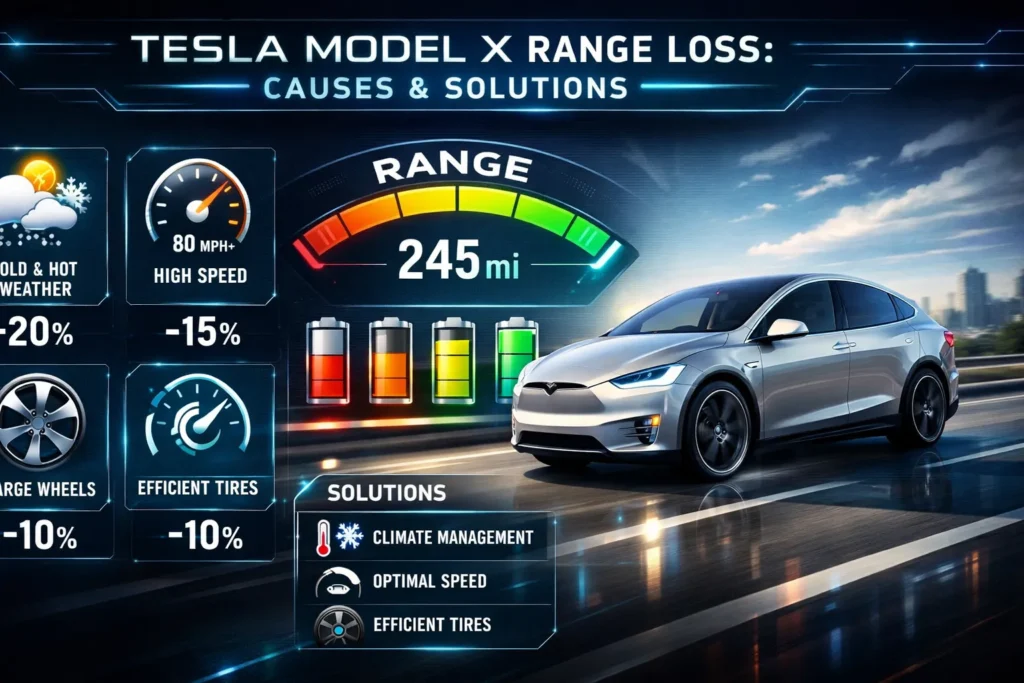
| Factor | Estimated Range Reduction |
| Cold Weather | –15% to –20% |
| Hot Weather / Air Conditioning | –5% to –10% |
| 22″ Wheels | –12% to –15% |
| High-Speed / Aggressive Driving | –10% to –15% |
For instance, a Model X rated at 348 miles EPA might realistically travel only 250–270 miles in winter with larger wheels and heavy cabin heating — a perfectly normal outcome.
The Impact of Cold Weather
Cold climates are among the most significant contributors to temporary range loss.
Why Cold Temperatures Reduce Range
Batteries operate less efficiently at lower temperatures
- Energy is diverted to heat the cabin
- Tire traction changes
- Battery chemical reactions slow down
Out in the open, Tesla batteries work best when it’s neither too cold nor too warm – think 50 to 80 degrees Fahrenheit, which lands around 10 to 27 Celsius. Temperature matters more than most expect.
Cold Weather Mitigation Tips
- Precondition your battery before driving
- Use seat heaters instead of full cabin heat
- Park indoors or in garages when feasible
- Charge indoors during cold nights
These measures reduce temporary losses without affecting long-term battery health.
Hot Weather & Energy Consumption
High temperatures also impact battery Performance, though typically less than cold weather.
Why Hot Weather Affects Range
- Air conditioning draws additional energy
- Battery cooling systems consume power
- Prolonged heat exposure can accelerate battery wear
Hot Weather Optimization
- Use Scheduled Departure to cool the cabin before driving
- Park in shaded areas
- Enable adaptive climate control
- Deploy sunshades on windows during intense heat
Wheels, Tires, and Rolling Resistance
Wheel size and tire selection significantly influence range efficiency.
| Wheel Size | Advantages | Disadvantages |
| 20″ | Better range, smoother ride | Less aggressive styling |
| 22″ | Sporty appearance | Higher rolling resistance → reduced range |
Tip: Prioritize smaller wheels if your goal is maximum distance per charge.
Battery Degradation Over Time
Like all lithium-ion batteries, Tesla packs gradually lose capacity as they age.
Typical Aging Pattern
Lasting roughly 200,000 miles, most vehicles show a drop near 12% in battery strength. While driving that far, typical users see capacity slip by about one-eighth.
A little less charge holds steady after each cycle. Over months, the drop becomes clear.
- Factors Accelerating Degradation
- Top-ups often reach full capacity
Repeated Supercharging sessions
- Aggressive driving behaviors
- Exposure to extreme climates without mitigation
- Slowing Down Wear Over Time
Charge every day up to 80 or 90 percent. Save full power only when driving far. Otherwise, keep it lower.
Keep your Tesla plugged in when stationary
- Avoid Discharges below 10%
- Fine attention keeps it lasting, while also preserving how far it can reach.
Driving & Charging Habits
Your behavioral patterns profoundly influence how far the Model X can travel.
Harmful Habits
- Constant high-speed driving
- Heavy acceleration and abrupt braking
- Daily 100% charging
- Neglecting preconditioning in cold weather
Beneficial Practices
- Maintain steady, moderate speeds
- Use regenerative braking effectively
- Strategically plan long trips,s and Supercharger stops
- Charge intelligently (80–90% daily)
- Ensure tires are correctly inflated
Real Owner Experiences
Folks who hang out on Tesla forums, Reddit threads, or chat in owner circles often notice similar things popping up again and again.
Fuel levels drop after extended journeys. Distance covered takes a toll on battery reserves. A short break lets the system recover slowly. Efficiency returns once things cool down. Charging helps reset performance lim. its
Colder months bring milder shifts. Temperature swings narrow when snow falls. Winter holds things closer, limits extremes. Changes feel smaller under gray skies.
Gradual decline after 100k+ miles
Out in the field, actual results line up with what battery research expects.
How to Accurately Measure Real Range
To determine the actual range:
- Use the Tesla Energy App
- Record Wh/mile (watt hours per mile)
- Track actual miles driven
- Compare the battery percentage over multiple trips
Monitoring over time gives the most reliable measurement.
Top Tips to Maximize Tesla Model X Range
Practical strategies to enhance both short-term and long-term performance:
Precondition the battery before driving in cold conditions
Maintain optimal tire pressure
- Avoid daily full 100% charges
- Minimize aggressive acceleration
- Reduce unnecessary cargo weight
- Opt for smaller wheels where Possible
- Limit HVAC usage when parked
- Monitor Wh/mile consistently
Charging Strategies to Protect Range
Charging is crucial for battery longevity and daily efficiency.
Full Charge
- Occasional 100% charge is safe
- Daily 100% charging accelerates degradation
Recommended daily range: 80–90%.
Supercharging vs Home Charging
| Charging Type | Speed | Battery Impact |
| Home Charging (AC) | Slow | Minimal stress |
| Supercharging (DC) | Fast | Slight battery stress |
Rule of thumb: Use Superchargers for long-distance trips, not routine commuting.
Maintenance & Long-Term Care
Though the Model X is low-maintenance, good upkeep supports range efficiency.
Maintenance Checklist
- Ensure tire balance and alignment
- Inspect suspension and brakes
- Clean the underbody after exposure to winter salt
- Regularly update Tesla software for efficiency improvements
Software updates often optimize battery performance and energy management.
Safety Features
Tesla Model X incorporates numerous safety systems without a major impact on range:
- Multiple airbags
- ABS & traction control
- Stability assist
Advanced Autopilot features (collision avoidance, lane assist)
Not sapping energy at all, improved safety measures hardly affect how long the battery lasts.
Variants and Pricing
Tesla offers multiple trims:
| Trim | Ideal For |
| Long Range | Maximum distance per charge |
| Plaid | Top speed, aggressive performance |
| Special Editions | Limited features, seasonal enhancements |
Choosing a trim impacts range priorities — the Range trim is efficiency-focused, while Plaid prioritizes acceleration.
Pros & Cons
Pros
- Rapid acceleration and handling
- Cutting-edge technology & Autopilot
- Spacious, luxurious interior
- Strong EPA range metrics
- Extensive Supercharger network
- Zero emissions
Cons
- Range variability in real-World conditions
- High purchase price
- Reduced range in extreme cold
- Charging slower than traditional refueling
- Large vehicle size limits maneuverability
Optimal Uses for Tesla Model X
The Model X excels:
- Families seeking safety and space
- Technology enthusiasts who prioritize innovation
- Long-distance drivers with Supercharger access
- EV owners who want high performance
Smart driving habits paired with efficient trip planning help maximize range regardless of conditions.
FAQs
Typically, Tesla batteries lose around 12% capacity after 200,000 miles, although climate and usage patterns can accelerate or slow this.
No. Range dips are temporary and return once ambient temperatures normalize. Preconditioning mitigates losses.
Use the Tesla Energy App to monitor Wh/mile over multiple trips and compare actual miles driven against battery percentage.
Occasional full charges are safe, but daily charging should remain 80–90% to protect longevity.
Conclusion
A dip in Tesla Model X range comes down to how the battery works, weather conditions, and how you drive. Differences between real-world performance and official numbers happen regularly.
A single habit can shift how far you go on a charge. Smooth acceleration instead of quick bursts keeps energy use steady. Plugging in before the battery drops too low works better than waiting till it is empty. Temperature matters more than most think. Cold mornings slow down power flow. Parking in shade during heatwaves reduces stress. Charging to full every time adds strain over months. Mixing home charging with occasional fast stops balances wear. How you drive affects longevity just as much as what you do when parked. Small choices add up where it counts.
Start here if you want smarter ways to get more from your Tesla in 2026 – without ignoring how cold weather cuts battery reach. Real steps mix with real physics, yet stay simple enough to follow day by day. Though details matter, none are buried under jargon. Because results? They come from doing less wrong, not chasing Magic fixes.