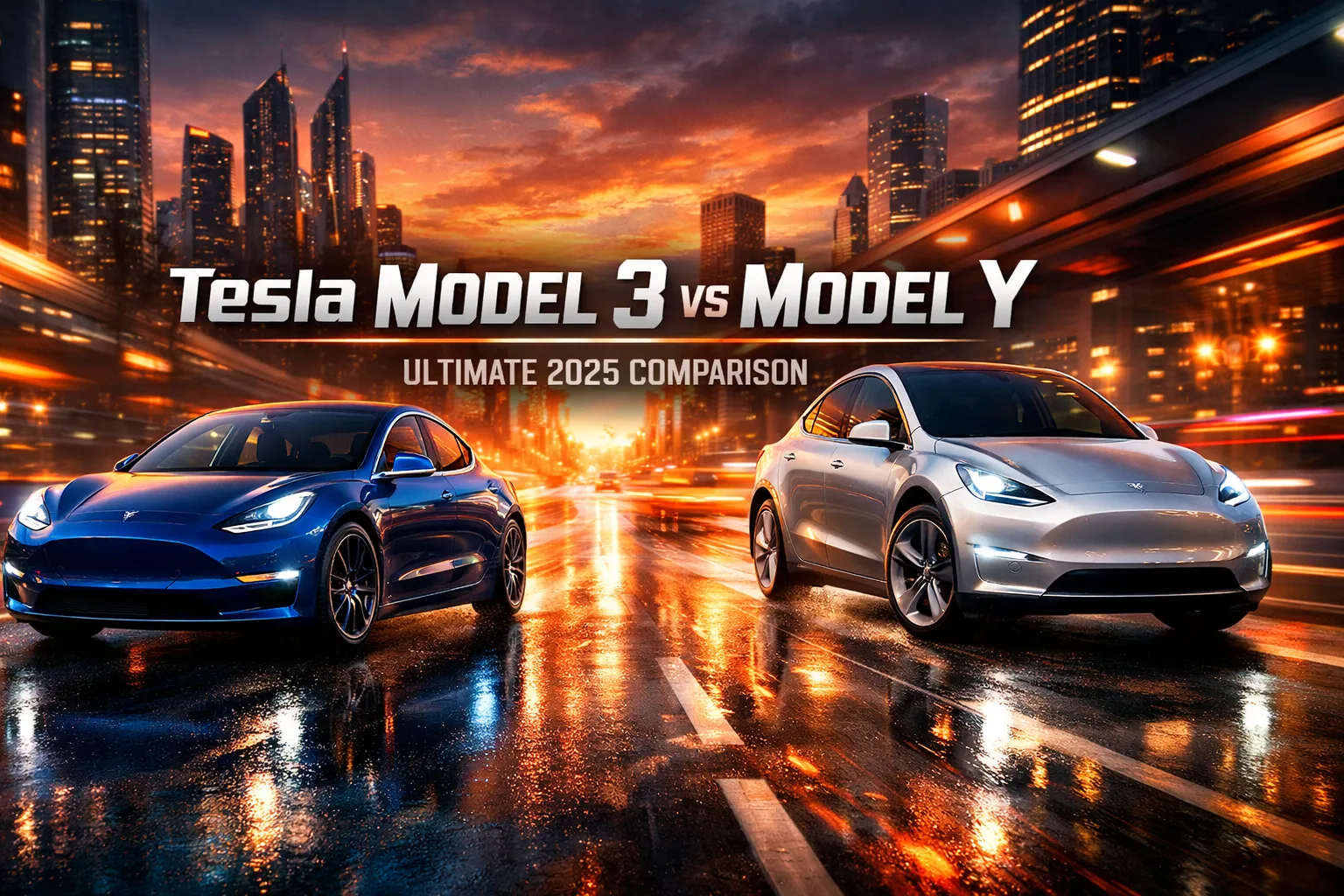
Tesla Model 3 vs Model Y
Thinking about a Tesla? The Model 3 and Model Y draw more interest every year. By 2025, they stand out globally, powered by advanced tech, strong acceleration, yet differ quietly beneath the surface. While one glides through city lanes with sleek efficiency, the other opens up space for weekend trips. Their range feels nearly identical on paper. Yet how each handles corners shifts who might favor it. A daily commuter may lean toward lower height and tighter turns. Families often notice that extra room overhead makes a difference. One fits garages like older sedans did. The taller version asks for an inch more head clearance. Charging speed matches across both.
Tesla Model 3 vs Model Y
Still, wind resistance gives the smaller model a slight edge over long distances. Drivers who value sporty feel point to weight distribution. Those hauling gear weekly tend to overlook that detail. Real-world conditions change preferences quickly. Rainy climates highlight traction differences. Sunbelt owners care less about ground clearance. Software updates arrive at the same pace regardless of choice. Design cues separate them instantly – roof lines diverge, wheel options contrast. Inside, materials speak more than specs ever could. Touchscreens behave identically, though usage patterns aren’t measured alike. Resale figures hover near parity when mileage aligns. Insurance varies based on local risk pools instead of trim levels. Test drives matter most once comparisons blur. Few walk away unchanged after experiencing autopilot features firsthand. Ultimately, comfort decides louder than numbers.
From how it looks to how it holds stuff inside, we cover what matters most. If you already know electric cars well or are just starting out, things become easier here. Performance details come without confusion. Safety features are explained simply. Cost over time is broken down piece by piece. Maintenance needs appear clear. Pricing shows exactly what to expect. Each part connects naturally. Understanding happens step by step.
Quick Specs Comparison
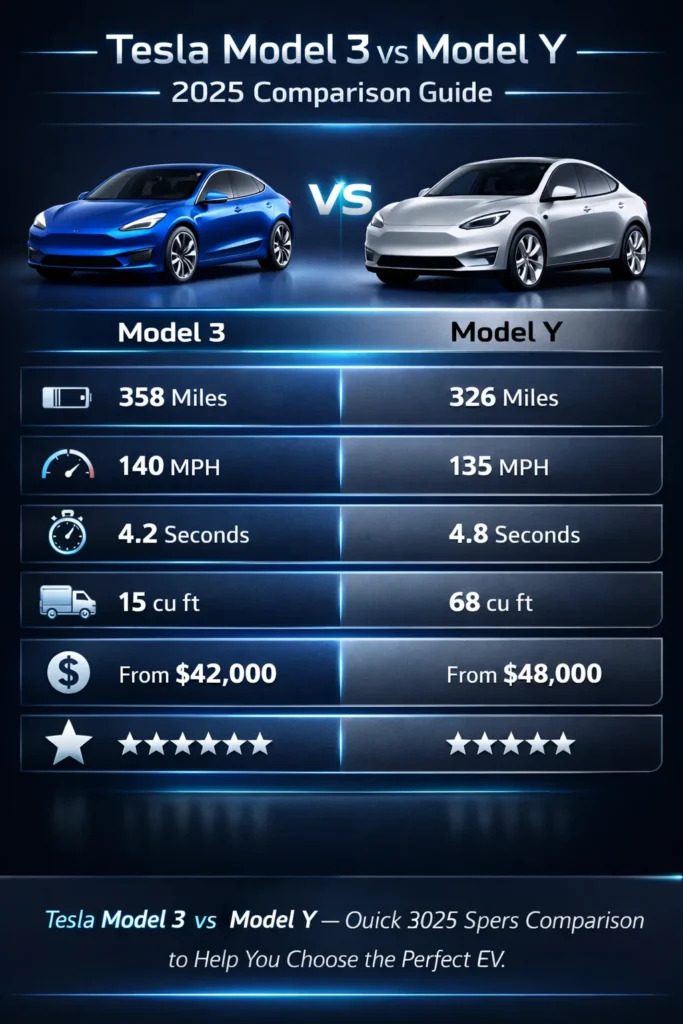
| Feature | Tesla Model 3 | Tesla Model Y |
| Body Type | Sedan | Compact SUV |
| Powertrain | Dual Motor AWD | Dual Motor AWD |
| Horsepower | ~450 hp | ~450 hp |
| 0–60 mph | ~3.1 sec (Performance) | ~3.5 sec (Performance) |
| EPA Range | ~358 miles | ~330 miles |
| Seating Capacity | 5 | 5–7 (optional) |
| Cargo Volume | 15 cu ft | 30 cu ft |
| Drivetrain Options | RWD / AWD | AWD |
| Infotainment | 15” touchscreen | 15” touchscreen |
| Starting Price | $42,000 | $50,000 |
Tesla Model 3 vs Model Y
One thing leads to another when comparing the Model 3 and Model Y – Tesla’s touch shows up in features like Autopilot, self-driving tech, wireless software upgrades, sleek glass ceilings, and clean inside layouts. What sets them apart comes down to shape, room inside, and how each feels behind the wheel.
Faster curves meet less wind resistance here. Smooth lines shape how it moves through the air. Performance links closely with smart energy use. Driving feels sharp without wasting power.
Standing taller than most hatchbacks, Model Y fits more gear inside. Families find the space useful when traveling far. Its cabin adjusts easily, handling both passengers and bulky items. Roomy from floor to roof, it moves well on long drives. The setup works especially well when hauling stuff week after week.
In essence:
- Model 3 is sporty and efficient
- Model Y Spacious Practical
Exterior Design
Tesla Model 3 Exterior Highlights:
Slipping through the air like a blade, the shape Cuts resistance to keep energy use down
- Minimal front grille for a modern look
- Sporty rear diffuser for performance styling
- 18–20” alloy wheels
Slim LED headlights for a futuristic aesthetic
- Tesla Model Y Exterior Features
- Higher stance and SUV proportions
- Hatchback rear design for easier loading
- Panoramic glass roof for a spacious feel
- Larger wheels (19–21”) for stability
Slightly increased ground clearance for versatility
Still, the Model 3 cuts through the air with ease, built like a sprinter dressed sharp. Meanwhile, inside the Model Y, space breathes easier – room for people, stuff, long trips without fuss.
Interior & Comfort
Inside a vehicle matters just as much as how it drives. Though Tesla sticks to clean designs, roominess and comfort shift from one model to another.
Model 3 Interior:
- 5” central touchscreen with intuitive interface
- Vegan leather seating for a luxury feel
Folks fit fine up front, yet the back seats feel a bit snug for taller ones. Space eases if everyone isn’t six feet apart. Leg stretch? Not quite full reach. Still, five can manage without constant elbow nudges. Body room shifts tighter near the knees when packed
Focused cockpit for driver-centric experience
Model Y Interior:
- Seats seven if you choose that setup. The room inside feels bigger because of it
- Taller ceilings open up the space above. Seats stretch farther apart, giving elbows extra room to move
- Panoramic glass roof enhances cabin openness
- Floor area stretches wide once you look past the backrests
Choosing the Right Fit
When city roads twist sharply, it keeps up without fuss. Sudden halts between traffic lights? Handled quietly. Fits where bigger vehicles simply cannot go, like narrow gaps near storefronts. Running solo or with a friend means plenty of room inside. Fuel dips slowly, even weaving through midday blocks. Short trips shape its design – nothing extra, nothing missing. Downtown rhythm matches its pace naturally
Families find it fits just right when roads stretch far beyond the daily route. Hauling stuff feels less like a chore because space comes without compromise. Trips that demand room Work better here than in most others on the market today
Performance & Driving Experience
Both models are high-performing EVs with subtle differences.
| Feature | Model 3 | Model Y |
| Motor | Dual Motor AWD | Dual Motor AWD |
| Horsepower | ~450 hp | ~450 hp |
| Torque | 471 lbs-ft | 471 lbs-ft |
| 0–60 mph | ~3.1 sec | ~3.5 sec |
| Top Speed | 162 mph | 155 mph |
| Handling | Agile & responsive | Stable & SUV-like |
Insights:
Firm on corners, Model 3 stays flat thanks to its weight sitting low. Grip feels eager, responding quickly when the road twists. Balance shifts smoothly, making turns predictable. Heavy bits underneath help it stick without fuss.
Taller on its stance, Model Y feels steady, though cornering loses a bit of sharpness.
Who craves sharp thrills behind the wheel will find them in the Model 3 Performance. On the flip side, those hauling kids or gear might settle more easily into the Model Y’s practical rhythm.
Electric Range & Efficiency
Driving range is a key factor in any EV purchase.
| Metric | Model 3 | Model Y |
| EPA Range | ~358 miles | ~330 miles |
| Highway Range | 340–355 miles | 310–325 miles |
| Energy Consumption | ~24 kWh/100 mi | ~27 kWh/100 mi |
Observations:
- Model 3 is lighter and more energy-efficient
- Model Y’s extra weight and size slightly reduce range
- Both models are excellent for daily commutes and moderate road trips
Example Scenarios:
- Commuting 50 miles/day: Both excellent
- 300-mile road trip: Model 3 offers a bit more confidence with range
Safety Features
Tesla emphasizes safety across all models.
Shared Features:
- Standard Autopilot, optional Full Self-Driving
- Advanced crash protection with multiple airbags
- Over-the-air updates enhance safety systems
Model-Specific Notes:
- Model Y benefits from higher roof strength and better side-impact protection
- Both vehicles include active safety alerts, Collision avoidance, and comprehensive camera coverage
Bottom Line: Both are extremely safe, with Model Y slightly favoring family utility due to SUV structure.
Technology & Infotainment
Tesla’s tech suite is consistent across both models:
- 15” touchscreen with media, navigation, and settings
- Over-the-air updates for new features and improvements
- Mobile app connectivity for remote monitoring and control
- Driver profiles for personalized settings
- HEPA air filtration and advanced climate control
Differences:
- Model 3 emphasizes a streamlined, driver-focused cabin
- Model Y uses the same screen but offers more space for passengers and cargo
Variants & Pricing
Tesla Model 3:
- Standard Range Plus: Entry-level, efficient
- Long Range: Extended battery distance
- Performance: Sportiest, most dynamic
- Price: $42,000 – $55,000
Tesla Model Y
- Long Range: Balanced performance & space
- Performance: Faster, sportier SUV feel
- Price: $50,000 – $65,000
Pros & Cons
3 Model Pros:
- Better range
- More efficient driving
- Lower starting price
- Sporty design
Model 3 Cons:
- Smaller cargo volume
- Less rear legroom
Y Model Pros:
- Larger cargo space
- Optional 7 seats
- Better family utility
- Elevated driving position
Model Y Cons:
- Slightly lower range
- Heavier, lower efficiency
- Higher price
Maintenance & Ownership
- EVs require minimal maintenance: no oil changes, low brake wear
- Regular tire rotation and battery checks are recommended
- Charging costs depend on home electricity rates or Supercharger fees
- Resale value: Model 3 slightly higher due to Popularity; Model Y strong due to SUV demand
FAQs
A: Yes, especially the Performance trim.
A: Model 3 is generally more efficient and has a longer range.
A: Yes, if you need more space, family comfort, or SUV styling.
A: Yes, up to ~3,500 lbs depending on trim.
A: Yes, both models receive free OTA updates to enhance features and safety.
Final Verdict
Both the Tesla Model 3 and Model Y are exceptional 2025 EVs. Your decision should focus on your lifestyle and driving needs:
Choose Model 3: For maximum range, efficiency, and sporty feel
Choose Model Y: For cargo space, family comfort, and SUV versatility
Tesla delivers advanced safety systems, long-term software support, and strong resale values in both vehicles, ensuring your Investment is future-proof.