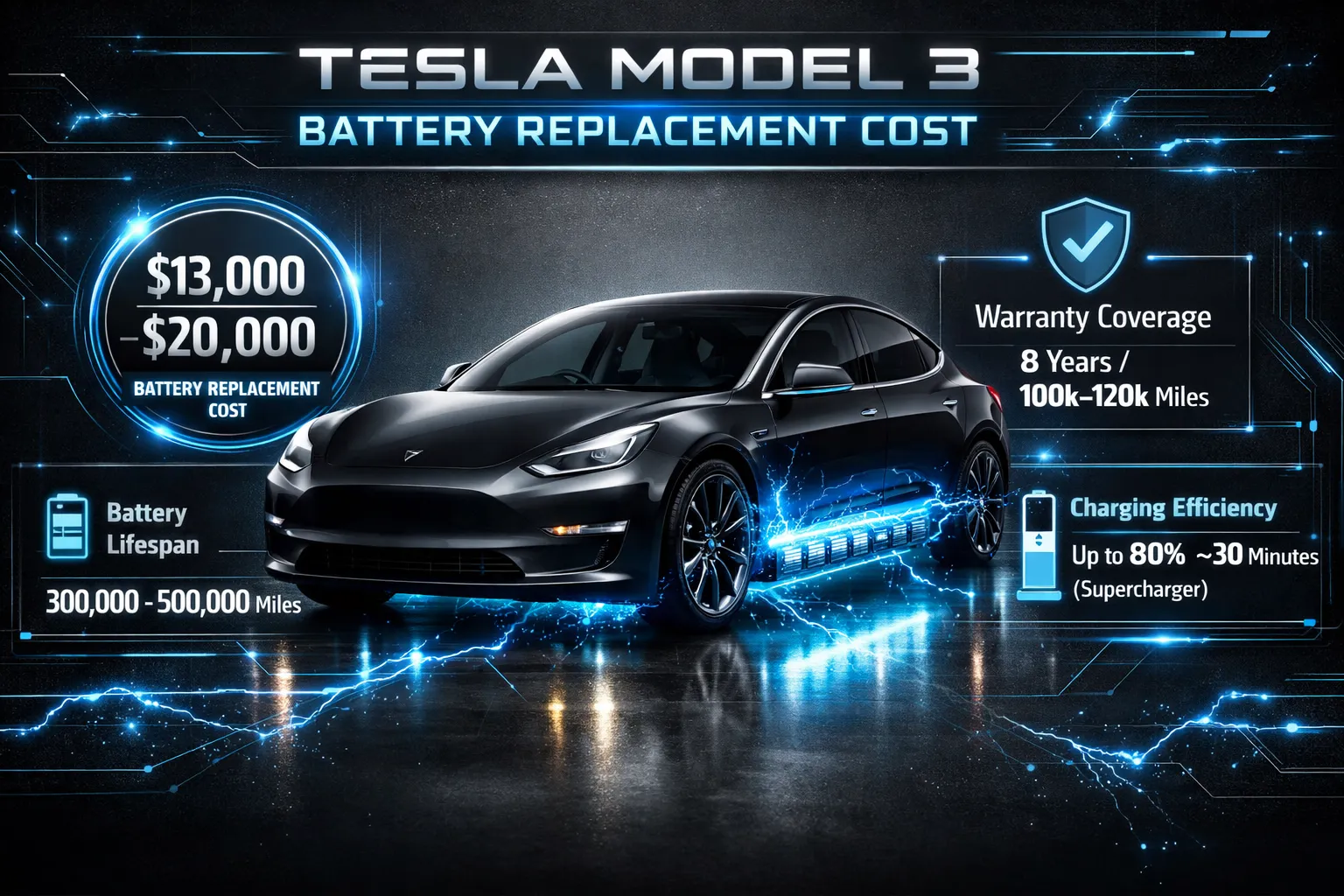
Tesla Model 3 Battery Replacement Cost
Cars that run on electricity are changing how people move around, yet the Tesla Model 3 stands out as a top choice among electric four-door cars across the globe. Loved because it uses little energy while delivering strong speed and smart features, it draws interest from regular drivers, along with fans of electric tech. Still, what weighs heavily on minds – buyers thinking twice, current owners watching closely – is the power pack under the floor, usually the priciest piece inside these cars.
Of course, folks wonder about the price of swapping a Tesla Model 3 battery. Dive into this full breakdown to find clear answers. Real pricing details sit alongside talk of chemical types inside the cells. How long these packs last matters just as much as what’s covered under warranty. Even care routines play a role here. Knowing each piece helps shape smarter choices down the road. Maybe you’re thinking of buying one. Or perhaps you already drive a Model 3. Long-range electric driving plans also fit into this picture. All angles connect in ways that matter when the time comes.
Starting off clear, the piece uses everyday words so anyone can follow along. Still, it lines up neatly with what search tools like to find. Built-in pieces such as sample charts, real cases, bullet points, and question boxes help shape the flow. Each part fits without feeling forced. The balance stays steady between readability and online visibility. Nothing gets left behind.
Quick Overview Table
| Feature | Specification |
| Vehicle Type | Electric Sedan |
| Battery Types | LFP (Standard Range) / NCA (Long Range & Performance) |
| Battery Capacity | ~50–82 kWh |
| Range (EPA Estimated) | ~250–360+ miles |
| Horsepower | ~240–450 HP |
| 0–60 mph | ~3.1–5.6 sec |
| Transmission | Single Speed (Electric Drive) |
| Seating | 5 Adults |
| Drive | RWD / AWD |
Introduction
Power storage inside a Tesla Model 3 shapes how far it goes, how fast it moves, also what it’s worth on the market. Gas-powered cars differ here – electric ones ask more money at purchase, mostly due to their stored-energy system.
What you find on the web often makes expenses seem easier than they are
- “Tesla Model 3 battery replacement: $12,000–$16,000”
- Yet it’s uncommon for them to clarify:
- Why prices fluctuate between trims and battery types
- Differences between LFP (Lithium Iron Phosphate) and NCA/NCM (Nickel-based) batteries
- Warranty coverage nuances
- Real-life owner experiences and practical guidance
This guide walks through every piece, offering clear takeaways while guiding your choices on owning an electric vehicle. What lies ahead shapes how you weigh each step forward.
How Much Does a Tesla Model 3 Battery Replacement Cost?
Battery replacement prices vary based on chemistry, capacity, labor, and whether you choose Tesla OEM, refurbished, or third-party options. In 2026, here’s the estimated breakdown:
| Replacement Type | Estimated Cost (USD) |
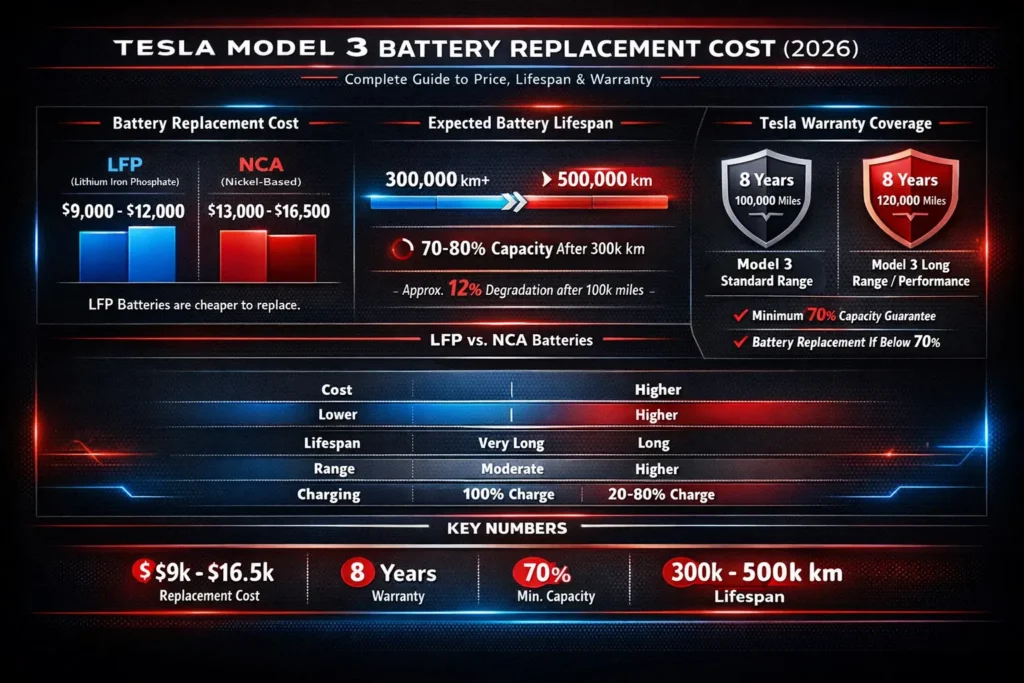
| Standard Range (LFP) | $9,000 – $12,000 |
| Long Range / Performance (NCA) | $13,000 – $16,000 |
| Tesla OEM New Pack | $13,000 – $17,000+ |
| Remanufactured Pack | $10,000 – $13,000 |
| Third‑Party Replacement | $7,000 – $12,000 (varies) |
Note: Regional differences, labor rates, battery availability, and shipping fees may influence final costs. Tesla OEM packs are higher-priced but ensure full software integration, warranty coverage, and optimal performance. Third-party alternatives can be cheaper but carry potential risks.
Tesla Model 3 Battery Replacement Cost Breakdown
Replacing a Tesla battery isn’t just about swapping the pack. Additional expenses often include installation, programming, diagnostics, and local taxes. Here’s a detailed cost analysis:
1. Battery Pack Price
- LFP (Standard Range) sits between nine thousand and twelve thousand dollars
- NCA or NCM Long Range and Performance 13000 to 16500 Dollars
2. Labor & Installation
Handling Tesla batteries safely means calling in experts trained for the job. Depending on where you are, paying for their work might cost anywhere from one thousand to two and a half thousand dollars.
3. Diagnostics & Programming
After swapping out Tesla’s onboard computer or Battery Management System, a reset is needed so everything runs right. That step helps track battery life, power use, and protection features properly. Not every shop bundles it – some tack on extra fees. Others cover it inside the main price.
4. Taxes & Fees
Local sales tax
- Handling and installation fees
- Environmental disposal fees
A clear record of these expenses helps avoid shock when it is time to replace them.
Pros & Cons
Pros:
- Higher energy density
- Longer range
- Advanced thermal management.
Cons:
Understanding battery chemistry helps owners predict maintenance costs and longevity.
Tesla Model 3 Battery Lifespan
EV batteries degrade gradually rather than failing suddenly. Real-world usage shows:
- ~10–15% capacity loss by 200,000 miles
- Typical lifespan: 300,000–500,000 miles
- Many vehicles are retired or sold before full battery replacement is required
Most owners never face full battery replacement during normal ownership. Smart charging habits and proper care significantly extend longevity.
Tesla Model 3 Battery Warranty
Tesla offers a robust warranty depending on the trim:
| Trim | Warranty |
| Standard Range | 8 years / 100,000 miles |
| Long Range & Performance | 8 years / 120,000 miles |
Guarantees a minimum 70% capacity retention- Batteries below 70% within warranty are replaced free of Charge
- Proper care ensures longevity beyond warranty
Signs Your Tesla Battery Might Need Replacement
Watch for red flags, including:
- Rapid range loss not explained by driving patterns
- Battery not charging beyond a certain percentage
- Dashboard alerts about battery health
- Large deviations in reported battery health
Early detection reduces long-term costs and prevents sudden failures.
Tesla Battery Degradation Explained
Battery wear occurs naturally over time, influenced by:
- Charging frequency and habits
- Use of DC fast chargers
- Exposure to temperature extremes
Trends:
- Degradation is slow and nearly linear
- LFP batteries degrade more slowly than NCA packs
- Charging between 20–80% daily prolongs lifespan
Proper habits reduce long-term replacement frequency and cost.
Tesla vs. Third-Party Battery Replacement Costs
| Provider | Approx. Battery Cost | Warranty | Notes |
| Tesla Service | $13k – $17k+ | Full OEM | Best compatibility, firmware, and support |
| Refurbished / Independent | $9k – $13k | Shorter | May lack full software features |
| Third-Party Used | $7k – $11k | Limited | Cheapest but carries risk |
Key takeaway: Tesla ensures firmware and BMS integration, while third-party solutions may save money but risk warranty and software limitations.
Can You Upgrade a Tesla Battery?
- Official upgrades: Not available
- Third-party upgrades: Possible, but risky
- Replacement packs usually match the original capacity
Battery upgrades remain an emerging niche with careful cost-benefit consideration.
How to Make Your Tesla Battery Last Longer
- Charge to 80% daily; full 100% only for long trips
- Limit frequent DC fast charging
- Maintain state-of-charge between 20–80%
- Avoid extreme temperatures
- Utilize Tesla’s scheduled charging features
Proper care can delay replacement for many years, saving thousands of dollars.
Should You Replace the Battery or Buy a New Tesla?
Consider replacement if:
- Vehicle is in excellent condition
- Battery fails early, and replacement is < $15k
- Long-term ownership is planned
Consider selling or upgrading if:
- Replacement costs > $18k
- The vehicle is older, with other parts possibly failing soon
- Planning a tech or performance upgrade
Often, battery replacement is more economical than buying a new Tesla — provided the rest of the vehicle is in good condition.
Future of Tesla Battery Technology
Tesla continues to innovate:
- 4680 structural cells: Higher density, lower cost
- Advanced thermal management for longevity
- Integration with the vehicle chassis for structural efficiency
These advancements promise longer battery life and lower future replacement costs.
Pros & Cons
Pros:
- Exceptional longevity
- Strong 8-year warranty
- LFP base trims are more durable
- Lower replacement cost than many EV competitors
- High resale value
Cons:
- Battery replacement remains costly
- Normal degradation not covered by Warranty
- Third-party replacements may void the warranty
- Regional wait times vary
- Failures, though rare, are inconvenient
FAQs
A: Most last 300,000–500,000+ miles with minimal degradation.
A: Yes — if capacity drops below 70% within the 8-year warranty.
A: Yes, but it may void the warranty and reduce the resale value.
A: Labor typically costs $1,000–$2,500.
A: Officially no. Third-party upgrades exist but carry risk.
Conclusion
A fresh battery in a Tesla Model 3 often weighs on buyers’ minds, yet hardly any cars need one at all. That’s because long life comes from smart design, plus how drivers treat charging habits. Temperature control within the car helps too, along with software that limits wear over time
- Gradual, predictable degradation
- Robust Tesla warranty
- Smart charging and maintenance habits
Fresh off the production line, Tesla’s original battery packs sit alongside rebuilt versions or those made by other companies. One choice might save money; another could mean less waiting. Each path trades something different in price or ease.
Battery swaps probably won’t wreck your wallet during normal use of the Tesla Model 3. This electric car still holds up well over Time while keeping costs low.