Introduction:
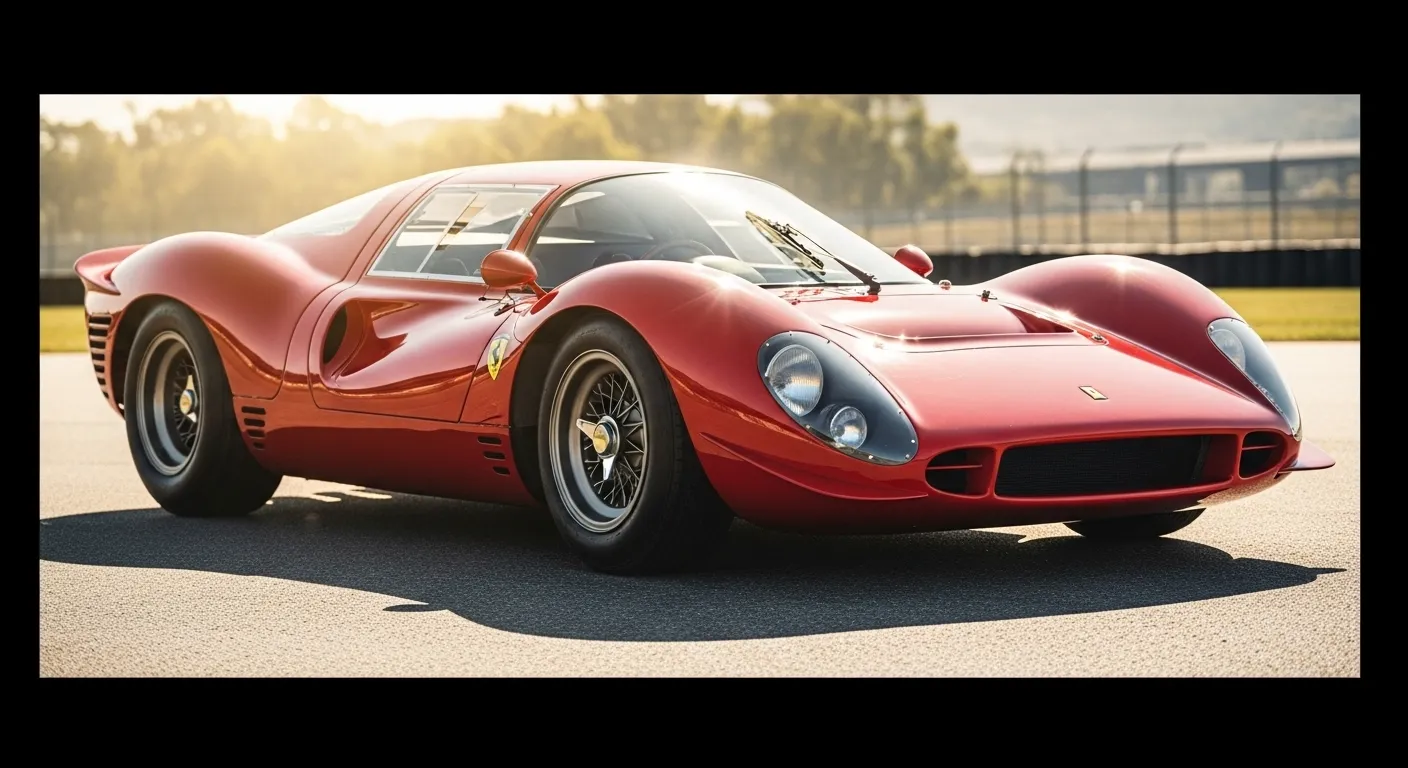
Still turning heads in 2026, the Ferrari 330 P4 isn’t just an old race car. Beauty lives under its curves – each line shaped by obsession with perfection. While many machines fade, this one stands taller through time. Craftsmanship like that doesn’t vanish; instead, it pulls crowds at shows across continents. Not because it won races – though it did – but because every bolt sings purpose. Engineers study it now much like they did fifty years ago. Meanwhile, fans keep returning, drawn less by speed than soul.
Out of a raw clash on the track – Ferrari versus Ford – a machine took shape, built for just one purpose. Not speed alone, but staying power through grueling miles. From that tension came engineering focused entirely on lasting longer than anything else. Every part was shaped by the need to outlive rivals when races stretched into darkness.
Ferrari 330 P4 now seen as iconic
- A multi-million-dollar collectible asset
- A museum-worthy automotive sculpture
- A benchmark for aerodynamic elegance and engineering brilliance
This deep dive into 2026 covers all key angles – specs, track history, how it was built, what it’s worth, alongside how it stacks up against famous competitors.
Quick Overview Table:
| Specification | Details |
| Engine | 4.0L V12 |
| Power Output | ~450 HP |
| Top Speed | ~320 km/h |
| Transmission | 5-speed manual |
| Fuel Type | Petrol |
| Body Style | Prototype race car |
| Weight | ~792 kg |
| Seating Capacity | 2 |
👉 While these figures appear straightforward, they conceal extraordinary engineering sophistication and race-focused innovation.
Exterior Design:
Aerodynamic Thinking and Human Shape
A sleek shape cuts through air while turning heads. Beauty meets function in every curve. Not just fast, but graceful too. Wind resistance fades as style steps forward. Power flows where design leads. Lines flow like speed made visible
- Fluid, sculpted contours
- Ultra-low and wide stance
- Seamless body integration
Smooth shapes cut through air better, holding steady even when moving fast. Each bend has a job: reducing resistance without losing balance mid-speed.
Iconic Headlight Integration
- Covered headlamps
- Flush-mounted design
- Reduced aerodynamic resistance
Performance runs smoother because of how it looks. The look ties into function without breaking stride.
Wheels and Frame Alignment
- Lightweight racing wheels
- Wide track for superior grip
- Optimized weight distribution
Inside the vehicle, how parts connect makes sharp turns at speed feel steady. A balance of weight and design keeps control tight when moving fast through curves.
Experts Find Beauty in Its Simplicity
- Automotive designers and historians consistently praise the Ferrari 330 P4 for:
- Perfect proportional harmony
- Organic design language
- Seamless fusion of art and engineering
Its appeal lasts, not because it Follows fashion but because it stands apart from it.
Interior Comfort:
Dashboard Layout
Inside the cockpit, functionality dominates:
- Analog instrumentation
- RPM-centric gauge cluster
- Minimalist racing interface
Every element is designed to enhance driver focus and situational awareness.
Seating Design
- Lightweight bucket seats
- Ergonomic positioning for stability
- Race-focused support
Comfort Reality
Let’s be direct:
- No infotainment system
- No climate control
- No luxury features
This is a purpose-built racing machine—not a road-going grand tourer.
Engine & Performance
Powertrain Engineering
Ferrari 330 P4 powered by naturally aspirated V12
- 4.0-liter displacement
- Approximately 450 horsepower
- Rev range up to 8000 RPM
From the first rev, power builds without sudden jumps. A raw rhythm of moving parts fills the air instead.
Driving Dynamics
- The driving experience is defined by:
- Instantaneous throttle response
- Progressive Acceleration
- Exceptional cornering agility
Balance matters more than brute force in the P4. Precision shapes how it moves, not just speed. Driver involvement becomes part of the experience, quietly built into each motion.
Performance Highlights
- Top Speed: ~320 km/h
- Lightweight construction (~792 kg)
- Advanced fuel injection system
Lightness makes steering feel sharper, almost alive. Every turn reacts quicker because there is less mass to move. Agility improves without needing extra power. The bike answers inputs with immediate precision.
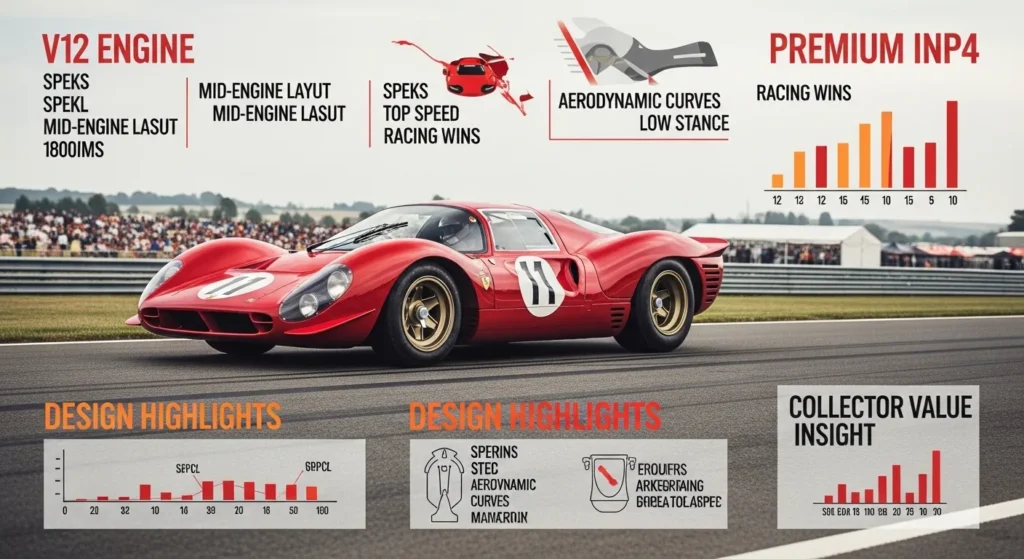
Ferrari 330 P4 vs Ford GT40
| Feature | Ferrari 330 P4 | Ford GT40 |
| Engine | 4.0L V12 | 7.0L V8 |
| Power Delivery | Balanced | Aggressive |
| Strength | Cornering | Straight-line speed |
| Driving Feel | Smooth & precise | Raw & powerful |
The Ford GT40 prioritized brute force, whereas the Ferrari 330 P4 focused on refined control and handling finesse.
Fuel Economy & Range
- No official consumption figures
- Designed for short endurance stints
Efficiency was never a design priority—performance was everything.
Technology & Infotainment
- Fully analog Systems
- No digital interfaces
- No connectivity features
Compared to modern Ferrari models, the P4 represents a purely mechanical era.
Pros & Cons
Pros:
- Iconic and timeless design
- Ultra-rare production
- Strong investment growth
- Legendary racing pedigree
- Exceptional engineering balance
Cons:
- Not road legal
- Extremely expensive
- Minimal safety features
- Zero comfort
- Complex maintenance
Maintenance & Ownership
Servicing Requirements
- Specialized Ferrari technicians
- Rare and expensive components
- Precision maintenance procedures
Ownership Reality
- Stored in climate-controlled environments
- Maintained as historical artifacts
- Driven only on special occasions or exhibitions
Resale Value
- Continuously Appreciating
- Extremely limited supply
- High global demand
The rarity ensures long-term value stability.
FAQs
A: Because of its Daytona 1967 victory and extreme rarity.
A: It can reach approximately 320 km/h.
A: No, it is strictly a racecar.
A: Only 3 original units were built.
A: Yes, but only through private collectors or auctions.
Final Verdict:
A masterpiece on wheels, the Ferrari 330 P4 blends craftsmanship with legacy through precise design. Though built for speed, its presence feels more like sculpture than machine. Every curve tells a story shaped by time, effort, and deep knowledge. This car does not just move forward – its motion carries echoes of an era defined by passion.
Even in 2026:
- Still sitting among the priciest cars ever built
- Golden times in long-distance races live on through it
- It continues to influence modern automotive design