Introduction:
Picture this. A 2018 Tesla Model X isn’t just numbers on a screen. Folks looking at it care less about specs stacked in columns. Instead, they’re after something deeper – real insight into how it feels, behaves, fits their life. Not data points, but clarity. Understanding what it’s actually like behind the wheel matters more than any chart ever could
- By 2026, will the 2018 Model X remain useful, enjoyable, yet upscale? Still holds up – maybe even surprises.
- What about value – does the 75D offer it best, or is it the 100D, maybe even the P100D?
- Today, how far can a used Model X actually go on a single charge?
- What problems show up most often when it comes to glitches or things breaking down?
- A used Tesla Model Y – could that be the better move?
The reality is fairly straightforward:
Fresh off the production line almost ten years back, the 2018 Model X refuses to fade into the background. With its spaceship-like look, plush cabin space, rare seven-seat layout, yet wild pickup speed – it holds its ground against fresher rivals on the market. While time ticks forward, this one keeps pace without begging for attention.
A buyer in 2026 will need to think twice before deciding. Satisfaction afterward ties closely to which trim it is, how strong the battery remains, plus whether past upkeep was thorough.
A well-kept 2018 Model X 100D, its battery still strong, those falcon-wing doors opening without issue, backed by documented servicing – this one drives like today’s electric cars should. But if it’s a base 75D model instead, struggling with weakened power storage, bouncy shocks, or doors that stick? That version turns into a wallet-draining headache before long.
This guide addresses:
- Trim comparison: 75D vs 100D vs P100D
- Driving distance you can actually expect by 2026
- Battery health and charging tips
- Reliability trends and common issues
- Interior comfort and practical usage
- Ownership and maintenance costs
- Comparison with used Tesla Model Y
- Recommended trims for typical buyers
Truth is, the 100D hits a sweet spot – not too much, not too little. Range stretches far enough without draining funds fast. Performance feels smooth yet sensible. Value? It holds up when compared to pricier picks. Most people looking to buy will find it just right. Not flashy, but steady where it counts.
2018 Tesla Model X at a Glance
A quiet hum replaces the roar of engines, the 2018 Model X cutting through city streets like something from another decade. First impressions? Sharp lines grab attention faster than words can explain. Charging unfolds overnight in driveways or during coffee breaks at public stations – no pumps involved.
- Premium all-electric performance with dual-motor all-wheel drive (AWD)
- Spacious cabin with optional 3-row seating
- Tesla Supercharger Network Access
- A sharp design pulls attention better than the plain shape of the Model Y
Trims Available in 2018
- 75D – entry-level trim with a smaller battery capacity
- 100D – balanced performance and range
- P100D – high-performance “Ludicrous” trim
Shared Features Across Trims
- Dual electric motors (AWD)
- Single-speed automatic transmission
- Adaptive air suspension
- Large vertical touchscreen with Tesla UI
- Optional Autopilot driver assistance
- Signature falcon wing rear doors
Right out of the gate, the Model X turned heads. Now, though, a different thought takes shape by 2026 – among 2018 models, which one holds up when you’re ready to buy?
Quick Overview Table
| Specification | 2018 Tesla Model X |
| Powertrain | Dual electric motors (AWD) |
| Transmission | Single-speed automatic |
| Battery Options | 75 kWh / 100 kWh |
| Main Trims | 75D / 100D / P100D |
| Horsepower | 518 hp (75D) – extreme in P100D |
| 0–60 mph | 4.9 sec (75D) – 2.9 sec (P100D) |
| EPA Range (new) | 238 miles (75D), 295 miles (100D), 289 miles (P100D) |
| Fuel Type | Fully electric |
| Body Type | Luxury SUV / crossover |
| Drivetrain | AWD |
| Seating | 5, 6, or 7 depending on configuration |
| Towing Capacity | Up to ~5,000 lbs |
| Basic Warranty (new) | 4 years / 50,000 miles |
| Battery & Drive Unit Warranty (new) | 8 years / unlimited miles (verify VIN for exact) |
Exterior Design
Even in 2026, the Model X exterior commands respect. Its futuristic lines, wide stance, and glass-heavy roof create a presence that older EVs rarely match.
Why Buyers Still Appreciate the Look
- Tall enough to handle rough roads, yet topped with a smooth roof that dips like a sports car. Built high but shaped low, almost whispering speed, even when standing still
- The longer distance between wheels gives it a standout look on the street
- Minimalistic Tesla design language
Compared to a used Tesla Model Y, the Model X feels:
- Wider and more substantial
- More upscale and luxurious
- Dramatic and iconic
- A true flagship rather than a conventional crossover
Emotional appeal: If your decision is partially influenced by aesthetics and “wow factor,” the Model X maintains an advantage.
Wheel Options
Built for comfort, 20-inch wheels roll easier on flat roads. Smooth travel comes through steady contact with the surface. Efficiency rises when less energy gets lost in each turn. Replacing tires happens less often due to tougher sidewalls. Costs drop because fewer changes add up over time
Recommendation: For comfort and long-term value, opt for 20-inch wheels.
Falcon Wing Doors
The Falcon wing doors are the signature element of the 2018 Model X. Eye-catching and futuristic, they enhance luxury perception but introduce maintenance complexity.
Pros, according to owners:
- Unique, futuristic design
- Improved rear access in some scenarios
- High “wow factor” for passengers
- Elevates the Model X above Standard SUVs
Common complaints:
- Slow opening/closing
- Over-sensitive safety sensors
- False obstruction alerts
- Inconvenient in tight spaces
- Expensive repairs if malfunctioning
Reality check: Falcon wing doors are both the most impressive and maintenance-sensitive feature of the Model X.
Interior & Comfort
Grace marks the years inside the 2018 Model X cockpit. Notable bits show up here – details catch attention without shouting
- Large vertical touchscreen for controls and infotainment
- Digital driver display
- Minimalist dashboard design
- Open, airy feel with panoramic windshield
- Flexible seating: 5, 6, or 7 passengers
Seating Layout Observations
- 5-seat configuration: best for cargo, simpler arrangement
- 6-seat configuration: premium captain’s chairs, slightly less flexible for luggage
- 7-seat configuration: ideal for families requiring maximum versatility
Recommendation: Most buyers find the 7-seat layout most practical, unless maximum cargo simplicity is a priority.
Comfort Highlights
Pros:
- Quiet electric drivetrain
- Premium materials
- Excellent front-seat support
- Strong visibility
Cons:
- Potential squeaks and rattles over time
- Rubber seal aging
- Occasional trim wear
- Build inconsistencies due to early production runs
2018 Model X Trims:
75D – Entry-Level, Affordable EV
- Smaller 75 kWh battery
- EPA range: ~238 miles (new)
- 0–60 mph: 4.9 seconds
- Ideal for buyers seeking an entry-Level Model X experience with a lower initial cost
Considerations:
- Limited range compared to higher trims
- An older battery may experience degradation
- Fewer features than 100D/P100D
100D – Sweet Spot
- 100 kWh battery balances range and performance
- EPA range: ~295 miles (new)
- 0–60 mph: ~4.7 seconds
- Optimal value for long-term ownership in 2026
Advantages:
- Strong range for daily commuting and trips
- Retains most luxury features
- Best balance of performance and reliability
P100D – High-Performance, Ludicrous Mode
- 100 kWh battery, maximum acceleration
- 0–60 mph: 2.9 seconds
- High performance with “Ludicrous” acceleration
Considerations:
- Higher purchase price
- Faster battery wear under aggressive driving
- Maintenance costs can be higher
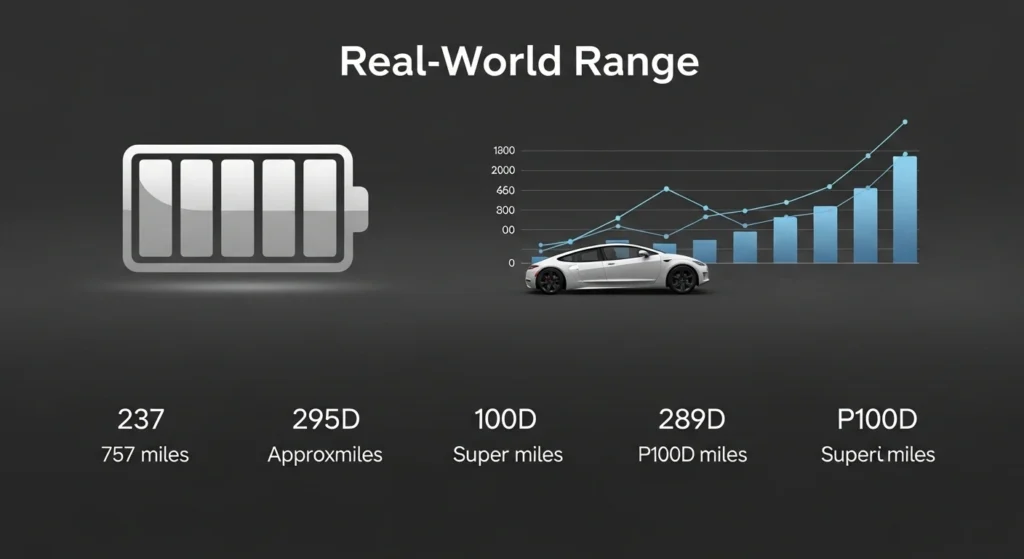
Real-World 2026 Range
- 75D: ~180–210 miles depending on battery health
- 100D: ~240–270 miles
- P100D: ~220–250 miles due to performance-oriented driving
Tip: Range depends heavily on battery degradation, wheel choice, and driving style.
Battery Health & Charging Considerations
- Tesla batteries generally retain 80–90% capacity after 150k–200k miles
- Frequent supercharging may accelerate degradation, but normal use is generally fine
- Replacement costs: $15k–$20k depending on VIN and Battery size
- Check historical charging patterns if possible
Reliability & Common Issues
Frequent concerns:
- Falcon wing doors are malfunctioning
- Suspension air bags and compressors are aging
- Touchscreen responsiveness issues
- Autopilot sensor calibration
- Minor electrical gremlins
Bottom line: A well-documented service history is critical.
Ownership Costs
- Annual maintenance: $1,200–$2,500
- Tire replacement: ~$300–$500 per axle (depending on wheel size)
- Insurance: typically higher than standard SUVs due to EV and premium status
Comparison with the Used Tesla Model Y
| Feature | 2018 Model X | Used Tesla Model Y |
| Cabin Space | Larger, more luxurious | Smaller, practical |
| Driving Feel | Flagship EV performance | Sporty, less refined |
| Falcon Wing Doors | Iconic, complex | Conventional doors |
| Range | 100D: ~240–270 mi | Long Range: ~310 mi |
| Price | Lower depreciation, but older | Cheaper entry price, newer tech |
Recommended Trim for Most Buyers
- 100D: Best balance of value, range, and Features
- 75D: Only if budget-constrained and range needs are minimal
- P100D: Only if performance and acceleration are top priorities
FAQs
A: Yes. If you choose the right trim—100D is recommended—verify battery health, and check service history, the 2018 Model X remains a premium, reliable, and exhilarating EV. Avoid poorly maintained 75D trims to reduce the risk of costly repairs.
A: 100D: Best balance of range, performance, and features. Ideal for most buyers.
75D: Budget-friendly but shorter range and fewer features.
P100D: High-performance “Ludicrous” trim; great for speed enthusiasts, but higher maintenance costs.
A: 75D: ~180–210 miles depending on battery health
100D: ~240–270 miles
P100D: ~220–250 miles, performance driving can reduce range
A: The Model X is generally dependable if maintained well. Common issues include:
Falcon wing door malfunctions
Suspension compressor wear
Touchscreen responsiveness issues
Minor electrical quirks
Proper maintenance and full service records are key to long-term reliability.
A: Annual maintenance: $1,200–$2,500
Tires: $300–$500 per axle, depending on size
Battery replacement: $15k–$20k (rare if battery health is good)
Insurance: Higher than standard SUVs due to EV premium status
Final Verdict:
Sure – provided you take time to check the trim level, look into how well the battery has held up, then confirm it comes with complete service records. For those wanting an upscale electric car that doesn’t feel outdated, the 100D stands out more than others.
Still turning heads in 2018, the Model X mixes sleek looks with high-end comfort plus electric power sent to all wheels. Because those upward-opening doors can bring extra upkeep, checking their function matters over time. Ride quality stays smooth until suspension parts begin showing age. Long-term value often ties directly to how well the battery has been cared for. Families drawn to space and tech will find plenty here – if past service history is clear.
Truth is, by 2026, the 2018 Tesla Model X 100D will still outlive doubts. Safety sticks around like it’s built in. Driving one feels sharp, even now. Few older electric cars match its pull. Year After year, it holds up – no fanfare needed.