Introduction
Rumors are swirling about the Tesla Model 2 release date in 2026, sparking excitement among EV enthusiasts and daily commuters alike. Unlike Tesla’s high-end lineup, the Model 2 aims for affordability and practicality, perfect for city streets and everyday drives. Compact yet feature-packed, it borrows design cues from older models while promising simpler, cleaner performance.
This deep dive explores everything about the Tesla Model 2 — from its expected launch window, probable tech specs, and estimated price, to key features, potential performance, and comparisons against rival EVs. Facts are presented clearly, blending context with practical insights that make sense for both casual readers and Tesla fans.
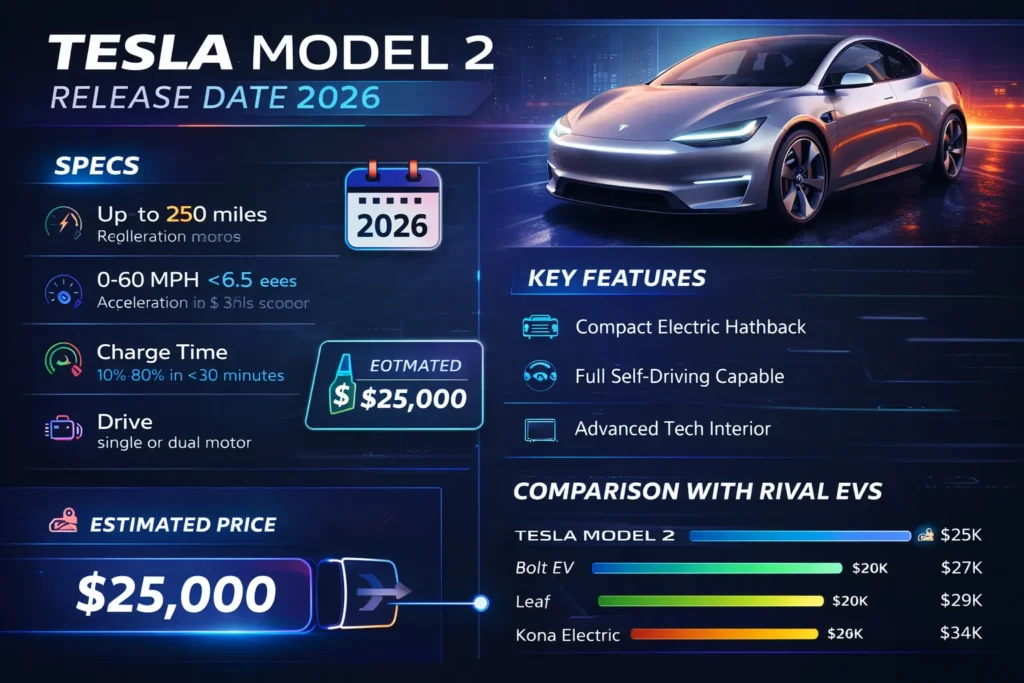
Industry whispers suggest production could start in late 2025, with deliveries possibly rolling out by early 2026, though Tesla has yet to confirm an official release date.
Tesla Model 2 at a Glance
| Feature | Expected Specification |
| Vehicle Type | Electric (LFP Battery) |
| Output (Approx.) | ~200–250 hp |
| Driving Range (Estimated) | ~250–300+ miles |
| Transmission | Single‑Speed Automatic |
| Battery Pack | ~53–60 kWh LFP |
| Body Design | Compact Hatchback / Small SUV Styling |
| Occupancy | 4–5 Passengers |
| Charging | Tesla Supercharger Compatibility |
| Delivery Horizon | Late 2025 — 2026 (Estimated) |
This snapshot provides a swift orientation to the anticipated technical core of the Model 2 — combining range, power, and functional utility in a compact electric package.
What Is the Tesla Model 2?
A small car, built by Tesla, might soon become its cheapest option yet. This version targets people wanting high-tech wheels without paying what they do for today’s Model 3 or Model Y. Instead of high costs, it leans on simplicity – bringing smart features within reach through lower pricing.
A clear goal drives it – making electric cars accessible through smart design. Not just speed or sleek tech, but real-world reach matters most. Built to match what Tesla offers, yet priced so more people can get in. Performance stays high, software works the same way. The difference? It fits budgets across countries, not just one corner of the market.
Smaller than the Model 3 or Model Y, the Model 2 seems aimed at city life, built for tighter streets and lower budgets. Instead of chasing mass-market appeal, it leans into compact design with pricing that once looked like it might dip below twenty-five thousand dollars. Yet raw materials got pricier, factory space grew tight – so those early numbers shifted. While Tesla stays quiet on exact figures, people tracking the situation think the new model will still cost noticeably less than today’s options. Even without official confirmation, whispers point toward a cheaper entry point into the brand’s electric world.
Expected Tesla Model 2 Release Date for 2026
When Will the Tesla Model 2 Become Available?
Folks at Tesla stay quiet on exactly when the Model 2 shows up. Not a single confirmed date floats around, while promises about delivery timing vanish into thin air.
Still, predictions from those who track the field point to production possibly beginning close to late 2025, with deliveries then stretching out through 2026.
Hopes for mid-2025 production have faded, pushed aside by shifting timelines. Factory issues across continents added strain, while supplies moved without warning or rhythm. Forecasts now show less coming out than earlier guesses suggested. Delays piled up, one after another, tightening the schedule until it snapped. The finish line, once clear, vanishes into haze.
Why This Matters
Timing matters with Tesla since the automaker tends to set bold goals – then adjust them when real-world limits show up. Early fans thought they might get it by 2025, yet people who track these things closely now expect delivery windows closer to late 2026 instead.
Right now, people think things should go like this:
- Production Launch: Late 2025 (tentative)
- Initial Deliveries: 2026 (expected)
- Still waiting on Tesla to confirm it themselves
Production usually gets confirmed by Tesla before deliveries start trickling out in phases. Once the assembly line speeds up, customer handovers begin slowly. Looking back at how Model 3 and Model Y were introduced helps spot the pattern. The earliest batches often reach only a small number of buyers each quarter. Launch pace tends to stay cautious for several months at first. Volume grows later, but not right away. Past launches show similar timing across models. Initial supply stays tight until output stabilizes.
Design & Exterior
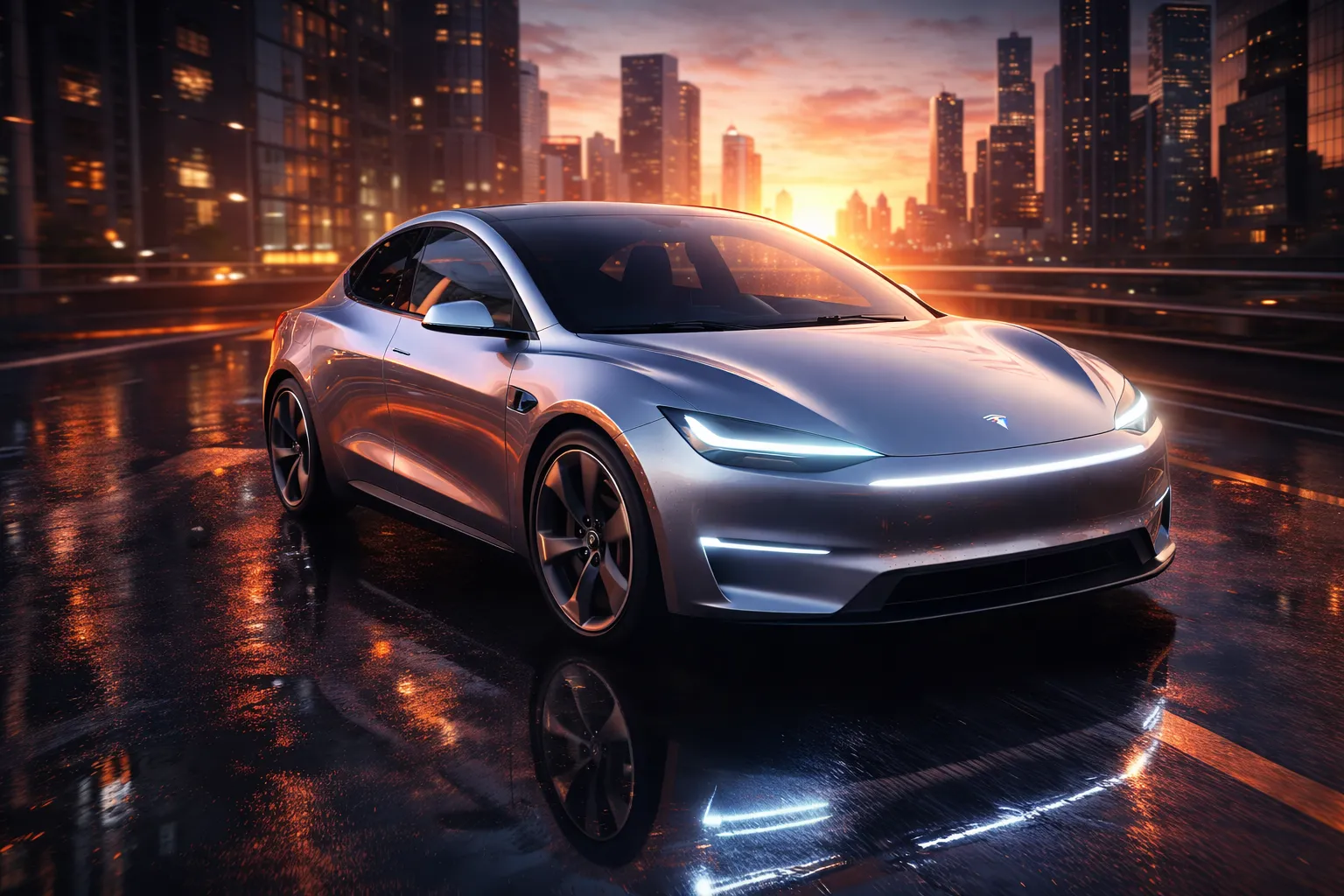
The upcoming Model 2 is expected to share Tesla’s signature design philosophy: minimalist aerodynamic efficiency blended with functional, modern aesthetic lines.
Exterior Highlights
- Aerodynamic Silhouette: Smooth, tapered body designed for lower drag and improved range efficiency.
- Compact Proportions: A size that slots below the Model 3 and Model Y — likely akin to a hatchback or city‑friendly SUV.
- Modern LED Lighting: Sharp, contemporary headlights and taillights that enhance visibility and style.
- Closed Front Fascia: Typical of EVs, a minimal grille area maximizes aerodynamic performance.
- Streamlined Wheel Design: Multi‑spoke or aero wheel options to further reduce drag and improve efficiency.
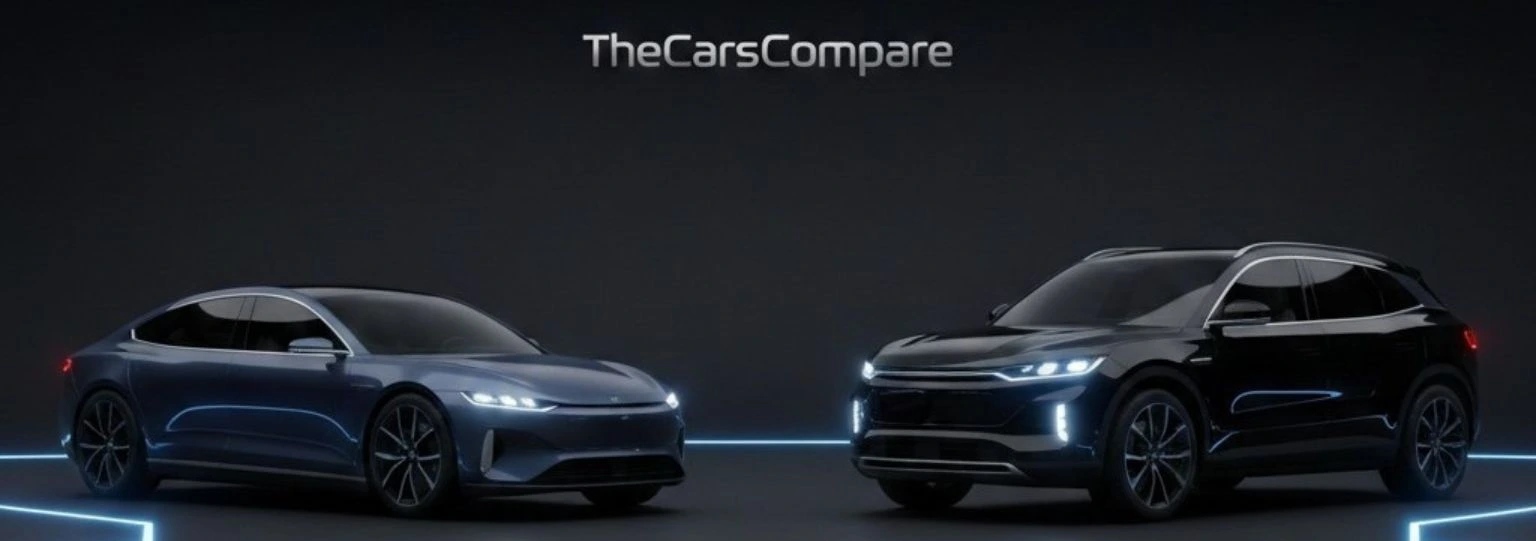
Although Tesla has not released official renderings or prototypes publicly, design consultants and automotive sketch leaks imply a vehicle silhouette that meshes elements of a small crossover with traditional hatchback practicality.
This compact form factor allows higher maneuverability in urban environments while retaining useful cargo and passenger space inside.
Interior & Comfort
Tesla interiors have become known for clean, intuitive layout designs with large central displays and few physical controls. The Model 2 is expected to carry this design DNA forward — albeit with practical adjustments appropriate for a more affordable vehicle.
Anticipated Interior Features
- Large Central Touchscreen (approx. 15–17 inches): Acts as the hub for Entertainment, climate control, navigation, and vehicle diagnostics.
- Minimal Hard Buttons: Most functions controlled through touchscreen or steering wheel inputs.
- Seating for 4–5 Passengers: Optimized for daily comfort and ergonomic support.
- Quality Interior Surfaces: Soft‑touch materials with ambient lighting, despite cost‑sensitive positioning.
- Open, Uncluttered Cabin Space: Minimalist layout to enhance perceived spaciousness.
- Panoramic Roof Option: Provides an airy feel for occupants (depending on trim).
Tesla continues to elevate the balance between simplicity and cutting‑edge tech. Even in a lower‑cost model, expect comfortable seating, thoughtful ergonomics, and an interface designed to quickly adapt to frequent over‑the‑air improvements.
Electric Power & Performance
Tesla vehicles are globally renowned for their near‑instant torque delivery, electric smoothness, and highly optimized powertrain systems.
Performance Estimates (Non‑Official)
| Specification | Expected Figure |
| Power Output | ~200–250 hp |
| 0‑60 mph (Est.) | ~6–7 seconds |
| Drive Options | RWD Standard; AWD (optional later) |
| Battery Technology | LFP (Lithium Iron Phosphate) |
These figures aim to balance fun driving dynamics with practical efficiency and cost control. Larger buffer batteries and LFP pack chemistry provide increased safety margins and cost‑efficiencies relative to more expensive lithium‑ion alternatives.
LFP is known for:
- Better thermal stability
- Higher long‑term durability
- Lower raw material costs
Charging compatibility with Tesla’s Supercharger network enhances long‑distance usability — a major convenience advantage over some competing affordable EVs.
Battery & Range
Folks checking out electric cars often fixate on how far they can go. Distance matters a lot when sizing up an EV.
Typical Battery Life and Driving Distance
- Estimated Range: ~250–300+ miles per charge
- Battery Pack: ~53–60 kWh LFP-based system
- Charging: Tesla Supercharger access (fast DC charging)
Few budget electric cars match this reach, yet it handles daily drives just as well as weekend getaways. Starting distances add up without surprise stops.
A less dense energy storage lies within LFP batteries when stacked against premium types. Yet price advantages show up clearly. Their lifespan cycles stretch much further than many expect. Heat behaves more predictably during operation. This mix fits vehicles built around smart budget choices.
Safety & Technological Features
Tesla’s vehicles consistently rank highly for crash safety and active driver support systems.
Expected Safety Technology
- Comprehensive Airbag System
- Anti‑Lock Brakes (ABS)
- Electronic Stability Control
- Lane Departure Warning
- Forward Collision Avoidance
- Automatic Emergency Braking
- Autopilot ADAS Optional
Moving down the highway, Tesla’s Autopilot – together with the optional FSD upgrade – stands as one of today’s most capable driver aids. While it cannot drive itself completely, the tech manages actions such as turning the wheel or switching lanes, but only with someone watching closely. Cameras built into the car scan the environment, and fresh software rolls out improvements gradually. Vision is key here; unlike numerous competitors, Tesla leans heavily on camera data rather than using radar. Even when engaged, those behind the wheel must remain alert, since oversight stays firmly in human hands. Every now and then, updates come by radio waves, shifting how vehicles behave on busy roads. Still, despite the leap forward, eyes must stay locked on the wheel always.
Infotainment & Connectivity Features
Tesla’s tech ecosystem is a major competitive advantage:
- Central touchscreen interface
- Built‑in Navigation
- Media Streaming Services
- Voice Command Integration
- Mobile App Vehicle Management
- Over‑the‑Air (OTA) Software Updates
With OTA improvements, Tesla vehicles often improve in functionality and performance without requiring Dealership service appointments — a modern approach to continuous optimization.
Trim Levels & Expected Pricing
While official pricing has not been released, industry estimates suggest multiple trims with differentiated features:
| Trim | Key Focus | Estimated Price (USD) |
| Standard | Essential range, RWD | ~$25,000–$30,000 |
| Mid | Enhanced range, Optional AWD | ~$30,000–$33,000 |
| Performance | Sportier setup | ~$33,000–$35,000 |
Note: Final prices vary by region, taxes, incentives, and Tesla has not yet published any official MSRP.
While initial projections aimed for sub‑$25k pricing, supply cost inflation has pushed expected base pricing toward $25,000–$30,000 — still highly competitive for the EV segment.
Comparison
| EV Model | Est. Price | Est. Range | Notes |
| Tesla Model 2 | ~$25k–$35k | ~250–300+ mi | Affordable Tesla EV |
| Hyundai Ioniq 5 | ~$32k–$40k | ~303 mi | Compact SUV EV |
| Chevy Bolt EV | ~$24,995 | ~259 mi | Budget long‑range EV |
| Nissan Leaf | ~$28k | ~220 mi | Veteran affordable EV |
Tesla Model 2 aims to outpace competitors in range, tech integration, and software experience, while offering lower maintenance needs and a strong supercharger network.
Pros & Cons
Advantages
- Lower‑cost entry into the Tesla ecosystem
- Competitive range for a compact electric vehicle
- Highly advanced tech platform
- Potential for strong resale values
Disadvantages
- Unconfirmed official launch timeline
- Depending on where you are, what’s included could differ. Some places get different details than others do. Not every location follows the same setup exactly
- Limited charging infrastructure in some areas
- A compact design takes up less space compared to bulkier electric vehicles
Maintenance & Ownership
Most of the time, electric cars need fewer checkups than gas-powered ones since they’ve got simpler engines. Fewer moving parts means less that can wear out over miles driven. Fluid changes almost vanish from the schedule, unlike regular automobiles. Brake systems tend to last longer thanks to regenerative slowing methods built into driving. Mechanics rarely touch the power system during typical upkeep rounds. Scheduled Visits focus more on tires, cabin filters, and software updates instead
Oil under the hood stays put. The engine never needs fresh drops. Maintenance skips that step entirely
- Fewer mechanical wear components
- Regenerative braking reduces brake wear
- Software updates can deliver improvements remotely
Home charging, along with access to Tesla’s Supercharger grid, makes owning one easier.
FAQs
A: No. Tesla has not given an official date yet. Industry reports suggest production may start in late 2025 with deliveries in 2026.
A: Expected around ~$25,000–$35,000 depending on trim and region. Official prices aren’t confirmed.
A: Around 250–300+ miles range is expected based on battery and design estimates.
A: Production is likely at major Tesla factories like Giga Texas or Giga Berlin, though exact plans are not official.
A: It aims to offer a better tech experience and longer range than many sub‑$35k EVs due to Tesla’s software and battery tech.
Conclusion
A small car from Tesla might change how people see electric driving. This version aims to bring their tech within reach, combining solid distance on a charge with smart features and fast refueling access.
This car shows something quiet but clear: price might stop being a wall between people and electric vehicles. A shift creeps in, not loud, just steady – accessibility grows, quietly pulling more drivers into possibility.
Keep an eye on updates straight from Tesla. Check what support or perks are available where you live. When comparing electric cars, look at different models before Deciding.