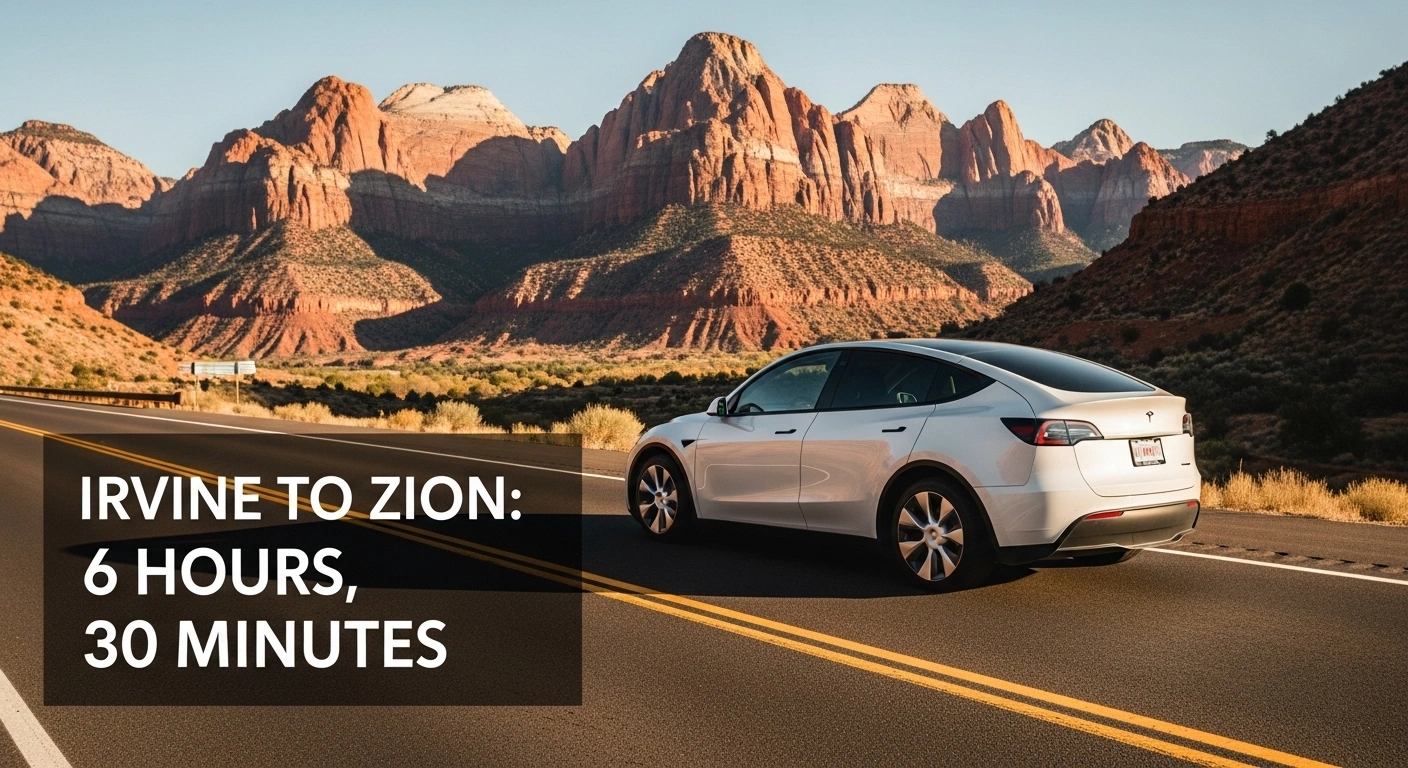
Irvine to Zion in Tesla Model Y:
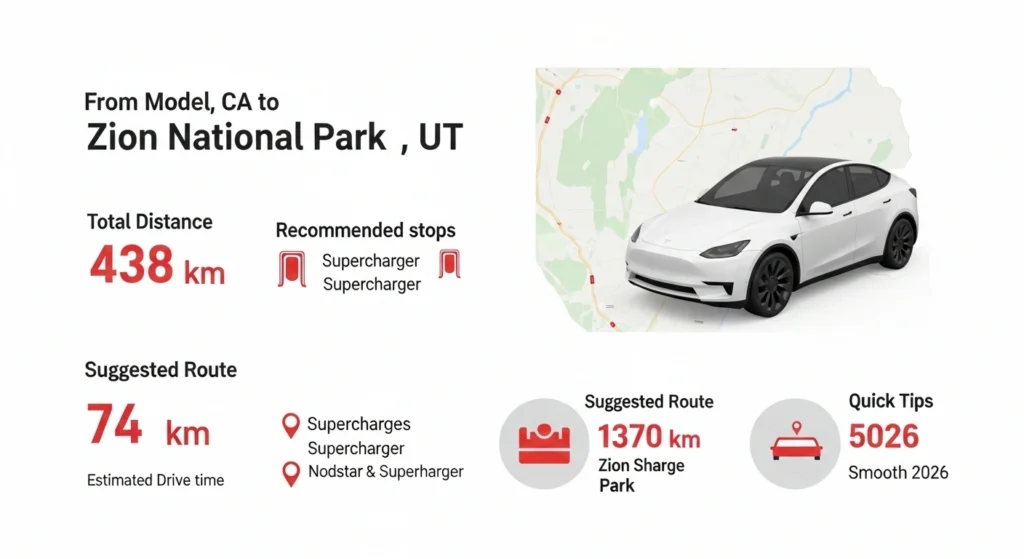
Driving from Irvine, California, to Zion National Park in a Tesla Model Y is more than simply covering the 425–429 miles — it involves strategic planning, accounting for charging sessions, navigating terrain, and optimizing arrival logistics. Many EV drivers searching for “Irvine to Zion in Tesla Model Y, how long?” want honest, precise answers:
- How many hours will it genuinely take?
- How many Supercharger stops are necessary?
- Can a Tesla Model Y comfortably complete this journey in a single day?
This comprehensive guide addresses all these questions, incorporating real-world driving experiences, vehicle comparisons, route strategy, and practical tips to ensure your trip is smooth, stress-free, and enjoyable.
Quick Answer: Realistic Irvine → Zion Drive Time in a Tesla Model Y
| Factor | Details |
| Distance | 425–429 miles (Irvine → Springdale/Zion NP) |
| Gas-car baseline | 6 hr 20 min – 7 hr |
| Tesla Model Y realistic total | 7.5 – 9 hr |
| Best-case (Long Range, full charge, optimal weather) | 7 – 7.5 hr |
| Worst-case (cold, wind, traffic, low battery) | 8.5 – 10+ hr |
| Likely charging stops | 1–2 for Long Range; 2+ for Performance/RWD |
Key takeaway: Most real-world drives take approximately 8 hours. Using Tesla’s Trip Planner is the fastest way to ensure your stops and range are optimized.
Irvine to Zion: Distance, Route & Drive Dynamics
Typical Route
Tesla drivers usually take:
- Orange County freeways to I‑15 North
- Through or near Las Vegas, Nevada
- Past St. George, Utah
- Into Springdale/Zion NP’s south entrance
Why this route is ideal for EVs:
- Major interstates with predictable traffic patterns
- Robust Supercharger network
- Manageable elevation changes
- Easy alternative charging options
Pro tip: Tesla Trip Planner accounts for variables like elevation, temperature, driving style, and traffic, providing efficient stops and minimizing downtime.
Can a Tesla Model Y Make the Trip Without Stress?
Yes, with proper preparation:
- Routes automatically guide through required Superchargers
- Suggests charging duration per stop
- Estimates battery percentage on arrival
- Adjusts dynamically if you charge differently than planned
- Precondition the battery if needed
Stress-Free Tips
- Begin with a 95–100% battery
- Adhere to Tesla navigation guidance
- Avoid assuming full EPA range at 75–80 mph
- Maintain a battery buffer upon arrival
- Opt for medium + short charging sessions instead of long Single stops
Factors That Increase Stress
- Starting at 60–80% SOC
- Ignoring elevation or weather effects
- Aggressive highway speeds (80+ mph)
- Arriving at chargers critically low
Tesla Model Y: Exterior & Efficiency for Long Drives
Aerodynamics & Body
- Crossover SUV provides extra cargo capacity
- Sloped roofline reduces wind resistance
- Smooth underbody enhances highway efficiency
Lighting & Visibility
- LED headlights improve early morning, dusk, and desert driving safety
Wheels & Range
- Smaller wheels = better energy efficiency
- Larger wheels (Performance trim) = higher consumption, more charging stops
Interior Comfort for 7.5–9 Hour Drive
- Minimalist cabin reduces fatigue
- Large central display simplifies navigation
- Seats and space accommodate long drives comfortably
Cargo & Family Use:
- Room for hiking gear, luggage, snacks
- Fits 5 passengers standard (7 optional)
- Comfortable for weekend trips
Performance: Handling Irvine → Zion
- Instant torque ensures easy freeway merging
- One-speed drive provides smooth acceleration
- Handles uphill gradients effectively
Driving Experience
- Stable at highway speeds
- Quiet for reduced fatigue
- Adaptive cruise & driver assistance reduce stress
Efficiency vs Acceleration:
- Aggressive driving reduces range
- 65–75 mph is optimal for fewer stops
- Performance trim may require extra stops
Real-World Range & Charging Stops
| Trim | Typical Stops | Realistic Time |
| Long Range | 1–2 | 7–8.5 hr |
| Performance | 2 | 7.5–9 hr |
| RWD | 2–3 | 8–10 hr |
Tesla Model Y Charging Stops: Strategy
Long Range
- Best-case: Full battery, mild weather, light cargo → 1 long stop or 2 Short top-ups
Performance/RWD
- Larger wheels, aggressive driving → 2–3 stops depending on conditions
Supercharger Strategy:
- Use Tesla nav for initial stops
- Recheck during traffic/weather changes
- Maintain 15–25% buffer upon arrival
Zion Arrival:
- Hotels or shuttles may require additional planning
- Avoid charging to zero
Safety & Technology on Long Trips
- High crash-safety rating
- Low center of gravity → better stability
- Regenerative braking optimizes energy
- Adaptive cruise/lane assist → reduced driver fatigue
Trip Planner Advantage:
- Calculates stops, charging duration, battery on arrival
- Dynamic adjustments outperform generic mapping apps
- Provides energy graphs, ETA, and stop confidence
Recommended Tesla Model Y Trim
| Trim | Best For | Road-Trip Stress | Stops | Range Buffer |
| RWD | Budget-conscious | Moderate | 2–3 | Tightest |
| Long Range | Efficient & comfortable | Lowest | 1–2 | Strongest |
| Performance | Sporty drivers | Moderate | 2 | Moderate |
Verdict: Long Range offers the best balance for a one-day trip.
Pros & Cons
Pros:
- Strong I‑15 Supercharger coverage
- Trip Planner simplifies navigation
- Charging stops coincide with meal breaks
- Comfortable and quiet drive
Cons:
- 45 min–2 hr slower than a gas car
- Highway speeds reduce range
- Performance trims are less efficient
- SoCal/Vegas traffic can add delays
- Cold or windy weather increases the total time
Departure & Battery Tips
- Leave 4:30–6:30 AM to avoid traffic and reach Zion early
- Start at 95–100% SOC
- Overnight home charging is recommended
- Use battery preconditioning if prompted
Tesla vs Gas Car Travel Time
- Gas car: ~6.3–7.1 hr
- Tesla Model Y: 7.5–9 hr
- “Tesla penalty”: 45 min–2 hr depending on stops
- Stop overlap (food/rest) reduces perceived delay
Zion Arrival & Itinerary Tips
- Check in at hotels with Level 2 Charging
- Factor in shuttles, walking, or entrance lines
- A one-day trip is feasible, but consider an overnight stay
Sample Itineraries:
| Plan | Start | Stops | Total Time |
| Fastest (Long Range) | 100% | 1 + short top-up | 7–7.8 hr |
| Balanced | 95–100% | 2 | 7.8–8.8 hr |
| Family / Stress-Free | 100% | Extra buffer | 8.5–9.5+ hr |
Alternative EVs on the Same Route
- Tesla Model 3 Long Range → efficient, lower cargo space
- Hyundai Ioniq 5 → fast DC charging, comfortable
- Kia EV6 → stylish, efficient, highway-friendly
Pre-Trip Checklist
- Charge to 95–100%
- Check tire pressure, windshield, cameras
- Confirm Tesla nav route
- Pack connectors/adapters
- Hotel charging confirmed
- Software updates completed
Tire health especially affects efficiency for Performance trims.
FAQs
A: Approximately 425–429 miles depending on your final destination.
A: Typically 7.5–9 hours, including charging stops.
A: 1–2 for Long Range; 2+ for Performance or RWD trims.
A: Yes — Tesla Trip Planner automates routing and charging.
A: Model Y Long Range provides optimal comfort, efficiency, and fewer stops.
Final Verdict
Driving from Irvine to Zion in a Tesla Model Y is straightforward if planned correctly:
- Depart early
- Prefer Long Range trim
- Follow Tesla navigation & Trip Planner
- Plan 1–2 efficient charging stops
- Stay overnight if possible
Honest real-world answer: ~425–429 miles, 7.5–9 hours, 1–2 charging stops (Long Range), stress-free with proper preparation.