Introduction
The 2020 Ferrari F8 Tributo successor isn’t just another Ferrari model — it’s the start of a new generation in Ferrari’s storied legacy of mid‑engine supercars. For years, the F8 Tributo marked the pinnacle of Ferrari’s naturally aspirated and turbo V8 road cars. But as emissions regulations tighten and performance benchmarks rise, the successor — widely acknowledged as the Ferrari 296 GTB — blends electrification with explosive performance. In this complete guide, we break down every element you need to understand Ferrari’s thrilling next chapter — from engine and design upgrades to real‑world driving impressions, safety features, variants, ownership insights, and how it stacks up against rival supercars on the road today.
Quick Overview Table
| Feature | Successor Ferrari Model (296 GTB and Hybrid Mid‑Engine Lineup) |
| Engine Configuration | Hybrid V6 Turbo + Electric Motor |
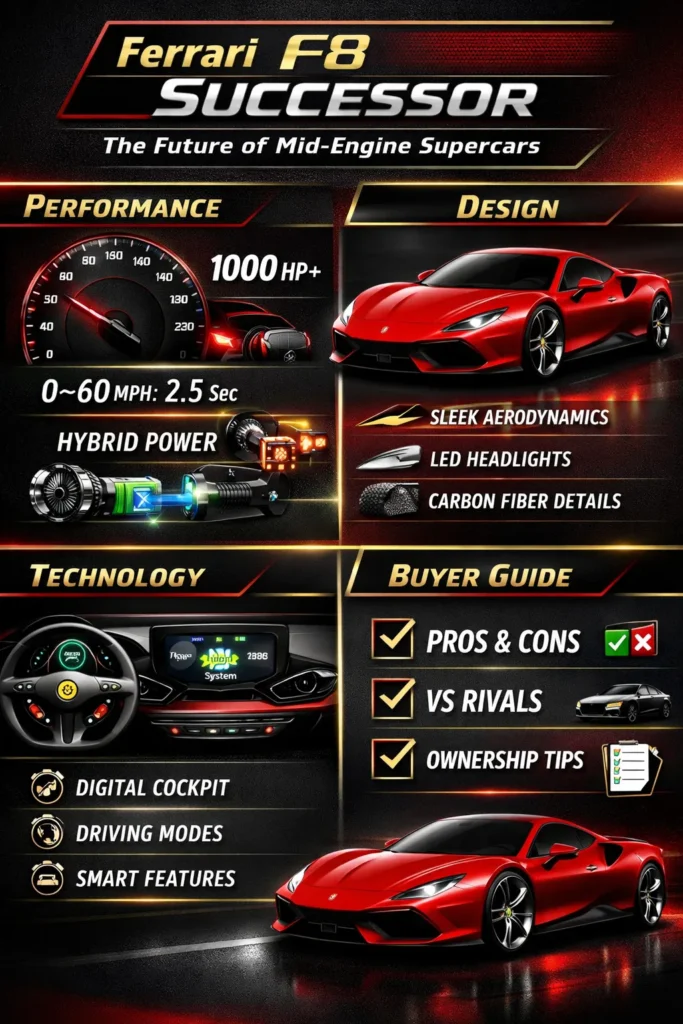
| Power Output | ~818–830+ hp Combined |
| Acceleration | ~0–62 mph in ~2.9 sec |
| Top Speed | ~200+ mph * |
| Transmission | Dual‑Clutch Automatic |
| Fuel Type | Petrol + Electric |
| Body Type | Mid‑Engine Berlinetta |
| Seating Capacity | 2 |
The Legacy: What Was the F8 Tributo?
So we need to think about what the Ferrari F8 Tributo was, and then we will consider what the one that came later was, or at least attempt to. The Ferrari F8 Tributo was a deal, and we should recall this.
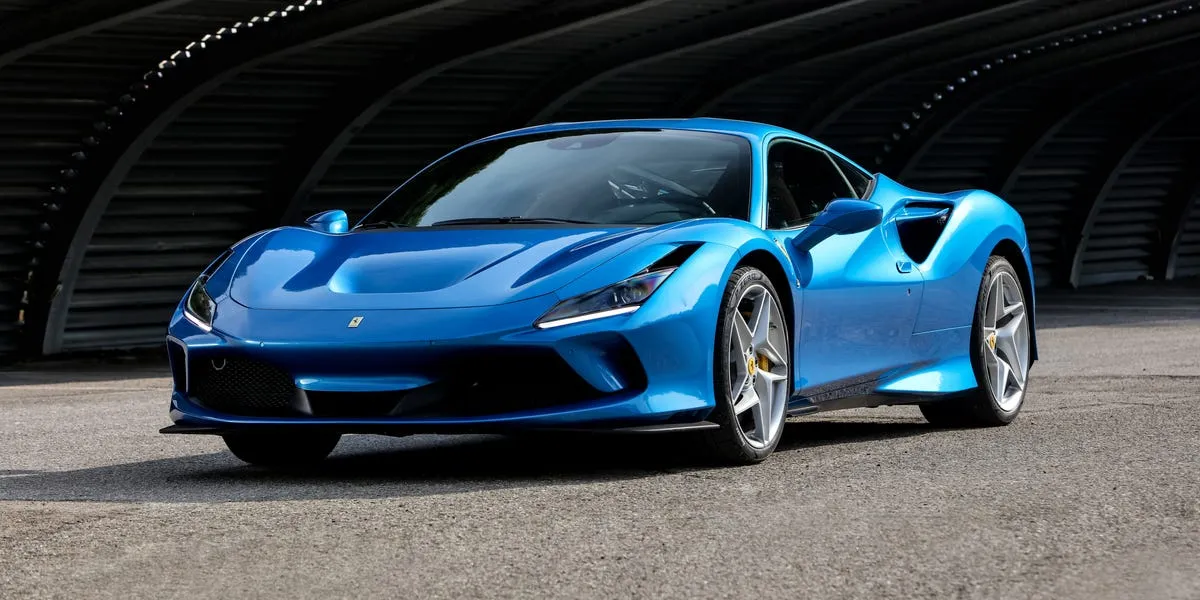
Ferrari F8 Tributo
The F8 Tributo came out in 2019. It replaced another Ferrari model called the Ferrari 488 GTB. The F8 Tributo has an engine located in the middle of the car. It also has some upgrades that allow it to move through the air. This Ferrari model has one of the most powerful engines Ferrari has developed. Its engine is a twin-turbo V8. It gives it power. It ranges from 710 to 720 horsepower. The F8 Tributo is fast.
According to Ferrari, the F8 is actually a tribute to their V8 cars. The Ferrari F8 features racing technology, making it look really aggressive and offering great handling on both the road and the racetrack. The Ferrari F8 is actually a tribute to their V8, which is purportedly the best of both worlds.
Exterior Design
**Bold, Aerodynamic Sculpt
The new Ferrari model has a really
Interior & Comfort
Cockpit Layout
Ferrari’s successor interior blends luxury with driver‑centric ergonomics: a flat‑bottom steering wheel, digital instrument cluster, and minimalistic cabin. Switchgear enhances focus.
Luxury & Materials
Premium leather, Alcantara, and carbon fiber trim deliver refined comfort wrapped around performance‑ready seating.
Infotainment & Interface
Touchscreens and custom driver displays support modern connectivity — wireless Android Auto and Apple CarPlay, vehicle telemetry, and customizable profiles.
Engine & Performance:
Hybrid Powertrain Excellence
The big shift from the F8’s turbo V8 is Ferrari’s move into hybridized performance — the new successor integrates a turbocharged V6 engine paired with electric motors, producing a powerful combined output that rivals supercars double its price.
Unmatched Acceleration
With explosive low‑end torque from electric assist and turbo boost, 0–62 mph in sub‑3 seconds keeps Ferrari competitive with hybrid hypercars.
Driving Dynamics & Balance
Active suspension, torque vectoring, and advanced stability control deliver an intuitive, reactive, and adrenaline‑charged driving experience.
Fuel Economy / Range
Hybridization improves fuel economy on regular roads without compromising performance on the track. While exact figures vary, electric assist boosts city efficiency and quick highway overtakes with reduced fuel consumption.
Safety Features
Ferrari has integrated advanced safety tech into its latest models:
- Multiple airbags & stability systems
- ABS with advanced traction control
- Adaptive cruise & collision mitigation
- High‑strength chassis with impact zones
Technology & Infotainment
Innovative features keep the successor ahead:
- Large touchscreen displays
- Wireless smartphone integration
- Custom digital cluster
- Telematics & performance logs
Variants & Pricing
Ferrari usually offers variants like base, sport, and track‑focused editions — each balancing luxurious comfort and aggression. Exact pricing varies globally, but these models typically sit above the F8 pricing range due to Hybrid tech and exclusivity.
Pros & Cons
Pros
✔ Incredible acceleration and power
✔ Hybrid tech for future compliance
✔ Ferrari design heritage
✔ Modern safety and driver tech
✔ Strong resale value
Cons
✖ More complex servicing
✖ Higher base price than traditional V8
✖ Purists miss traditional V8 sound
✖ Narrower maintenance base globally
✖ Electrification adds weight
Best For
This car is perfect for:
- Enthusiasts wanting top performance with modern tech
- Ferrari collectors eyeing future classics
- Drivers preferring hybrid efficiency with supercar speed
Comparison Suggestions
You can compare the successor with:
- McLaren Artura – hybrid supercar rival
- Lamborghini Huracán Tecnica – naturally aspirated competitor
- Porsche 911 Turbo S – performance all‑rounder
Maintenance & Ownership
Ferrari offers dedicated servicing programs, but hybrid tech may increase running costs. However, strong resale and brand prestige often offset early depreciation.
FAQs
Yes — Ferrari’s lineup transition points to the hybrid V6 Ferrari 296 GTB, replacing the F8’s market segment.
Absolutely — Ferrari preserves mid‑engine balance with hybrid integration for both performance and stability.
Ferrari shifted to hybrids for emissions compliance and performance equal to or better than pure combustion engines.
Conclusion
The 2020 Ferrari F8 Tributo successor marks a transformative moment in Ferrari’s history — merging the brand’s performance legacy with a new hybrid horizon. With outstanding acceleration, Cutting‑edge technology, and Ferrari’s signature flair, this supercar represents both the conclusion of an era and the birth of a new one. Whether you’re a purist missing the V8 roar or a performance lover craving hybrid punch, this successor promises a thrilling ride into Ferrari’s future. Explore more on TheCarsCompare.com and tell us what you think in the comments!