Introduction
The Ferrari F40 is not just a car — it is a badge of raw achievement, racing ancestry, and pure driving affection. Begun in 1987, to celebrate Ferrari’s 40th anniversary, the F40 was the last Ferrari directly approved by Enzo Ferrari. That fact alone gives it fabled status.
Built during a time when camcorders were minimal, and driver skill affected most, the Ferrari F40 was anticipated with one clear goal: speed without compromise. No luxury artifice, no driver virus — just lightweight development, twin-turbo power, and aggressive aeronautics.
Even today, decades later, the Ferrari F40 remains one of the most respected and desired supercars in automotive history. Collectors admire it, addicts dream of it, and architects study it.
This accurate guide explains what the Ferrari F40 is, who it’s for, how it drives, ownership basic facts, and how it compares to other legendary supercars — all in simple, easy English.
Quick analysis Table
| Feature | Details |
| Engine | 2.9L Twin-Turbocharged V8 |
| Power Output | ~471 hp |
| Torque | ~577 Nm |
| Transmission | 5-Speed Manual |
| Fuel Type | Petrol |
| Body Type | 2-Door Coupe |
| Seating Capacity | 2 Seats |
| Drivetrain | Rear-Wheel Drive |
| 0–100 km/h | ~4.1 seconds |
| Top Speed | ~324 km/h |
Exterior Design:
Purpose-Driven Body Design
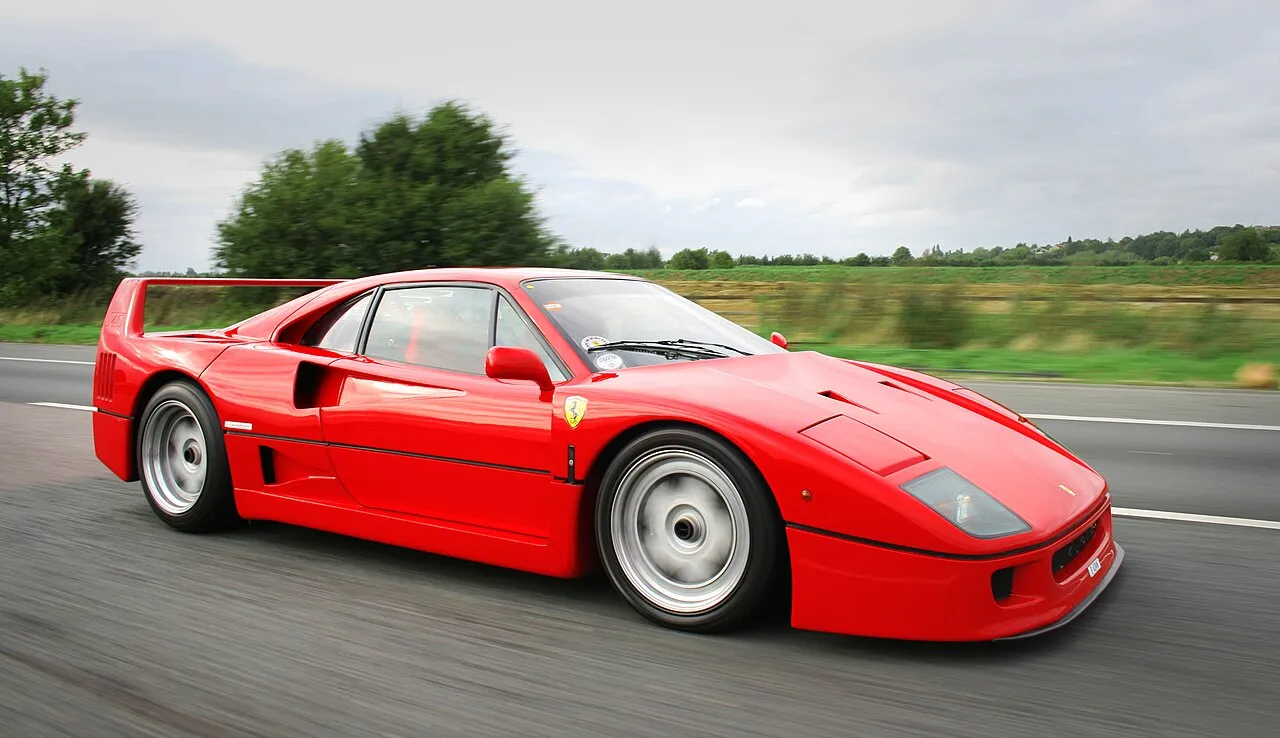
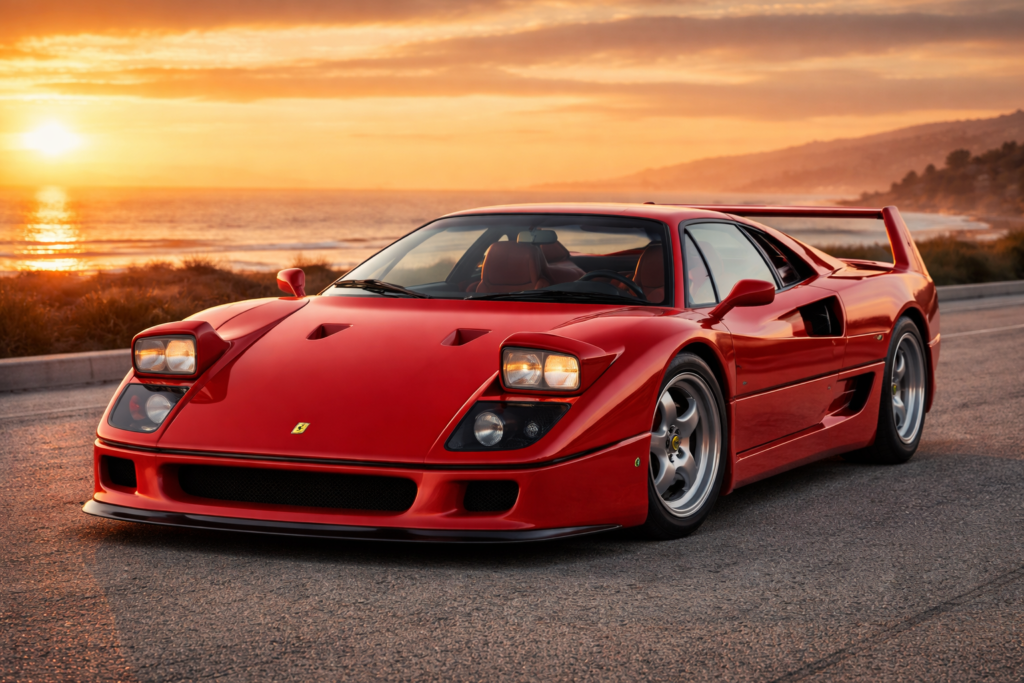
The Ferrari F40’s extraneous is pure action over fashion. Every curve, vent, and opening exists to improve cooling, downforce, or stability. It doesn’t try to look Classic — it looks fast, even when standing closed.
The body is made from Kevlar, carbon fiber, and a bottle, making it acutely light for its time.
Headlights & Front Profile
- Pop-up headlights (classic 80s Ferrari design)
- Wide front air intakes for engine cooling
- Low nose for aerodynamic efficiency
Rear Wing & Aerodynamics
The big fixed rear wing is one of the most definite features of the Ferrari F40. It adds real downforce at high speed, not just visual comedy.
Wheels & Tires
- 17-inch lightweight wheels
- Wide rear tires for traction
- Race-inspired stance
Design Verdict:
The Ferrari F40 looks combative because it is combative— no avoidable styling, just speed.
Interior & Comfort:
Cabin Philosophy
If you expect luxury, soft leather, or fancy screens, the Ferrari F40 will surprise you. The interior is bare, mechanical, and purposeful.
There is:
- No power steering
- No power windows
- No sound insulation
Dashboard & Controls
- Simple analog gauges
- Toggle switches
- Exposed Carbon fiber panels
Everything is placed to serve the driver, not to impress passengers.
Seats & Space
- Fixed bucket racing seats
- Thin padding
- Tight cabin space
The Ferrari F40 is not appropriate for long trips, but that was never the goal.
Engine & Performance:
Engine Overview
The Ferrari F40 uses a 2.9-liter twin-bloated V8, derived from Ferrari’s racing program.
- Twin IHI turbochargers
- No electronic driving aids
- Explosive power delivery
Acceleration & Speed
| Performance Metric | Result |
| 0–100 km/h | ~4.1 sec |
| 0–200 km/h | ~11 sec |
| Top Speed | ~324 km/h |
When the turbos kick in, the dispatch feels brutal and acute.
Driving Experience
Driving the Ferrari F40 requires skill and Respect. The turbo lag is real, and when boost appears, the car exigencies consideration.
This is pure, cognate driving — no suction control, no balance systems.
Fuel Economy
The Ferrari F40 was never designed for fuel economy.
| Condition | Approx Mileage |
| City Driving | ~5–6 km/l |
| Highway Driving | ~8 km/l |
Fuel drinking is high, but owners accept this as part of the experience.
Safety Features:
What It Has
- Strong lightweight chassis
- Excellent braking system (for its era)
What It Lacks
- No airbags
- No ABS
- No traction control
- No stability control
Safety depends absolutely on driver skill.
Technology & documentary
The Ferrari F40 has zero documentary systems.
- No touchscreen
- No navigation
- No Bluetooth
The engine sound is the entertainment.
Variants & Pricing
Ferrari F40 Variants
- Standard Ferrari F40
- Ferrari F40 LM (track-focused version)
Pricing Insight
Prices vary based on:
- Condition
- Original parts
- Mileage
- History
Today, the Ferrari F40 sits in the multi-million range, making it a serious collector’s item.
Pros & Cons
Pros
- Legendary Ferrari heritage
- Raw, pure driving acquaintance
- Extremely lightweight construction
- High collector value
- Timeless design
Cons
- No modern safety features
- Uncomfortable for daily use
- High maintenance costs
- Difficult to drive for beginners
- Very limited availability
FAQs
A: Yes, the Ferrari F40 is street legal in many regions, but regulations may vary.
A: Approximately 1,315 units were produced.
A: Yes, it is considered one of the strongest appreciating classic Ferraris.
A: No, it relies purely on mechanical driving skill.
Conclusion:
The Ferrari F40 is not just one of Ferrari’s attractive cars — it is one of the most performance-oriented cars ever built. It represents a time when driving meant connection, audacity, and control.
This car does not try to protect the driver from mistakes. Instead, it rewards skill and respect. That is why the Ferrari F40 continues to hold incomparable emotional value.