Introduction:
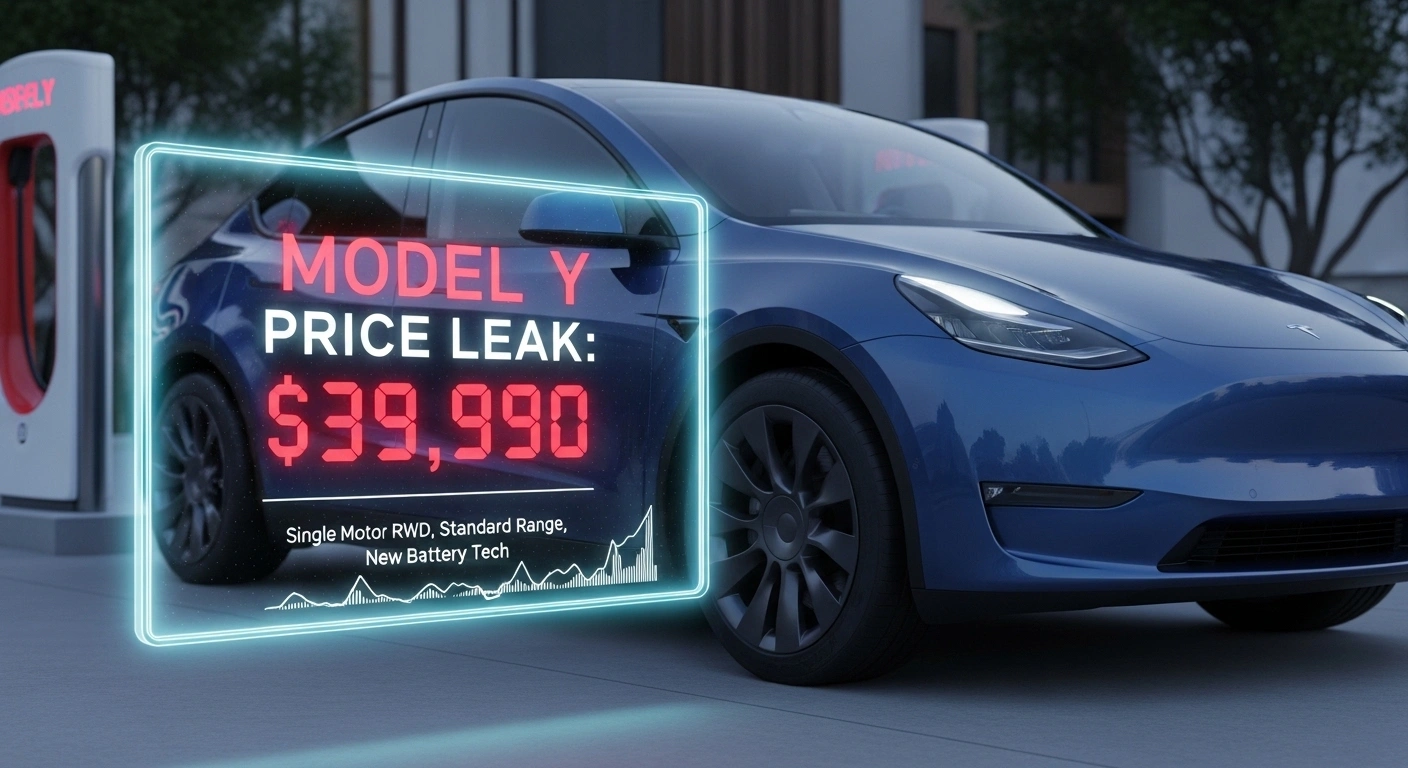
Lately, the Tesla Model Y stands out among electric SUVs, mixing speed, smart features, and real-world usability better than nearly anything else like it. By 2025, talk began spreading through online spaces where car fans gather-chatter grew louder on posts, threads, and video comments – about a lower-cost version appearing soon. That idea lit up conversations, hinting Tesla could deliver an electric SUV people actually afford, priced under $40,000, which many have waited years to see happen.
One step forward, then a small detour – the promised budget Model Y didn’t land exactly as first rumored. Instead of a sub-$40K version, Tesla rolled out a 2026 Standard trim, cheaper than others yet trimmed down in key areas. Features take a backseat here when stacked against pricier versions. Still, it holds appeal for those watching both price and performance. Every thoughtful decision comes with fine print though, worth noting ahead of any purchase.
Right off the bat, this guide covers every part of the more affordable Tesla Model Y. Peek behind the curtain with rumored prices stacked against real numbers. Dive into specs that matter without getting lost in jargon. Trim levels unfold one by one, showing what actually changes between them. Acceleration times sit beside range stats in plain sight. Tech inside the cabin gets broken down piece by piece. Safety ratings appear straight from official results. Worth grabbing today? Or better to hold out? That call comes after weighing it all quietly.
Quick Overview Table:
Before we dig into the details, here’s a snapshot of what the 2026 entry‑level Model Y brings to the table:
| Feature | Specification |
| Motor | Single / Dual Electric Motor (RWD / AWD options) |
| Power | ~279–384 horsepower (varies by variant) |
| Torque | ~310–376 lb‑ft |
| 0–60 mph | ~5.9s (Standard RWD); ~4.8s (AWD) |
| Transmission | Single‑Speed Automatic |
| Estimated EPA Range | ~272 to ~330 miles |
| Charging | Tesla Supercharging (up to ~250 kW peak) |
| Body Style | Crossover SUV |
| Seating | 5 Adults |
| Drive | RWD / AWD |
This model retains Tesla’s minimalistic design language, innovative technology stack, and strong efficiency, but it pares back select premium options to hit a more accessible price bracket.
Exterior Design:
A closer look at the Standard Model Y shows Tesla’s clean, forward-looking design stays intact. Though built with savings in mind, this version moves smoothly through air, helping it go farther and run better. Its shape cuts resistance without losing visual appeal, standing out even when simplified.
Key Visual and Functional Elements
Sleek curves follow the shape of the Model Y, holding on to its tight, sporty form. Streamlined edges run across body panels, shaped to cut through air without losing a clean look. A design that feels intentional sits low and balanced, every line doing more than just catching eyes. Form meets airflow in quiet harmony, where nothing sticks out by accident. Smooth surfaces wrap around, each curve built for motion yet calm in presence.
Built-in LED projectors handle the lighting, offering solid performance though missing the smarter adaptive systems seen on pricier versions. Brightness stays reliable but lacks dynamic beam shaping when driving at night.
Interior & Comfort:
Inside, the entry‑level Model Y doubles down on simplicity and functionality, prioritizing utility and comfort over luxury pizzazz.
Dashboard & Interface
Across the front, a wide panel keeps things uncluttered. At its center sits a 15-inch screen handling nearly every task inside the car. This setup guides your eyes straight ahead. Most controls live within the display instead of buttons. The design leans on simplicity. Function follows clear sightlines. Touch inputs replace physical switches almost completely.
Seating & Comfort
Cool mornings feel better when the front chairs warm up on their own. Heat comes built in, so long drives stay cozy without extra steps. Warmth kicks in automatically, making chilly starts far more bearable.
Last row warmth comes with the car, but cheaper versions might need a separate pick. Though built in some trims, lower cost models could require extra selection.
A car like this fits five grown-ups, just fine. Room inside feels normal for a family SUV when you sit down. The way people fit in it works how you’d expect.
Cargo & Practicality
Around 68 cubic feet opens up when the back seats drop flat. Sitting normally, the trunk holds close to 40 cubes of stuff.
Beneath the floor, hidden compartments pop up where you least expect them. Door panels hold pockets that catch small things before they vanish. A storage space up front – where engines used to be – holds bags or suitcases without fuss. These spots make hauling stuff feel effortless, whether it is groceries or weekend luggage.
Technology & Features
Starting off, there’s a built-in system handling maps plus music through popular online services. Wireless phone pairing comes standard, letting devices link without cords. Updates arrive straight from the cloud, rolling out improvements automatically. Streaming shows up alongside route guidance, both running on the same dashboard screen.
A better sound setup isn’t part of the base model – only pricier versions include Tesla’s top-tier audio. With that said, standard vehicles still deliver clear playback through their built-in speakers.
Inside, though cleaner than costlier models, it still carries Tesla’s focus on smart layout and tech-driven ease instead of flashy details.
Electric Powertrain & Performance
Tesla’s electric propulsion systems deliver instantaneous torque, seamless acceleration, and low noise operations. The 2026 Model Y Lineup is organized into three distinct configurations:
Standard RWD (Rear‑Wheel Drive)
Engine puts out around 279 horsepower. Torque measures close to 310 pound-feet. Output feels strong without being extreme. Performance stays smooth under load. Power delivery remains steady across revs
0–60 mph: Approximately 5.9 seconds
Top Speed: Around ~135 mph
Last updated: 2025-04-17. Drivetrain setup uses one electric motor connected only to the back tires
A choice built around value stands here – delivering dependable get-up-and-go for regular commutes minus blistering speed. While it won’t sprint ahead violently, the drive feels steady when weaving through traffic. Power comes smooth enough, just not forceful. Daily routines match well with what this version brings. Not tuned for thrills, yet fully capable of keeping pace.
Long Range All Wheel Drive
- Holds about 384 horsepower, while delivering close to 376 pound-feet of twisting force.
- Half a minute from stop to sixty takes about 4.8 ticks of the clock
- Top Speed: ~145 mph
- Two motors power the wheels – one up front, one at the back – working together to grip the road better
- This model suits drivers who want practical daily use along with lively acceleration and more miles per charge.
Performance AWD
- Power: ~456 hp with ~487 lb‑ft of torque
- Half a minute gone, already hitting sixty from rest – roughly three and a half heartbeats. That quick
- Top Speed: ~155 mph
- Fresh shocks up front, bigger stoppers at each corner instead. Tuning tweaks under the hood now too – handles sharper, stops quicker, holds grip longer
- Faster off the line, this version suits drivers after sharper handling. Excitement builds behind the wheel when response tightens up. Behind every turn, a livelier feel takes hold.
Driving Dynamics & Experience
Right away power shows up when you go. That sudden push off the line? Typical of how Teslas behave, thanks to electric motors Doing their thing right from zero.
Down low, the battery sits right where it should – making turns feel steady without lag. Stability kicks in smoothly when you shift direction, thanks to how weight spreads across the frame.
Electric Range & Charging
One of the most critical considerations for EV buyers is range and ease of charging.
EPA Estimated Range by Trim
| Trim | EPA Estimated Range | Charging |
| Standard RWD | ~272 miles | Supercharging (up to ~250 kW) |
| Long Range AWD | ~330 miles | Supercharging (up to ~250 kW) |
Supercharging Network
Out on the road, Tesla drivers plug into a far-reaching web of quick-charging stations. These spots pop up along busy routes and inside cities, making pit stops faster. Instead of hunting outlets, they tap into dedicated hardware that refuels cars in less time. Long drives turn smoother when charge points are never too far ahead.
Charging Experience
- Overnight charging works using a standard 240V household setup. Power refills happen while you sleep, fitting right into daily life.
- Fueling stops? Not a long wait – Superchargers refill fast. Quick bursts of power keep road trips moving without delays.
- Power hits its highest point near 250 kW at compatible spots – adding many miles fast instead of waiting long.
Safety Features:
Tesla prioritizes safety even for cost‑conscious variants, with a robust set of protective measures designed to protect driver, passengers, and pedestrians.
Standard Safety Systems
- Airbags: Eight to ten strategically positioned airbags depending on configuration
- ABS & Traction Control: Standard across all trims
- Electronic Stability: Ensures stability in emergency maneuvers or low traction conditions
Advanced Driver Assist Systems (ADAS)
- Autopilot: Includes adaptive cruise control, lane keep assist, lane departure warnings, and automatic emergency braking
- Collision Avoidance: Predictive systems help detect and mitigate potential impacts
Structural Integrity
Tesla’s Model Y platform incorporates high‑strength materials and reinforced zones to protect occupants in the event of a collision or rollover.
Even the Standard Model Y carries excellent safety ratings in independent crash testing programs, making it a strong contender for family‑oriented buyers who prioritize peace of mind.
Technology & Infotainment
A rolling lab of clever engineering, Tesla stands out less for building cars than for packing them with smart systems. Even the base Model Y Brings that mindset along.
Infotainment Center
15‑inch Center Screen: Central hub for controls and visualization
Tesla UI: Intuitive interface with navigation, media, and vehicle settings
Films flow through your screen when you tap a button. Music arrives without waiting. Podcasts appear like messages sent just in time. Screens light up with stories, songs, or voices speaking close by. Everything connects once you choose what plays next
Connectivity and Over the Air Updates
New features arrive by software updates over time through the air. These improvements skip the need for a trip to the dealer. Each update brings tweaks that adjust how things work. Changes show up automatically on their own schedule. Functionality grows little by little from afar. Little upgrades appear quietly in the background. Fresh tools emerge without warning now and then
From your phone, check how the car is doing anytime. Remote charging starts through the mobile software. Temperature settings adjust without touching the dashboard. Controls reach you wherever there’s signal. Vehicle functions respond beyond the driver’s seat
Audio & Media
Fitted on basic models, a working stereo comes standard; stepping up brings richer speakers along with tuned acoustics.
Right from the start, Tesla builds connection into every Model Y. Even basic versions stay fresh because updates appear long after buying them. These changes come slowly, sometimes years later. They keep things working better over time. People tend to like their cars more as a result. Fresh tools show up without needing new hardware.
Variants & Pricing
Tesla simplified its lineup to emphasize entry‑level accessibility without overwhelming customers with unnecessary trims.
| Trim | Overview |
| Model Y Standard RWD | Base trim with essential features, optimized for utility and value |
| Model Y Long Range AWD | Dual‑motor configuration with extended range and enhanced traction |
| Model Y Performance AWD | Focused on acceleration, sportier suspension, and dynamic driving |
Pricing Reality
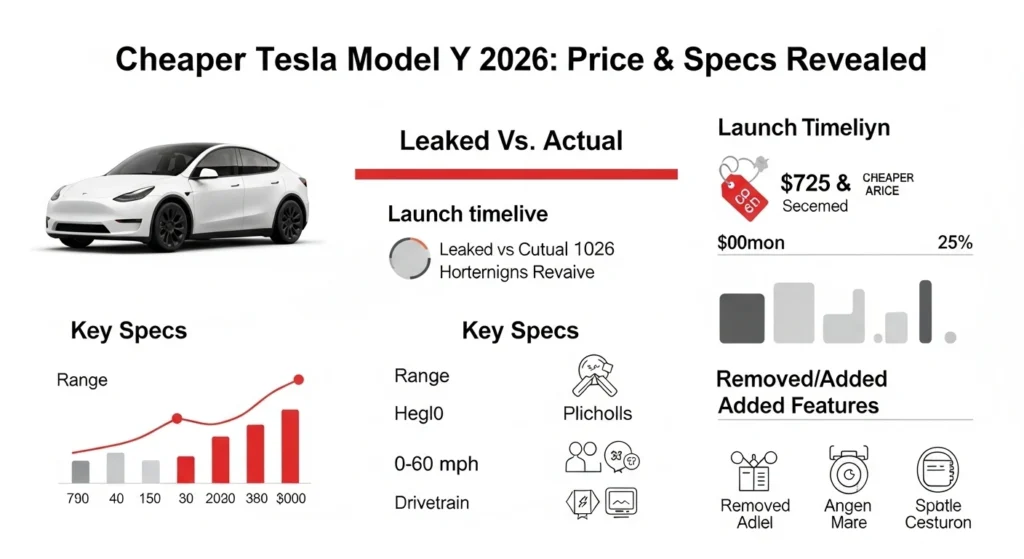
Starting under forty grand? Not quite. The 2026 Tesla Model Y Standard usually shows up around forty-one thousand dollars on average across the United States. Higher versions – those with all-wheel drive or performance upgrades – end up crossing fifty thousand once priced fully. Price tags climb when extra traction or speed enters the picture.
Now it turns out the talk about a price under forty thousand dollars wasn’t far off, though maybe a bit too hopeful. Costs came down through tighter manufacturing and smarter logistics, bringing the number close. Still, the company held back from slashing prices like before.
Pros & Cons
Pros
- A small step into Tesla’s world, opening doors without heavy cost. First rides here feel light on price, yet full of electric promise.
- A screen sits at the heart of the cabin, drawing eyes without effort. Updates arrive silently through the air, changing things over time.
- A solid set of safeguards comes standard, no upgrades needed. Built-in helpers watch the road, always on duty.
- Faster charging stations spread widely make road trips easier. Wherever you go, power is rarely far off.
- Resale Value: Model Y retains strong residual values relative to many competitors.
Cons
- Shorter reach on the base version compared to pricier versions. Some distance gets lost when you pick the starter setup instead of the Upgraded ones.
- Fewer extras show up in the form of simpler comforts. Smooth details once common now feel scaled back. What used to be pampering feels more basic today.
- Firm bumps creep in when roads turn rough. Basic rims can’t smooth out the jolts. Suspension feels busy on cracked pavement.
- Starting at the bottom, audio quality takes a back seat in the entry-level version. Higher-end listening needs a step up in price.
Who Should Buy the Cheaper Model Y?
The 2026 Model Y Standard may make sense for:
- Budget‑Conscious Families: Needing SUV practicality without premium pricing.
- Most days it covers the miles needed. Sometimes longer drives happen too.
- Drivers who like tech care about smooth software links inside the car.
- Those who care about lasting worth look for solid features without overspending. Worth matters most when picking what will last.
- If one of these groups fits you, the Model Y Standard targets those who want depth instead of flash. What matters most here isn’t looks – it’s what lies beneath.
Comparison with Competitors
Here’s how the cheaper Model Y stacks up against key rivals:
| Feature | Tesla Model Y Standard | Rivian R2 (Expected 2027) | Ford Mustang Mach‑E |
| Price | ~$41,000 | $48–$53k (expected) | $44–$50k |
| Estimated Range | ~272 miles | ~220–250 miles | ~260–300 miles |
| AWD | Optional | Optional | Optional |
| 0–60 mph | ~5.9s | ~6.0s est. | ~5.0–6.0s |
| Charging | Supercharger Network | TBD | FordPass / 3rd‑party |
Tesla’s price advantage and robust Supercharger ecosystem remain her strongest differentiators — while competitors may offer family‑friendly options or future budget models, Tesla’s combination of tech, range, and charging convenience holds up well.
Maintenance & Ownership
Servicing & Repairs
EVs inherently require less routine maintenance than gasoline vehicles — no oil changes, fewer moving parts, and simplified thermal systems.
Parts & Service Network
Tesla’s growing footprint of service centers and mobile service options help reduce downtime for common maintenance.
Warranty Coverage
Typical warranty includes:
- Basic Warranty: ~4 years / 50,000 miles
- Battery & Drive Unit: ~8 years
These are aligned with industry standards for EVs.
Resale & Insurance
- Resale Demand: Model Ys enjoy strong used market demand.
- Insurance: Entry‑level trims often command slightly lower premiums.
FAQs
A: The Standard trim is the most affordable, typically priced around the low $41,000 range in the U.S.
A: Largely yes — Tesla launched a Standard trim at $39,990 MSRP, validating the rumor’s general direction, though real‑world pricing often sits slightly above due to destination fees and market adjustments.
A: Not exactly. Production costs may have declined around 20%, but Tesla’s Manufacturer Suggested Retail Price (MSRP) did not fall by that magnitude.
A: Yes, especially if you’re a budget‑minded buyer wanting entry into Tesla’s ecosystem; however, higher trims or lightly used versions might offer more features at similar price points.
A: In most cases, no — the Standard trim fills the budget segment well. Waiting might be worthwhile only if inventory discounts or future refreshes reduce costs further.
Conclusion:
The cheaper Tesla Model Y price leak was genuine in spirit, though somewhat optimistic in its initial estimates. In 2026, Tesla delivered a Standard trim Model Y that provides:
- A more accessible price point for budget‑oriented buyers
- Safety performance consistent with larger and more expensive EVs
- Tesla’s industry‑leading technology and OTA future‑proofing
- Access to a wide charging infrastructure and proven reliability
While the Model Y Standard doesn’t dramatically overturn EV pricing models or offer luxury features by default, it represents one of the best value propositions in the current market — especially for families, commuters, or tech enthusiasts seeking capability, comfort, and connectivity in a fairly priced electric SUV.
If you value practicality, strong safety features, tech‑forward design, and a reputable charging ecosystem, the 2026 cheaper Tesla Model Y Standard is an excellent gateway into Tesla ownership.