Introduction
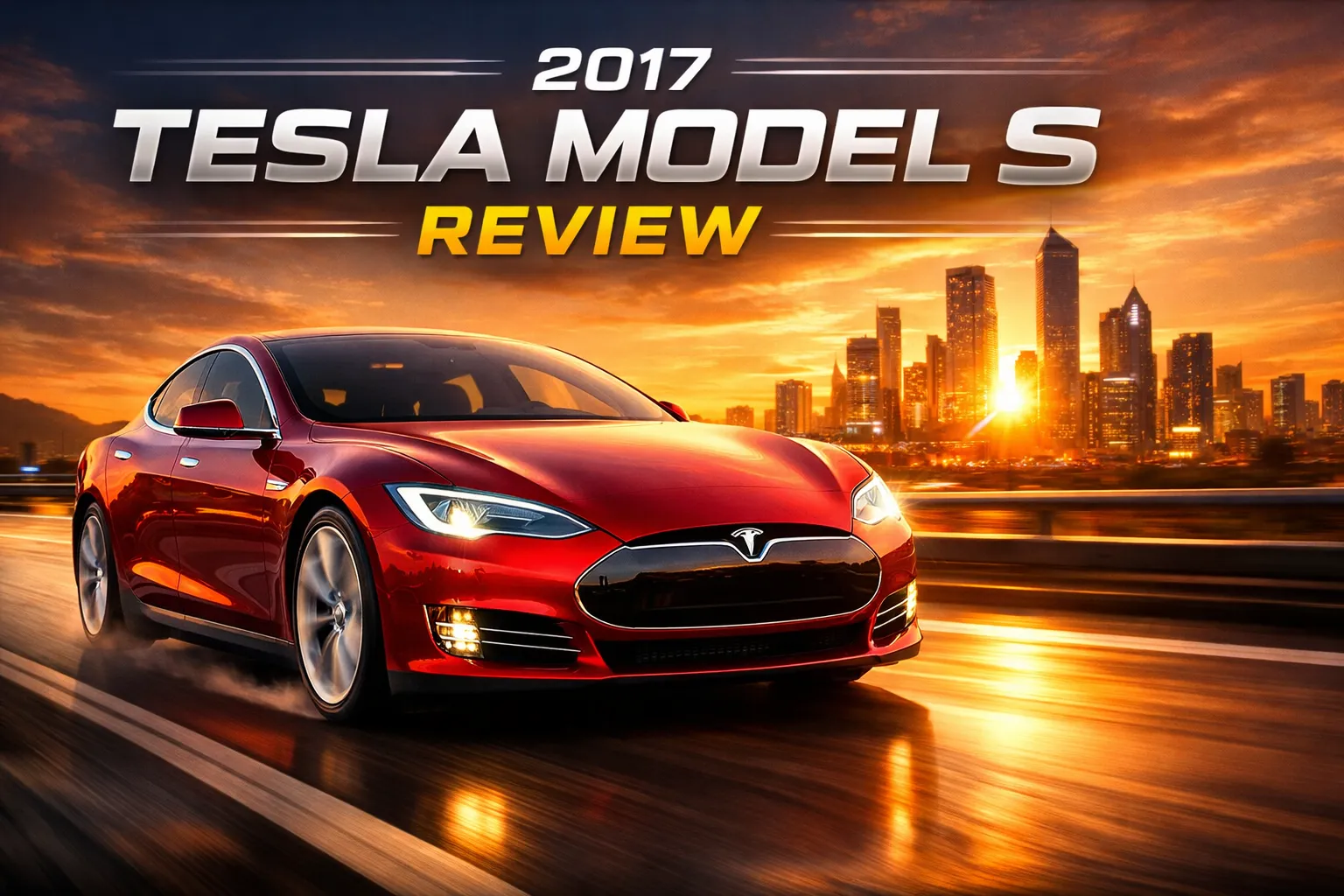
Years past its debut, the 2017 Tesla Model S still pulls steady interest across secondhand EV markets worldwide. Back then, it marked a shift – software smarts met a serious range, plus rapid pickup off the line. That mix set a benchmark others chased. Buyers today notice how well it holds up. Not every old car feels this current. Driving one now reminds you why the model stood out. Performance didn’t fade with time. Neither did the appeal. Even fresh options struggle to match its blend. Few vehicles from that era carry such weight. It simply aged differently. The roads haven’t dulled its edge. Owners keep returning for reasons beyond specs. Something about the way it moves stays compelling.
Folks keep looking up this model even now since it performs well. What makes it stick around? Reliability shows time after time. People notice that. Year by year, interest stays put. Performance builds trust slowly. That kind of track record doesn’t fade fast
Extended driving distance on a single charge
Powerful instantaneous acceleration
Advanced driver assistance technology
Luxurious interior comfort
Access to the Tesla charging ecosystem
A used 2017 Tesla Model S might suit someone wanting an upscale electric car in 2026 without feeling outdated – though checking it carefully first makes sense. Because older tech can hide problems, taking time to look under the hood pays off later.
A close look at each key part helps you think clearly before deciding where to put your money. What matters most shows up when details are clear, giving you space to weigh options without pressure.
Quick Overview
Basic Technical Specifications Table
| Feature | Details |
| Powertrain | Fully Electric Motor |
| Power Output | 382 hp – 532 hp |
| Torque | Immediate Electric Torque |
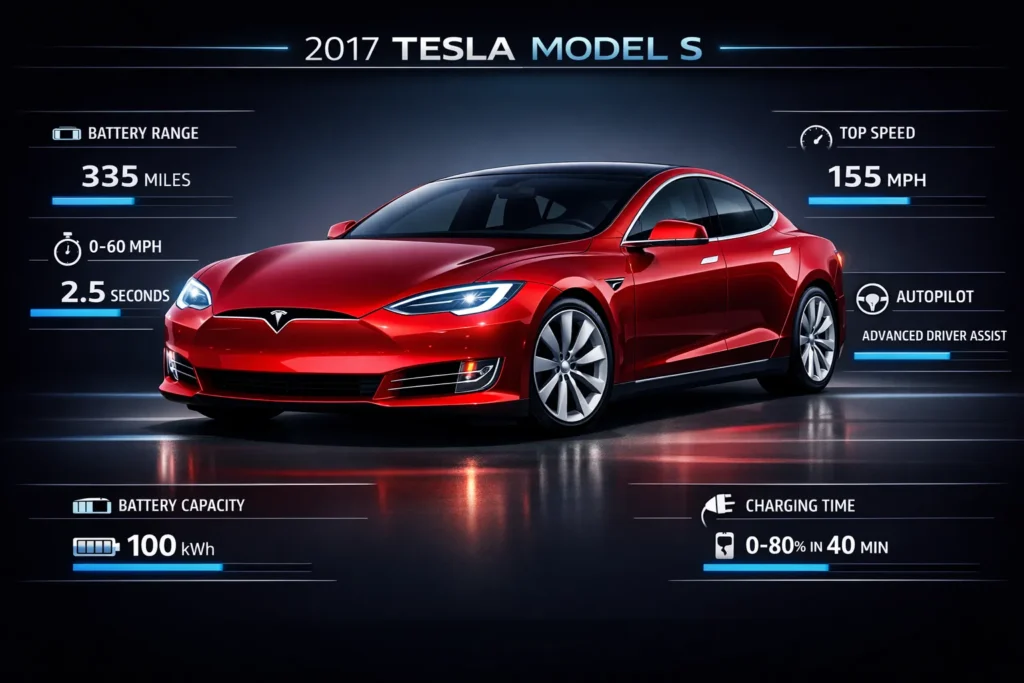
| Driving Range | Approximately 249 – 315 miles |
| Transmission | Single-Speed Automatic |
| Drive System | RWD / AWD Options |
| Body Type | Four-Door Luxury Sedan |
| Seating Capacity | 5 Standard / Optional 7 |
Why This Specification Matters
Engineered to go head-to-head with top-tier gas-powered luxury cars of its time, the 2017 Model S showed what electric cars could do. Though quiet in delivery, it matched speed and status without burning fuel. Performance wasn’t borrowed – it was built in from the start. With acceleration like that, comparisons became inevitable. Not just a car, but a statement riding on wheels. Luxury felt different when silence came standard.
Battery performance still holds strong when older electric cars are compared on value. Though age shows, their range keeps up without draining resources fast.
Exterior Design
Minimalist Exterior Philosophy
The 2017 Tesla Model S follows a design approach focused on simplicity and aerodynamic refinement rather than aggressive styling.
Its appearance prioritizes efficiency and smooth airflow across the vehicle body.
Key exterior characteristics include:
✔ Streamlined body contours
✔ Seamless surface design
✔ Optimized wind resistance
✔ Modern LED lighting technology
Front Design Features
The front fascia eliminates the conventional radiator grille because electric vehicles do not require large cooling systems.
Key elements:
- Narrow LED headlamps
- Smooth bumper configuration
- Clean surface layout
- No traditional air intake grill
This aerodynamic design reduces drag and improves overall driving efficiency.
Wheel Configuration Options
| Wheel Size | Purpose |
| 19-inch | Enhanced comfort and better range efficiency |
| 21-inch | Sport-oriented visual appeal and improved road presence |
Larger wheels improve aesthetic appeal but may slightly reduce electric driving distance due to increased rolling resistance.
Aerodynamic Importance
Tesla Engineers optimized the body structure to minimize air friction.
Reduced drag results in:
✔ Improved highway efficiency
✔ Better long-distance travel capability
✔ Lower energy consumption
This aerodynamic engineering remains one of the strongest advantages of the vehicle.
Interior & Comfort
Dominant 17-Inch Touchscreen Interface
The most recognizable feature inside the cabin is the massive vertical touchscreen system.
This screen controls:
- Navigation system
- Climate control
- Autopilot configuration
- Entertainment options
- Vehicle settings
Unlike traditional vehicles, physical buttons are minimal because software integration handles most functions.
Interior Materials & Comfort Features
The cabin delivers premium materials combined with futuristic styling.
Interior highlights include:
✔ Soft-touch surface materials
✔ Leather seating upholstery
✔ Heated seat functionality
✔ Spacious legroom for passengers
✔ Premium dashboard finishing
The design emphasizes a clean environment combined with comfort-oriented engineering.
Cargo Space Advantage
One major benefit of electric architecture is space utilization.
The Model S provides:
✔ Large rear trunk storage
✔ Front trunk (Frunk) storage area
Since there is no internal combustion engine, additional storage capacity becomes available.
This makes the vehicle practical for:
- Family usage
- Travel
- Business transportation
Engine & Performance
The 2017 Model S is offered in multiple configurations with varying Power levels.
Performance Breakdown Table
| Trim Version | Power Output | 0–60 mph Time | Drive Type |
| 60 / 75 | 382 hp | ~5.5 sec | Rear-Wheel Drive |
| 75D | 518 hp | ~4.2 sec | All-Wheel Drive |
| 100D | 463 hp | ~4.1 sec | All-Wheel Drive |
| P100D | 532 hp | ~2.5 sec | All-Wheel Drive |
What Makes the Performance Special?
Key performance advantages include:
✔ Instant torque delivery
✔ No gear shifting delay
✔ Smooth acceleration curve
✔ Powerful highway merging capability
The P100D variant was considered one of the quickest production sedans globally at its release.
Even now, acceleration remains impressive compared to many modern vehicles.
Electric Range
As a fully electric vehicle, operational distance depends on battery capacity.
Battery Range Breakdown
| Battery Capacity | Approximate Driving Range |
| 60 kWh | ~249 miles |
| 75 kWh | ~270 – 290 miles |
| 90 kWh | ~300 miles |
| 100 kWh | ~315 miles |
Factors That Influence Real-World Range
Actual driving distance depends on:
✔ Driving speed
✔ Weather conditions
✔ Ambient temperature
✔ Battery degradation level
✔ Highway vs city driving patterns
Cold climate environments may reduce the effective range slightly.
Safety Features
The 2017 Model S received strong safety ratings during its evaluation period.
Standard Safety Systems
✔ Multiple airbag protection system
✔ Anti-lock braking system (ABS)
✔ Traction stability control
✔ Electronic stability management
✔ Automatic emergency braking
Autopilot Functionality
The vehicle supports driver-assist technology, including:
✔ Adaptive cruise control
✔ Lane-keeping assistance
✔ Automated parking support
✔ Basic autonomous assistance system
Tesla enhances functionality through over-the-air software updates.
Technology & Infotainment
Core Technology Features
✔ 17-inch touchscreen interface
✔ LTE connectivity
✔ Built-in GPS navigation
✔ Bluetooth connectivity
✔ Remote system updates
Importance of Over-The-Air Updates
Software updates allow Tesla to:
Introduce new features
Improve system performance
Enhance user interface functionality
This capability increases long-term technological value compared to traditional vehicles.
Variants & Pricing
Main Available Versions
- Model S 60
- Model S 75
- Model S 90D
- Model S 100D
- Model S P100D
Used Market Pricing Factors
Pricing depends on:
✔ Mileage
✔ Battery condition
✔ Geographic market
✔ Accident history
✔ Software configuration
Prices fluctuate significantly across different European regions.
Pros & Cons
Advantages
✔ Long electric range capability
✔ Powerful acceleration performance
✔ Premium interior technology
✔ Supercharger network access
✔ Continuous software improvement
Disadvantages
Battery replacement costs are high
Suspension components may require repair
Repair costs can accumulate
Build quality consistency varies by production batch
Careful inspection is necessary before purchasing.
Maintenance & Ownership
Maintenance Benefits
✔ No engine oil changes
✔ No transmission maintenance
✔ Fewer mechanical components
✔ Reduced brake wear due to regenerative braking
Major Potential Expenses
Battery degradation replacement
Air suspension repair
Infotainment system repair
It is essential to verify service records before buying.
Best Alternatives
Potential alternatives in the used luxury electric segment include:
- Porsche Taycan (Used Version)
- Audi e-tron
- Jaguar I-PACE
These vehicles differ in:
✔ Charging infrastructure support
✔ Driving range
✔ Performance characteristics
✔ Purchase price
Each Competitor offers distinct advantages depending on buyer priorities.
FAQs
A: Yes, reliability depends heavily on battery health and maintenance history. Properly maintained units perform well.
A: Most battery systems can exceed 100,000 miles with moderate degradation if maintained properly.
A: It can be a strong value purchase if priced appropriately and inspected thoroughly.
A: Yes, it supports Tesla Supercharging infrastructure.
A: Routine maintenance is low-cost, but battery or suspension replacement may become expensive over time.
Conclusion
The 2017 Tesla Model S remains one of the most powerful and technologically advanced used electric sedans available in the market today.
It provides:
✔ Exceptional performance
✔ Extended electric range
✔ Premium driving comfort
✔ Smart software integration
However, buyers must verify:
Battery condition report
Suspension system health
Software version status
Complete service history
If purchased at the correct price with proper inspection, it remains a strong long-term electric mobility Investment in 2026 and beyond.