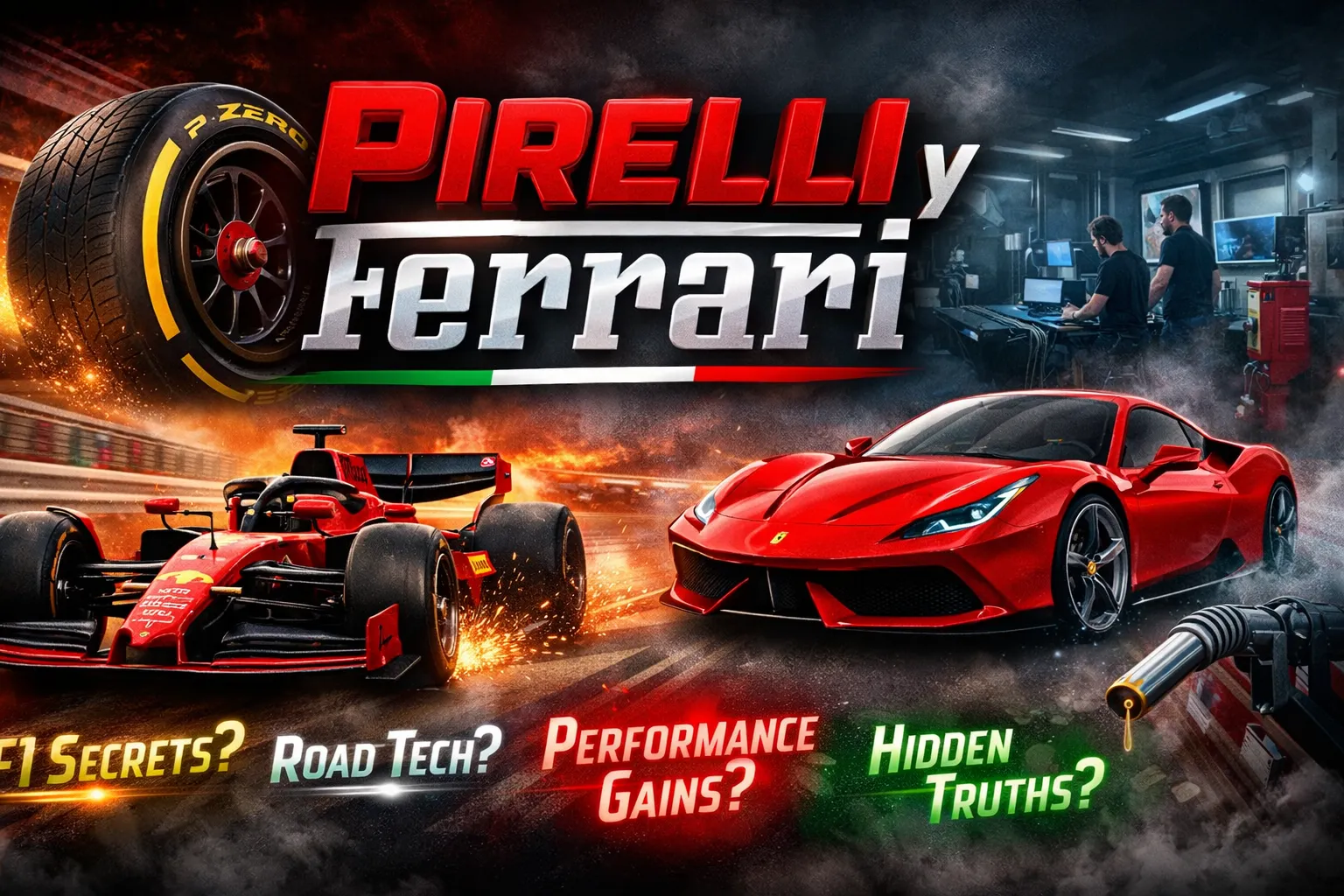
Introduction:
Ferrari and Pirelli pop up whenever speed, status, race history, or car greatness come up among fans. Names from Italy that just won’t be ignored when engines roar and tyres grip.
Pirelli and Ferrari aren’t just something people type into a browser. What you’re seeing here runs deeper than slogans or ads ever could. Think about it – this connection changed how high-performance cars are built. Tires meet speed through more than chance; they rely on shared precision. Engineers from both sides shaped what drivers now expect at full throttle. Years passed, yet their joint work still sets quiet standards behind the scenes. Few partnerships last that long without shifting priorities pulling them apart. This one held tight, focused less on fame and more on function. Together, they redefined grip, response, and even silence at extreme speeds. That bond? Still humming beneath every curve taken fast
- Formula 1 racing
- GT endurance championships
- Ferrari Challenge series
- High-performance road-going supercars
- Advanced luxury performance development
Ferrari moves fast because its tyres grip hard. What keeps it steady on track comes down to rubber meeting road every single second. Instead of raw power alone, it relies on smart materials shaped by speed needs. Each turn tests how well compound blends stick under pressure. Built tough at the edges, the walls resist twisting when forces rise. Power means nothing if slippage wins. Precision from Maranello demands contact that holds firm.
This comprehensive, SEO-optimised pillar guide explores:
- The complete heritage of the Pirelli and Ferrari relationship
- How Formula 1 tyre innovation transfers into road cars
- Measurable performance effects on Ferrari models
- Influence on safety, fuel consumption, refinement, and durability
- Comparative analysis versus Michelin, Bridgestone, and Continental
- Ownership advice, maintenance strategy, and resale insights
- Frequently asked questions about the Pirelli and Ferrari collaboration
This guide speaks plainly, though its core holds complex engineering ideas. Though straightforward, it carries a weight of technical insight beneath calm words. Its tone stays approachable while packing detailed know-how inside. Simple on the surface – yet built for those who dig deeper. Words stay light; meaning runs deep without showing off.
Pirelli Makes Tires, Ferrari Builds Cars?
Pirelli y Ferrari – this phrase points to a long-standing tie in tech and racing. Not just business, but shared goals on track shaped it. A bond built through seasons of speed, testing limits together. What began years ago continues to roll forward today. Joint effort behind every lap, each innovation. Trust grown from countless races links them. Progress carved out under pressure defines their path. Still moving as one, even after all this time.
Faster than most machines on asphalt, Ferrari crafts cars that pull hard at the heart as much as they do on corners. Built not just for grip but survival under fury, Pirelli’s tyres face down searing track temps, brutal cornering loads, violent direction shifts, and unrelenting high-velocity strain.
This collaboration encompasses:
- OEM homologated tyres (e.g., P Zero Ferrari specification)
- Ferrari Challenge racing compounds
- GT endurance racing solutions
- Formula 1 tyres supplied under FIA contract
Ferrari races on rubber shaped by Pirelli’s designs – same as every outfit in F1 since 2011. One supplier fits all, no exceptions.
Fueled by shared goals, the collaboration blends business with intricate engineering.
The Story of Pirelli Working With Ferrari Over Time
Early Motorsport Roots
One began in Italy around the 1800s, the other not long after. Racing circuits linked them years ago, wheel to wheel under open skies.
Ferrari’s racing DNA demanded tyres capable of:
- Elevated cornering adhesion
- Thermal endurance
- Structural rigidity at sustained high velocity
- Predictable deformation under load
Ferrari’s shifting frame shape pushed Pirelli into motion – new rubber mixes emerged, not just softer but smarter under load. Structure followed suit, with stronger internal skeletons holding firm through hard cornering. Tread patterns then adapted, shaped around airflow quirks few noticed at first glance.
Modern Formula 1
Born from its role as Formula 1’s only tyre provider, Pirelli collects deep insights on every team’s performance. With Ferrari, that means a clearer window into how tyres behave under extreme demands
- Real-time telemetry feedback
- Compound evolution through racing conditions
- Aerodynamic and suspension synergy
- Continuous performance refinement
Out on the track, Formula 1 becomes a relentless test for tyres like nowhere else. Pushed by crushing downforce, these machines slam into corners while brakes scream under pressure. Tiny shifts in grip can make or break a lap time. What engineers learn shapes how Ferrari approves rubber for street cars. Every insight matters when translating Speed into safety.
Quick Ferrari Performance Model Overview
To understand tyre integration, consider a typical modern Ferrari configuration:
| Specification | Details |
| Engine | 3.9L Twin-Turbo V8 |
| Power Output | 710–720 HP |
| Torque | 770 Nm |
| Transmission | 7-Speed Dual-Clutch |
| Fuel Type | Petrol |
| Body Type | Coupe / Convertible |
| Seating Capacity | 2 |
| Tyre Partner | Pirelli P Zero (Ferrari Spec) |
Such parameters are comparable to vehicles like the Ferrari F8 Tributo and Ferrari 296 GTB.
Each specification is carefully calibrated alongside tyre dimensions, load ratings, and compound classification.
Exterior Design
Ferrari’s exterior aesthetic is assertive, sculpted, and aerodynamically optimised. Yet tyres are integral to that visual identity.
Wide Stance & Maximum Traction
Ferrari supercars feature:
- Broad rear track width
- Reduced ride height
- Aerodynamic channels and diffusers
- Precision camber alignment
Tyres must:
- Complement suspension geometry
- Accommodate aerodynamic load
- Maintain stability beyond 250 km/h
Without structural reinforcement, tyre deformation would compromise steering precision and braking efficiency.
Ferrari-Specific Markings
Ferrari-approved Pirelli tyres typically include:
- Dedicated sidewall codes (e.g., “F01”)
- Customised internal belt architecture
- Vehicle-specific compound calibration
These are not generic aftermarket tyres. They are precision-Engineered components harmonised with Ferrari’s electronic stability and traction management algorithms.
Interior Comfort
Inside a Ferrari, occupants experience:
- Digital instrumentation
- Carbon fibre accents
- Premium leather or Alcantara upholstery
- Meticulous stitching
However, tyre engineering significantly affects:
- Acoustic insulation
- Vibration absorption
- Highway composure
- Surface refinement
Pirelli balances:
- Adhesion versus comfort
- Performance versus longevity
- Track capability versus daily usability
This equilibrium ensures Ferraris remain composed even during long-distance European motorway travel.
Engine & Performance
Power Transmission Efficiency
Modern Ferrari vehicles generate:
- 600–800+ horsepower
- 0–100 km/h in under three seconds
- Immense torque curves
Without sufficient grip, torque overwhelms traction, resulting in wheel spin and reduced acceleration efficiency.
Pirelli compounds enhance:
- Launch control performance
- Stability control calibration
- Acceleration consistency
- Heat resistance during repeated launches
Cornering Accuracy
Ferrari suspension tuning works collaboratively with Pirelli development engineers.
Benefits include:
- Superior lateral acceleration
- Consistent steering response
- Reduced understeer or oversteer
- High-speed predictability
This synchronisation ensures chassis dynamics remain balanced at extreme velocities.
Fuel Economy & Rolling Resistance
High-performance tyres typically increase rolling resistance. However, Pirelli employs:
- Lightweight structural reinforcement
- Advanced elastomer chemistry
- Reduced energy dispersion
Estimated mileage for a performance Ferrari:
| Driving Condition | Average Mileage |
| City | 6–8 km/l |
| Highway | 9–11 km/l |
| Combined | 8–9 km/l |
Although fuel consumption remains secondary in supercars, optimised rolling efficiency enhances sustainability and driving range.
Safety
Modern Ferrari vehicles integrate:
- ABS
- Traction control
- Electronic stability systems
- Multiple airbag configurations
Yet tyre technology directly improves:
- Braking distance reduction
- Wet traction capability
- Aquaplaning mitigation
- High-speed straight-line stability
Motorsport-derived compounds ensure consistent contact patch integrity in variable weather conditions.
Ferrari Challenge & Motorsport Influence
Within the Ferrari Challenge series, Pirelli develops racing-specific slick and semi-slick tyres engineered for maximum circuit adhesion.
In Formula 1, Pirelli supplies:
- Soft compounds
- Medium compounds
- Hard compounds
- Intermediate Tyres
- Full wet tyres
Race data contributes to:
- Thermal resilience research
- Structural reinforcement development
- Road car compound enhancement
This knowledge transfer refines everyday Ferrari tyre technology.
Tyre Variants for Ferrari Models
| Variant | Purpose |
| P Zero | Road performance |
| P Zero Corsa | Track-focused |
| P Zero Trofeo R | Extreme circuit use |
| Winter Sottozero | Cold climate markets |
These variants differ in:
- Compound softness index
- Tread geometry
- Operating temperature window
- Sidewall stiffness
Selection depends on climate, usage frequency, and driver intent.
Pros & Cons
Pros
- Motorsport-validated innovation
- Precise chassis compatibility
- Strong wet and dry traction
- Brand prestige alignment
- Continuous Formula 1 research integration
Cons
- Elevated replacement expense
- Accelerated wear during track sessions
- Limited brand interchangeability
- Seasonal performance Sensitivity
Competitor Comparison
Key competitors include:
- Michelin
- Bridgestone
- Continental
| Brand | Strength | Track Focus | Comfort | Ferrari OEM Presence |
| Pirelli | Motorsport Heritage | Excellent | Good | Yes |
| Michelin | Durability | Very Good | Very Good | Limited |
| Bridgestone | Reliability | Good | Good | Rare |
| Continental | Wet Grip | Moderate | Excellent | Limited |
While competitors excel in longevity or comfort, Pirelli maintains deeper motorsport integration with Ferrari.
Ownership & Maintenance Insights
Tyre Rotation
Recommended every 8,000–10,000 km.
Track use significantly shortens lifespan due to elevated heat cycles.
OEM Importance
Ferrari dealerships advocate OEM-spec tyres because:
- Suspension calibration is optimised for them
- Resale value remains stronger
- Insurance compliance may depend on homologated tyres
Resale Value Impact
Ferraris equipped with correct OEM tyres:
- Preserve collector desirability
- Demonstrate proper maintenance discipline
- Achieve faster resale in premium markets
Who Should Choose Ferrari with Pirelli?
- Track-day participants
- Motorsport enthusiasts
- Luxury asset investors
- Performance purists
- European autobahn drivers
For those seeking authentic Ferrari engineering integrity, OEM tyre specification remains critical.
FAQs
A: Because of advanced motorsport technology and compound innovation.
A: Not always, but Pirelli is a primary OEM partner.
A: Yes. Pirelli is the official tyre supplier of Formula 1, including Scuderia Ferrari.
A: Yes, they are premium-engineered tyres designed for high performance.
Conclusion
Ferrari rolls forward, tied tight to Pirelli by more than contract terms. Not just business – this bond runs on decades of shared turns, each lap weaving them closer. One pushes speed, the other answers with grip. Through seasons of change, their path stays linked. Rubber meets road, yes – but also history, timing, unspoken trust. What looks like a supply is really a partnership dressed quietly
- Technical confidence
- Motorsport intelligence
- Mechanical precision
- Italian craftsmanship
Beyond racetracks and open roads alike, this alliance stands firm. Speed meets comfort where high stakes blend with long-distance ease. Precision finds its match when engineering crosses into elegance. Not just performance, but a steady hand on the wheel through every mile. Expect consistency, nothing less, nothing more
- Optimal grip
- High-speed security
- Balanced refinement
- Racing heritage authenticity
Ferrari stands apart in the world of fast cars because of things you cannot see. What matters most happens under the surface, where grip fights slip and science dances with desire. This bond reveals more than speed or shape ever could – it shows how force connects to feeling when Wheels touch pavement.