Tesla Cybertruck Marketing Redesign:
The Tesla Cybertruck marketing redesign represents one of the most influential brand transformations in modern automotive history. Few vehicles have generated as much anticipation, controversy, admiration, and debate as the Cybertruck from Tesla.
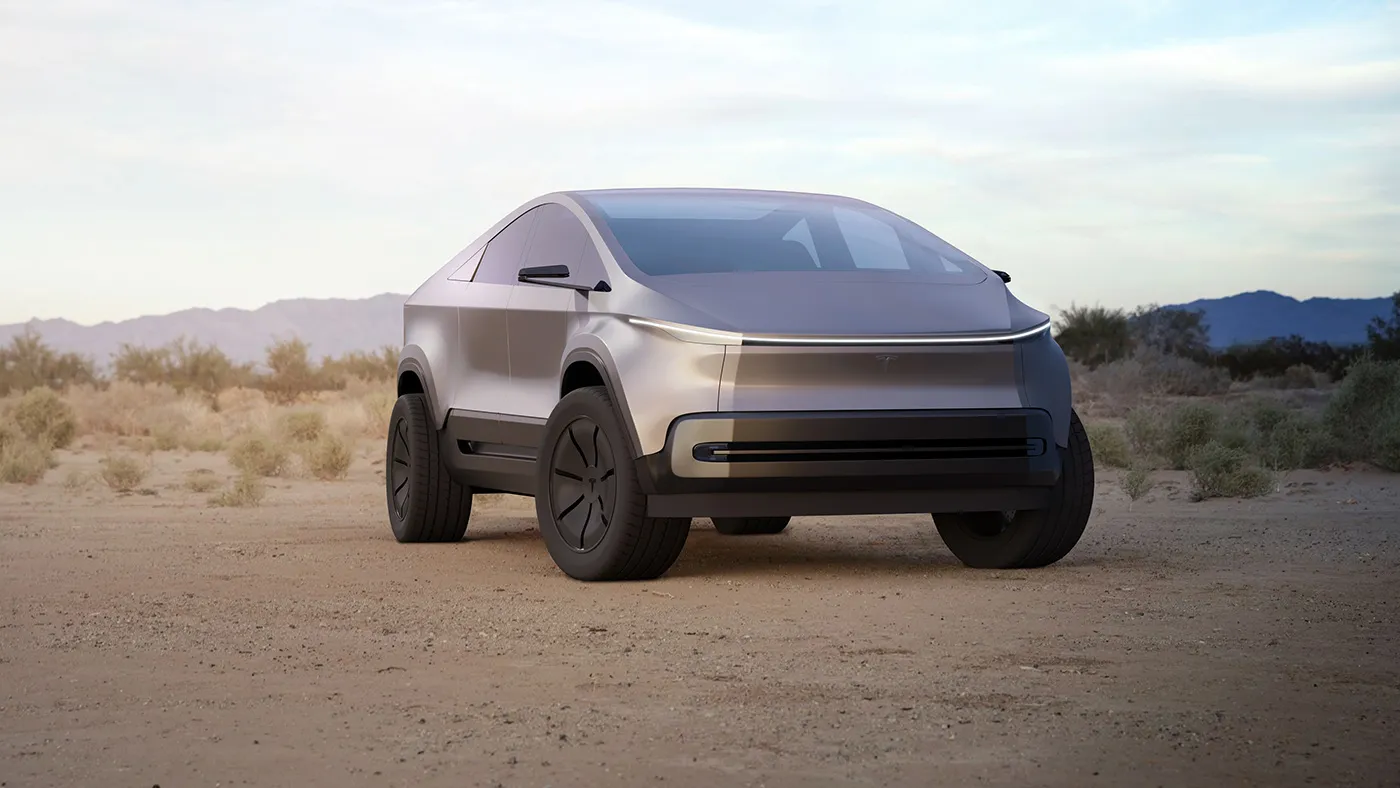
When Tesla first unveiled the Cybertruck, it appeared less like a traditional pickup and more like a science-fiction artifact. Its sharp geometric edges, cold stainless-steel exoskeleton, armored aesthetic, and radical proportions instantly divided public opinion.
Initially, Tesla positioned the Cybertruck as:
- A revolutionary machine
- A technological breakthrough
- A symbol of futuristic innovation
- A statement against conventional automotive design
However, as reservations turned into real-world deliveries, Tesla discovered a critical truth: viral fascination does not always translate into sustained sales success.
Between 2025 and 2026, Tesla initiated a comprehensive branding and messaging shift, refocusing the Cybertruck from a futuristic experiment into a dependable, practical, and everyday electric pickup.
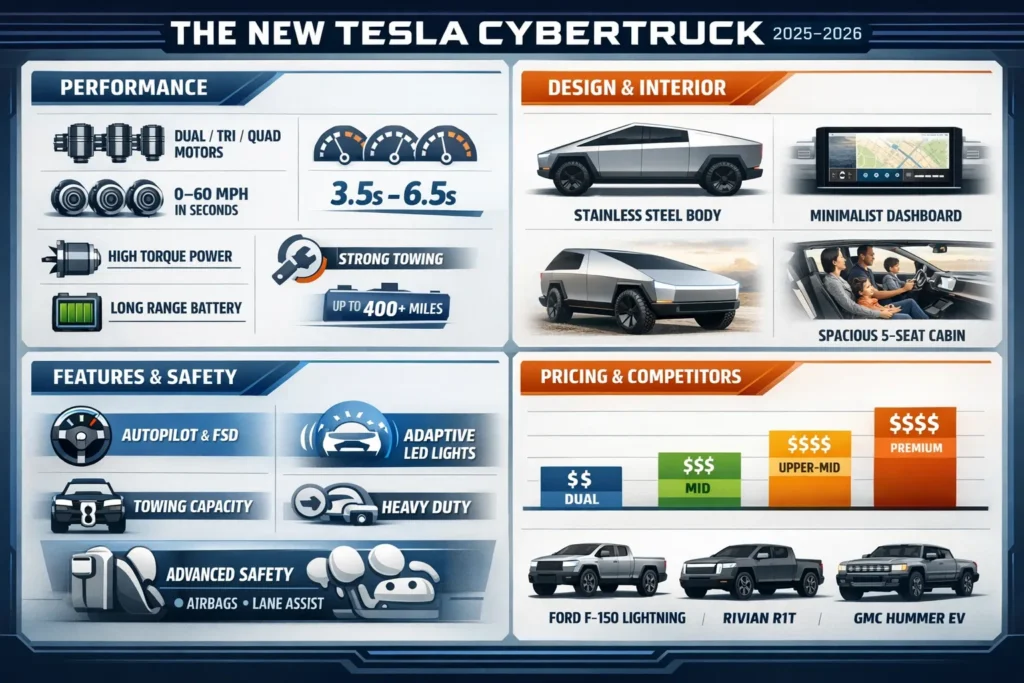
Quick Overview Table:
| Specification | Details |
| Motor System | Dual / Tri / Quad Electric Motors |
| Powertrain | High-performance EV drivetrain |
| Range | Long-range lithium battery |
| Transmission | Single-speed automatic |
| Fuel Type | Fully electric |
| Body Type | Full-size pickup truck |
| Seating | 5 adults |
| Drive System | AWD configurations |
| Charging | Supercharger + Home charging |
Why Tesla Changed Its Marketing Strategy
Early Sales Reality
During its early launch phase, the Cybertruck dominated social media, technology blogs, and automotive forums. Millions admired its unconventional design, yet comparatively fewer customers finalized purchases.
Key challenges included:
- Extremely radical styling
- Expensive panel and body repairs
- Limited traditional truck appeal
- Uncertainty for professional users
- Concerns about resale and service
Tesla realized that online engagement alone does not guarantee long-term profitability.
Customer Feedback
Post-launch feedback revealed important insights:
“It looks incredible, but can I use it every day?”
“Is it practical for family driving?”
“How expensive are repairs?”
“Is it reliable for work?”
Strong Competition
By 2025, Tesla faced serious competition from established automakers and startups alike.
Major rivals included:
- Ford F-150 Lightning
- GMC Hummer EV
- Rivian R1T
These competitors emphasized:
- Familiar truck aesthetics
- Dealer networks
- Outdoor lifestyle branding
- Comfort-oriented interiors
- Fleet compatibility
Market Maturity
By 2025, EV consumers will have become more informed and analytical. They focused on:
- Total ownership cost
- Battery longevity
- Service infrastructure
- Software reliability
- Resale potential
The New Tesla Cybertruck Marketing Approach
Tesla’s revised strategy centers on real-world usability.
Old Messaging
- “Bulletproof body”
- “Unbreakable glass”
- “Space-age truck”
- “Extreme acceleration”
New Messaging
- “Reliable work vehicle”
- “Family-friendly EV”
- “Daily commuting solution”
- “Towing and hauling capability”
Core Marketing Pillars
| Pillar | Focus |
| Practicality | Daily usability |
| Durability | Long-term resilience |
| Technology | Smart features |
| Value | Cost efficiency |
| Comfort | Family and commuting |
Exterior Design:
Stainless Steel Body
The Cybertruck retains its iconic stainless-steel exoskeleton.
Benefits:
- Corrosion resistance
- Structural rigidity
- Reduced paint maintenance
- Distinctive identity
Marketing campaigns now showcase Cybertruck on:
- Construction sites
- Agricultural farms
- Remote highways
- Campgrounds
- Job locations
Headlights and Lighting
Key lighting features include:
- Full-width LED light bar
- Rear LED strip
- Adaptive brightness
- Worksite illumination
Grille-Free Front
Without a traditional grille, Cybertruck achieves:
- Lower aerodynamic drag
- Improved energy efficiency
- Reduced maintenance
Wheels and Suspension
Features include:
- Large alloy wheels
- All-terrain tires
- Adaptive air suspension
Interior & Comfort:
Dashboard Design
The minimalist dashboard includes:
- Flat architecture
- Central touchscreen
- Hidden air vents
- Clean interface
Marketing visuals now show:
- Navigation maps
- Work schedules
- Music streaming
- Family road trips
Infotainment System
Features:
- Large high-resolution screen
- Voice control
- Integrated navigation
- OTA updates
Seating & Space
| Feature | Description |
| Seats | 5 adults |
| Rear Seats | Foldable |
| Storage | Large compartments |
| Comfort | Ergonomic support |
Build Quality
Materials prioritize:
- Easy cleaning
- Scratch resistance
- Industrial durability
- Long-term wear
Engine & Performance:
Motor Options
| Variant | Power | Target User |
| Dual Motor | Balanced | Daily drivers |
| Tri Motor | High | Performance users |
| Quad Motor | Extreme | Enthusiasts |
Acceleration & Handling
- Instant torque delivery
- 0–60 mph in seconds
- Stable chassis
Driving Experience
Focus areas include:
- Smooth ride quality
- Stable Towing Behavior
- Low cabin noise
- Long-distance comfort
Fuel Economy & Real-World Range
Battery Options
- Standard long-range pack
- Extended-range battery
- High-efficiency motors
Efficiency Tools
- Regenerative braking
- Route optimization
- Energy consumption reports
- Smart charging algorithms
Safety & Driver
Passive Safety
- Multiple airbags
- Reinforced frame
- Crumple zones
- Impact-absorbing panels
Active Safety
- Automatic emergency braking
- Lane keeping assist
- Blind-spot monitoring
- Adaptive cruise control
Advanced Systems
- Autopilot
- Full Self-Driving (FSD)
- AI-based cameras
- Driver monitoring
Technology & Smart
Interface
- Cloud-based OS
- Custom layouts
- Smartphone integration
- Voice AI assistant
Connectivity
| Feature | Available |
| Bluetooth | ✅ |
| Wi-Fi | ✅ |
| App Control | ✅ |
| OTA Updates | ✅ |
Smart Tools
- Remote locking
- Climate scheduling
- Charging management
- Fleet tracking
Variants & Pricing
Available Variants
| Variant | Target Buyer | Price Level |
| Dual | Daily users | Mid |
| Tri | Performance | Upper-mid |
| Quad | Enthusiasts | Premium |
Pricing Shift
Tesla moved from:
Low-entry pricing
to
Value-based pricing
Focus: features, longevity, and ownership benefits.
Pros and Cons
Pros
- Distinctive design
- Strong performance
- Advanced software
- High towing capacity
- OTA upgrades
Cons
- Polarizing appearance
- Costly repairs
- Charging limitations
- Learning curve
- Limited dealer network
Best For:
Ideal Buyers
✔ Technology enthusiasts
✔ EV adopters
✔ Urban professionals
✔ Small enterprises
✔ Eco-conscious drivers
Not Ideal For
✖ Traditional truck loyalists
✖ Rural-only users
✖ Budget buyers
Competitor Comparison
Main Rivals
- Tesla Cybertruck
- Ford F-150 Lightning
- GMC Hummer EV
- Rivian R1T
Comparison Table
| Feature | Cybertruck | Lightning | Hummer EV | R1T |
| Design | Futuristic | Traditional | Bold | Adventure |
| Price | Mid–High | Mid | High | Mid–High |
| Tech | Very High | High | High | High |
| Buyer | Tech users | Fleet | Luxury | Outdoor |
Maintenance & Ownership
Servicing
- Mobile technicians
- Limited centers
- Online scheduling
Parts Availability
- Tesla-controlled supply
- Occasional delays
- Improving logistics
Resale Value
- Strong brand equity
- Software updates
- Market-driven pricing
Ownership Costs
| Cost Type | Level |
| Fuel | Low |
| Service | Medium |
| Battery | High (long-term) |
| Insurance | Medium |
FAQs
A: Yes. The redesigned marketing emphasizes everyday comfort and usability.
A: To attract mainstream buyers and improve long-term sales sustainability.
A: Yes. It offers strong torque and towing capacity.
A: Yes. It supports Superchargers and home charging.
A: Regulations vary, but Tesla is adapting regionally.
Conclusion:
The Tesla Cybertruck Marketing redesign is not a retreat.
It is a strategic recalibration.
Tesla learned that:
Innovation must serve practicality.
By prioritizing:
- Reliability
- Usability
- Transparency
- Comfort
- Value