Introduction
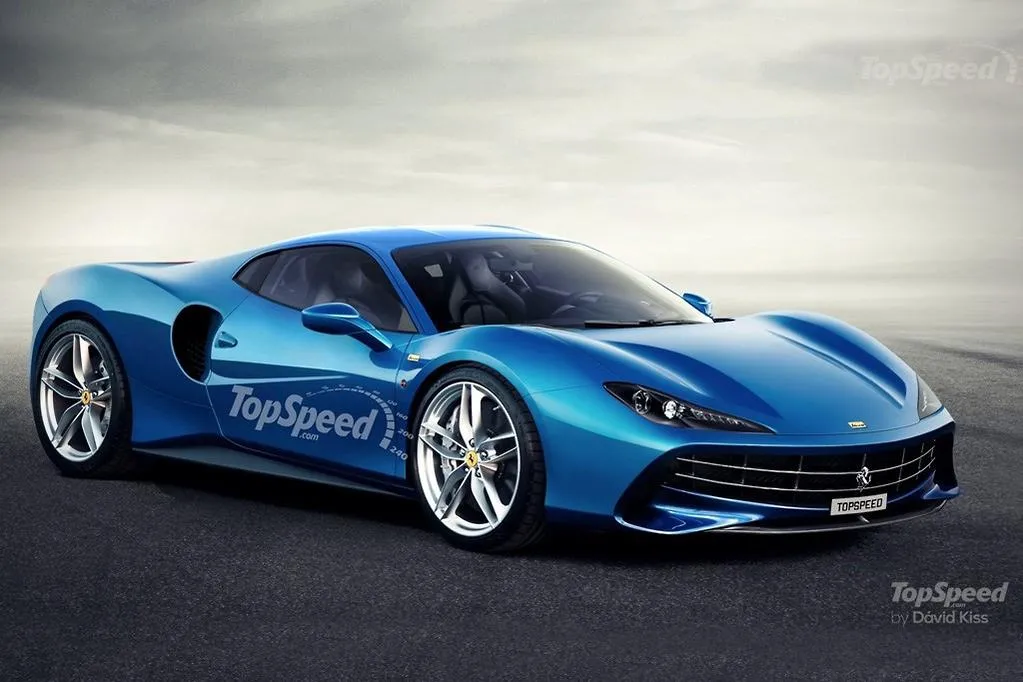
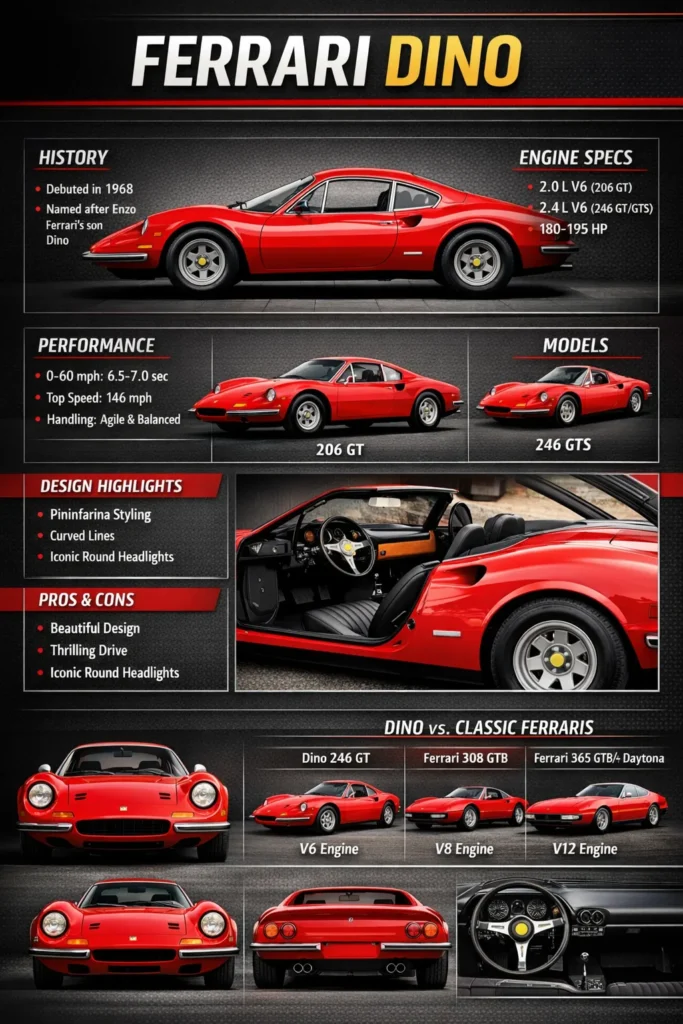
The Ferrari Dino is a series of mid-engine, rear-wheel-drive sports cars produced by Ferrari (and for some early units in collaboration with Command) from the late 1960s to the late 1970s. Named after Alfredo “Dino” Ferrari, the cars were created to house V6 and next V8 engines, offering an available, more lively drag compared with Ferrari’s big V12 grand traveler.
While not the fastest Ferrari ever made, the Dino became great for its balanced handling, simple design, and affordability with collectors — a car rich in culture that feels like a pure driver’s car. It’s ideal for an addict who values timeless style and a natural connection with the road, not just headlines about electricity.
Quick Overview Table
| Specification | Ferrari Dino (Classic Models) |
| Engine | 2.0–2.4 L V6 / Early V8 on GT4 variants |
| Power | ~180–195 hp (simple) |
| Top Speed | ~146 mph (235 km/h) |
| Acceleration (0-60 mph) | ~5.0–6.7 seconds |
| Transmission | 5-Speed Manual |
| Fuel Type | Petrol (Gasoline) |
| Body Type | Coupe / GTS (Spider) |
| Seating Capacity | 2 Seats |
Exterior Design
The Ferrari Dino’s exterior is instantly recognizable:
Body Style and Proportions
The Dino was designed with mid-engine balance in mind. Its compact amount— low hood, through roofline, and rear-engine cover — creates a perfect shadow that stands out between simple sports cars. The smooth loop and balanced attitude make it both simplified and timeless.
Headlights & Front Fascia
Most simple Dino models featured specific, rounded, or pop-up headlights that blend seamlessly into the body. This design was advanced for its time, offering the car a sporty yet simple nature.
Roast and Aerodynamics
Unlike many Ferraris of its era, the Dino’s grille was indirect— more about air function than overt styling. Yet this control enhanced its clean, breezy look, growing style over assault.
Wheels & Stance
With simple 14-inch wheels (generally fitted with Michelin or Pirelli tyres in the era), the Dino’s confident attitude reflects care and performance balance. It wasn’t just for show — it improved the handling advantage that addicts still cry today.
Interior & Comfort
The Dino’s cabin doesn’t overwhelm with gadgets — instead, it focuses on driver engagement.
Dashboard and device
Designed with clearness and clarity in mind, the Dino features a driver-centric instrument panel with round dials and minimal aberration. Simple analog meters send speed, revs, and engine health in their simple form.
Seats and Space
Two sporty bucket seats hamper passengers. While not roomy by modern standards, they are perfect for fearless drives on breathtaking roads.
Infotainment & Comfort
Of course, classic models didn’t have modern infotainment — but the essence of comfort came from the connection between driver and machine, emphasizing pure driving joy. Owners often retrofit period-correct radios and cruise amenities.
Engine & Performance
Performance is where the Ferrari Dino truly shines.
Engine Types
Originally introduced with a 2.0-liter V6, the line evolved into the more popular 2.4-liter V6 that defined the Dino legacy.
V6 Engine Highlights:
- Configuration: 65° V6 naturally aspirated.
- Power: ~192 hp @ 7600 rpm
- Torque: ~167 lb-ft @ 5500 rpm
Performance Metrics
| Metric | Ferrari Dino 246 GT / GTS |
| Top Speed | ~146 mph (235 km/h) |
| 0-60 mph | ~5.0–6.7 sec |
| Weight | ~1,110 kg (2,450 lb) |
Driving Experience
Driving a Dino is purely analogue. With a manual gearbox, twitch-free chassis, and balanced mid-engine layout, it rewards precision and smooth throttle control — an experience many modern cars struggle to replicate.
Fuel Economy / Range
While the Dino wasn’t designed for economy, classic figures give us insight:
Fuel Economy:
- ~17 mpg (US combined)
Range: Around 240-270 miles per tank.
Safety Features
Safety equipment in classic Ferraris was simpler than modern cars, but key aspects included:
- Four-wheel disc brakes with ventilated rotors for strong stopping power.
- Independent suspension improves road contact and control.
- Driver-focused ergonomics that promote alert driving.
Technology & Infotainment
Unlike modern supercars, the Dino’s tech list was basic but intentional:
- Minimalist analog gauges
- Classic radio units (often aftermarket)
- Manual climate control
- Mechanical switches & levers
Variants & Pricing
Pricing Insight:
- Classic Dino 246 GT/GTS: High collector demand
- 206 GT: Extremely rare & high value
- Dino 308 GT4: More affordable classic option
Pros & Cons
Pros
. Timeless design & style — a true classic.
. Impressive balance & driving dynamics.
. Respected collector status.
. Historic Ferrari heritage.
. Strong enthusiast community and parts support.
Cons
. No modern safety tech.
. Fuel economy is not efficient by today’s standards.
. Maintenance requires specialist care.
. Parts can be costly and rare.
. Ride comfort is simple compared with modern cars.
Best For
The Ferrari Dino is perfect for:
Classic car collectors seeking a European legend.
Driving purists who love manual engagement.
Vintage motorsport hedgers valuing history.
European touring & classic events enthusiasts.
Comparison Suggestions
| Model | Why Compare? |
| Porsche 911 (Classic 1970s) | Iconic rear-engine rival |
| Lancia Stratos | Shared Ferrari-engine history |
| Alfa Romeo Montreal | Italian classic sports coupe |
Maintenance & Ownership
Owning a Ferrari Dino is rewarding but requires understanding:
Servicing
Routine checks with specialists experienced in classic Ferraris are essential — engines, brakes, and suspension require careful attention.
Parts Availability
Excellent support exists through heritage specialists, but some parts are limited due to age.
Resale Value
Well-maintained Dino classics have strong appreciation trends, particularly early 206 GTs and well-preserved 246 models.
FAQs
A: It’s a mid-engine classic created to honor Enzo Ferrari’s son, blending design, engineering, and historic significance.
A: Yes — it was produced by Ferrari, though some models originally carried Dino branding without Ferrari badges.
A: The Dino 206 GT is rarer and highly sought after by collectors.
A: Classics can be driven daily, but they excel on weekends or in gatherings due to age and maintenance needs.
Conclusion
The Ferrari Dino is more than a car — it’s a sample of automotive art and history. With its simple design, attractive performance, and honest backstory, the Dino stands proudly with simple European sports cars. If you’re a collector, a driving addict, or simply someone who respects automotive excellence, the Dino offers a driving experience that few cars can Match.