Introduction
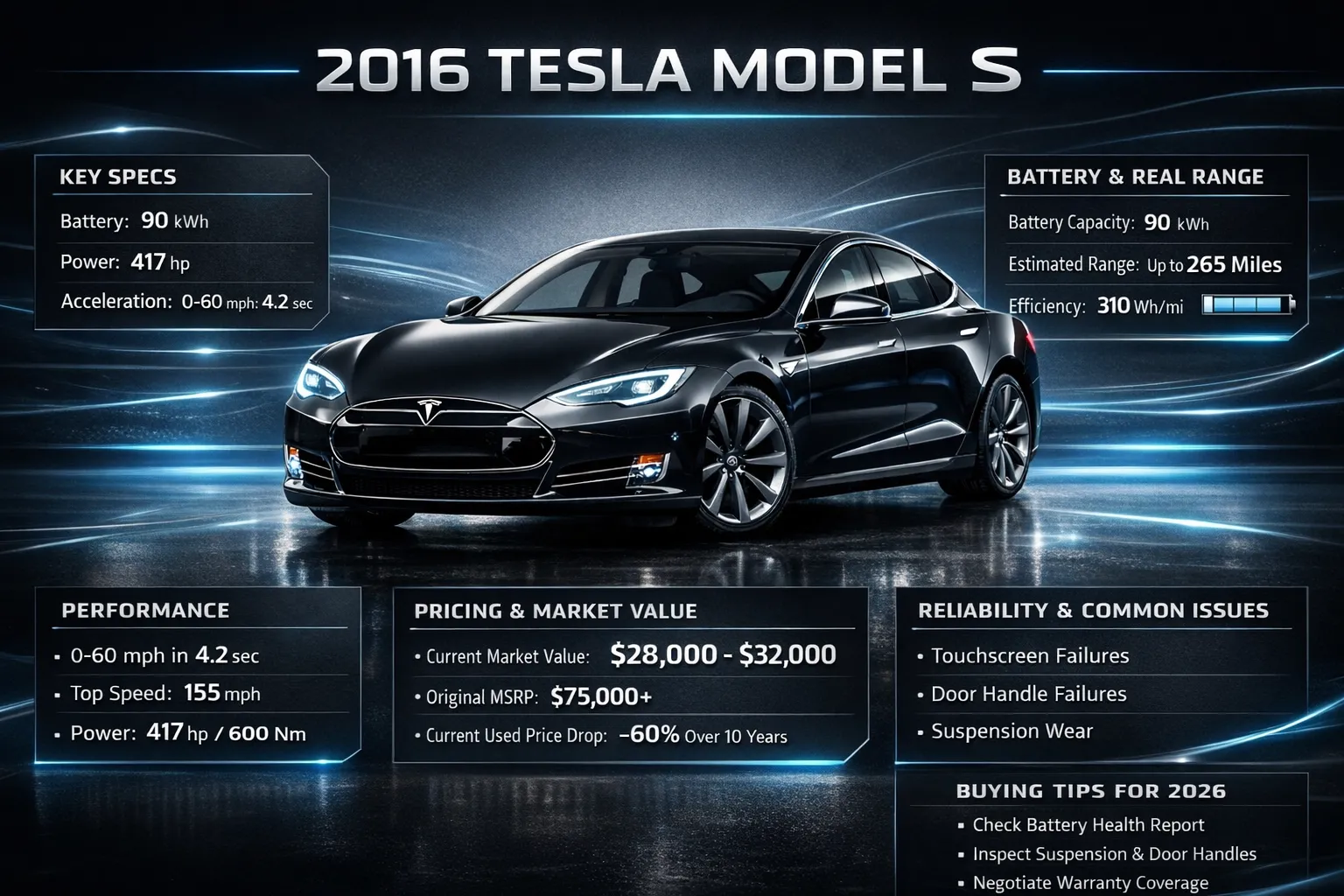
The 2016 Tesla Model S remains one of the most searched-for and highly demanded used electric luxury vehicles in 2026.
Even after nearly a decade since its release, buyers still actively search for:
- 2016 Tesla Model S reliability
- 2016 Tesla Model S range
- 2016 Tesla Model S price
- 2016 Tesla Model S common problems
- Is the 2016 Model S worth buying in 2026?
This electric sedan transformed the automotive industry.
It delivered:
Premium electric mobility
Powerful acceleration
Long-distance driving capability
Advanced digital technology
Early Autopilot integration
Today, it remains a strong option for buyers who want luxury + performance at reduced used market pricing.
In this detailed guide, we analyze everything step by step with deep insight.
Quick Overview
| Feature | Details |
| Fuel Type | Electric |
| Body Type | Luxury Sedan |
| Seating | 5 – 7 Seats |
| Battery Options | 60 / 70 / 75D / 85 / 90D / P90D / P100D |
| Electric Range | 210 – 330+ miles |
| 0–60 mph | 2.5 – 5.5 seconds |
| Drive Type | RWD / AWD |
| Transmission | Single Speed |
| Top Speed | 155+ mph |
Exterior Design
Design Overview
The 2016 Tesla Model S features a clean aerodynamic silhouette.
Its design remains visually attractive even in 2026.
Key Exterior Characteristics:
Streamlined body structure
Minimal front grille
Hidden electronic door handles
Extended wheelbase for stability
Sport-inspired stance
Lighting System
- Xenon headlights
- LED upgrade variants
- Automatic light adjustment
Wheel Configuration
| Wheel Size | Advantage |
| 19-inch | Improves driving distance |
| 21-inch | Sport-focused look |
| Aero Wheels | Enhances efficiency & reduces drag |
Smaller wheels improve electric driving range due to reduced rolling resistance.
Interior & Comfort
Dashboard Technology
The most iconic feature of the 2016 Model S is the 17-inch touchscreen display.
Almost all vehicle functions are managed digitally:
Climate control
Navigation system
Media playback
Vehicle configuration
Physical buttons are minimal.
Seating Comfort & Cabin Space
The vehicle offers:
- Premium leather seating
- Heated seat options
- Spacious rear legroom
- Optional third-row seating (primarily for children)
Why Buyers Appreciate It
The cabin feels comparable to a luxury Mercedes-Benz — but powered entirely by Electricity.
Infotainment System Features
The system includes:
Bluetooth connectivity
Internet browsing capability
Premium audio system
Real-time traffic navigation
Over-the-air (OTA) updates
Tesla continuously improves software performance through remote updates.
Engine & Performance
The 2016 Model S does not contain a combustion engine.
Instead, it operates via advanced electric motor technology.
Performance by Trim Level
| Trim | Power | 0–60 mph |
| 60 / 70 | Standard | ~5.5 sec |
| 75D / 90D | AWD | ~4.0 sec |
| P90D | Performance | ~2.8 sec |
| P100D | Ludicrous Mode | ~2.5 sec |
Driving Experience
When pressing the accelerator:
Instant torque delivery
Smooth acceleration
Silent propulsion
Strong road grip
The P100D variant was among the fastest sedans globally at Launch.
Electric Range & Battery Performance
Official EPA Range Estimates
| Battery | Estimated Range |
| 60 | ~210 miles |
| 75D | ~249 miles |
| 90D | ~270 miles |
| P100D | 300+ miles |
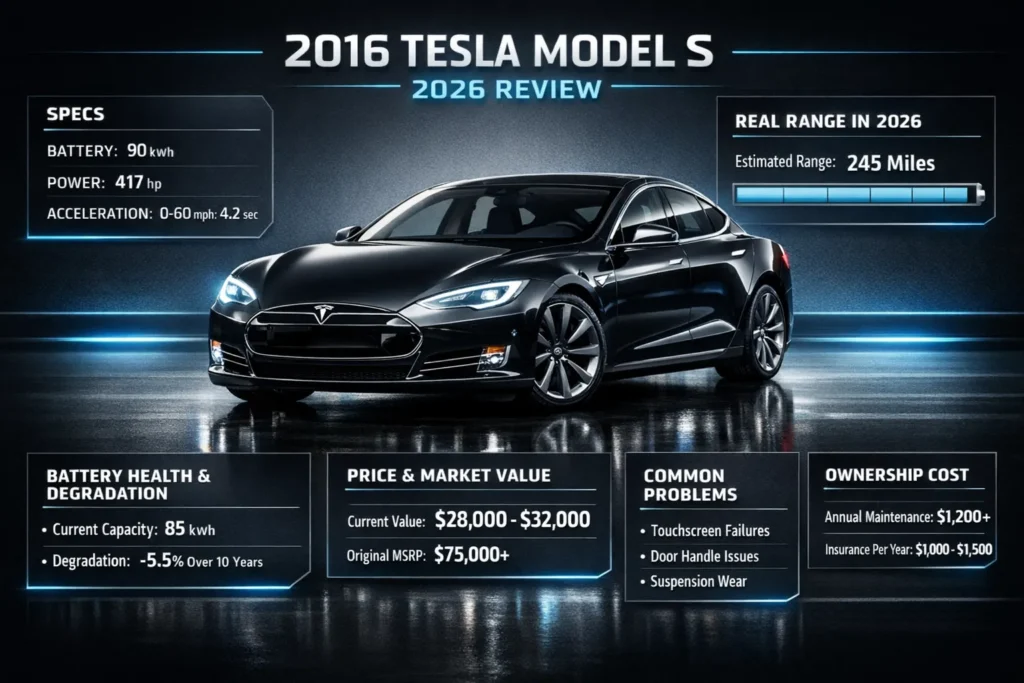
Battery Degradation Explained
Battery capacity naturally declines over time.
Typical degradation:
✔ 5% – 15% after several years
Influencing Factors:
- Frequent fast charging
- Extreme heat exposure
- High mileage usage
- Poor maintenance habits
2016 Tesla Model S Reliability
Is It Reliable?
Yes, but the condition matters significantly.
Strong Reliability Factors
Electric motors last longer than gasoline engines
Minimal mechanical components
No oil changes required
Reduced brake wear
Common Problems
| Issue | Explanation |
| Suspension wear | Air suspension failure is possible |
| Touchscreen glitches | Screen lag or system freeze |
| Door handle malfunction | Electronic door system failure |
| Battery aging | Normal degradation over time |
| Autopilot limitations | Early system software constraints |
Important Buying Tip
Before purchase, inspect:
Full service records
Battery diagnostics
Recall status
Suspension condition
Safety Features
The Model S is recognized for strong crash protection.
Advanced Safety Technologies
Multiple airbags
Anti-lock braking system (ABS)
Traction control
Stability control
Automatic emergency braking
Early Autopilot integration
Recall Monitoring
Some historical recalls involved:
- Suspension components
- Steering inspection updates
- Power steering monitoring
Always verify recall compliance before buying.
Technology & Autopilot System
Smart Technology Features
The 2016 Model S introduced:
Autopilot Version 1
Over-the-air updates
Remote mobile app access
Vehicle tracking & diagnostics
Why It Was Revolutionary
During 2016, self-driving capability was rare.
Tesla pioneered semi-autonomous driving technology ahead of Competitors.
Variants & Used Market Pricing
2016 Tesla Model S Price
Pricing depends on:
Mileage
Battery condition
Trim level
Geographic market
Trim Position Overview
| Trim | Market Category |
| 60 / 70 | Budget Entry |
| 75D / 90D | Best Value Option |
| P90D | Performance Choice |
| P100D | Premium Tier |
Why Price Varies?
Battery health significantly impacts resale valuation.
Performance versions generally retain stronger demand.
Pros & Cons
Advantages
Strong electric range
Quick acceleration
Premium interior
Reduced fuel expenses
Advanced technology integration
Disadvantages
Battery replacement costs a lot
Repairs can be expensive
Outdated autopilot compared to modern systems
Suspension maintenance required
Maintenance & Ownership Cost
Maintenance Benefits
No need for:
Oil changes
Engine service
Fuel refills
Battery Replacement Cost
Battery replacement is expensive.
However:
Most batteries last many years
Replacement is rarely needed early
Resale Value
Performance variants typically hold better resale Pricing.
Tesla vehicles maintain strong market demand compared to many competing EV brands.
Best For
Ideal Buyers:
EV enthusiasts
Luxury car lovers
Technology-focused buyers
Performance drivers
Budget-conscious luxury seekers
Not Ideal For:
People are uncomfortable with digital systems
Buyers are expecting low repair costs for aging vehicles
Traditional combustion engine fans
Comparison With Competitors
| Vehicle | Range | Performance | Luxury |
| Tesla Model S | High | Excellent | Premium |
| BMW i3 | Low | Moderate | Compact |
| Nissan Leaf | Medium | Basic | Budget |
| Chevy Bolt | Good | Good | Affordable |
The Model S dominates in the performance + luxury combination.
FAQs
A: Yes — if battery condition and service history are verified.
A: Typically 8 to 15 years, depending on usage.
A: Lower than gasoline vehicles — but major repairs can be costly.
A: 75D or P90D provides balanced value between cost and performance.
A: Yes — first-generation Autopilot is supported.
Conclusion
The 2016 Tesla Model S remains one of the strongest used electric luxury vehicles in 2026.
It provides:
Powerful performance
Long electric driving range
Advanced technology
Lower operating cost
However:
Always inspect battery condition
Check suspension status
Verify recall compliance
If evaluated properly, it is still a smart investment in the used EV Market.